
Blaps lethifera
Blaps lethifera
Description
How to identify
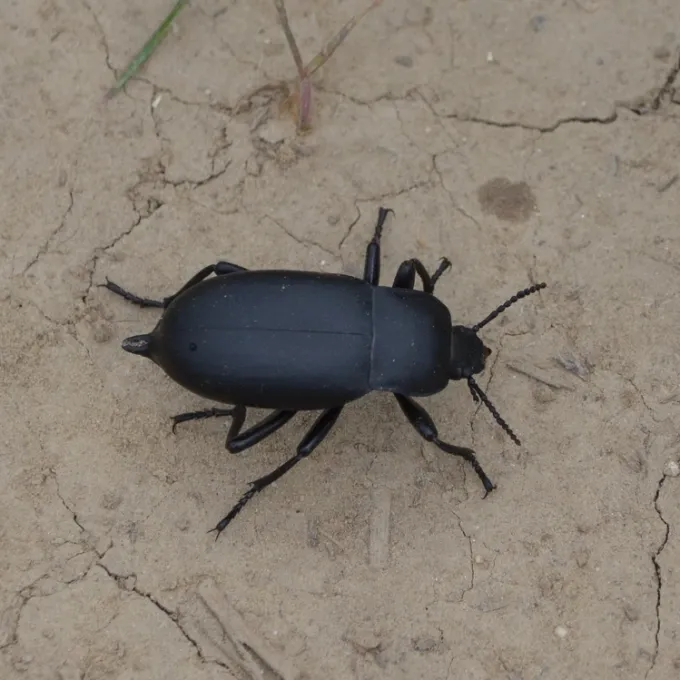
Blaps lethifera, commonly known as a type of darkling beetle, belongs to the family Tenebrionidae. These beetles are relatively large, typically ranging from 20 to 30 mm in length.
The body is elongated and oval-shaped, characterized by a matte or slightly shiny black color. A distinctive morphological feature is the pointed, tail-like extension at the rear of the elytra.
The larvae are cylindrical and heavily chitinized, colored in shades of yellowish-brown. They resemble wireworms in appearance but are significantly larger, reaching up to 40-50 mm when fully mature.
These insects are primarily nocturnal. During daylight hours, both adults and larvae typically remain hidden under soil debris, plant litter, or within soil crevices.
The life cycle is long, with larvae living in the soil for up to two years. They are opportunistic feeders, thriving in environments rich in organic matter and moist soil.
What it damages
Blaps lethifera is a polyphagous pest that affects a variety of field crops. Cereals such as wheat, barley, rye, and oats are among the most frequently attacked crops.
The pest also causes substantial damage to row crops, including corn, sunflowers, and sugar beets, primarily during the germination and seedling emergence stages.
Larvae feed on sprouting seeds and the underground portions of stems, which often leads to poor stand establishment and total crop failure in heavily infested spots.
Adult beetles also contribute to the damage by feeding on young leaves and stems, though the soil-dwelling larval stage represents the primary threat to agricultural production.
The extent of the damage is largely dependent on the larvae density in the soil, with high infestations causing significant economic impact on crop yields.
Signs of infestation
The primary symptom of infestation is the emergence of patchy or thin crop stands. Affected plants appear yellow, stunted, and wilted before dying.
When investigating the affected areas, digging into the soil around the base of the plants usually reveals the presence of large, brownish larvae feeding on the roots.
Physical inspection of the plants shows eaten-out roots or stems near the soil line, making the young plants unstable and easily uprooted from the ground.
In sugar beets and sunflowers, damage often manifests as deep lesions on the root collar or stems severed just below the surface, leading to sudden collapse of the seedlings.
High beetle activity on the soil surface during the night in the early season serves as an indicator of a growing population that requires monitoring and intervention.
Control measures
A proactive approach to crop rotation is the cornerstone of controlling this pest, as it disrupts the beetle's life cycle and prevents the buildup of larval populations.
Deep autumn plowing is a highly effective mechanical control method. It exposes larvae and pupae to the surface, where they become vulnerable to natural predators like birds.
Seed treatment with systemic insecticides prior to planting provides critical protection for seeds and seedlings, preventing early-season damage from soil-borne pests.
Effective weed management on the field edges and within the plot reduces the availability of secondary food sources, thereby lowering the overall carrying capacity for the population.
Chemical control involving soil-applied insecticides should be considered only when scouting indicates that the pest population exceeds the established economic threshold.
Taxonomy
- Latin name
- Blaps lethifera
- Order
- Coleoptera (beetles)
- Family
- Tenebrionidae
- EPPO code
- BAPSLE
Discussion
No discussions yet — be the first.