
Shinano whitefly
Bemisia shinanoensis
Description
How to identify
The Shinano whitefly (Bemisia shinanoensis) belongs to the order Hemiptera and the family Aleyrodidae. These small insects are characterized by white wings covered with a powdery substance.
Adults are approximately 1 to 1.5 mm long. Eggs are oblong and typically attached to the underside of the leaves with a short, thin stalk that anchors them firmly.
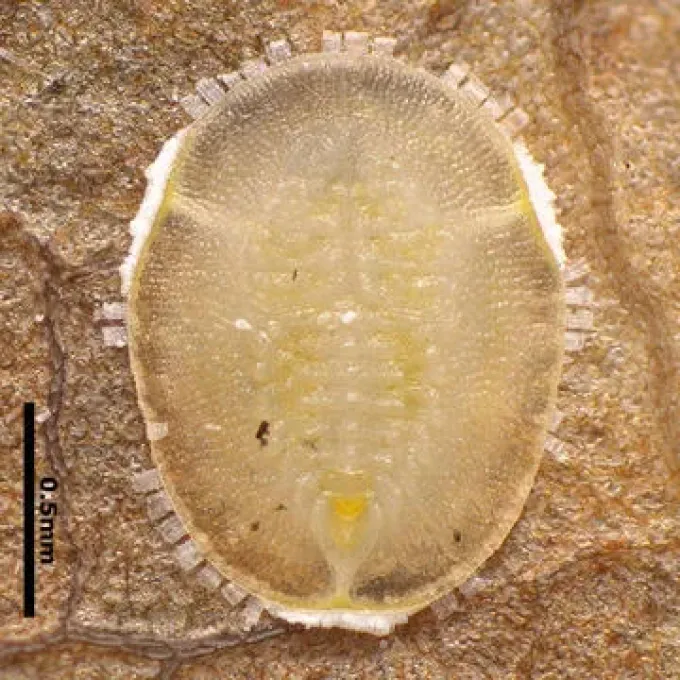
The larval stages, particularly the first instar known as the crawler, are mobile. Once they begin feeding, they settle on the leaf, lose their mobility, and appear as flat, translucent scales.
This species is a specific pest that can be distinguished from other whitefly species through a detailed microscopic examination of the pupal case morphology.
It remains a significant subject of study in agricultural entomology due to its potential impact on specific tree fruit crops in orchard ecosystems.
What it damages
The primary host plants for Bemisia shinanoensis are trees belonging to the Rosaceae family, with apples, pears, and rowan trees being the most frequent targets.
The pest tends to hide on the undersides of leaves, which allows the infestation to progress significantly before it is detected by orchard managers.
The whitefly causes direct damage by sucking phloem sap from the foliage, which leads to the weakening of both young saplings and established fruit-bearing trees.
Heavy infestations can lead to decreased vigor, reduced shoot growth, and a lower overall yield due to the metabolic stress imposed on the host plant.
In addition to direct feeding, the excretions produced by the larvae create a favorable environment for secondary infections, specifically sooty mold.
When it appears
The activity of the Shinano whitefly is highly dependent on ambient temperatures. Adults typically emerge in the spring once temperatures remain consistently above 15 degrees Celsius.
During the warmer summer months, the pest goes through multiple generations, with development rates accelerating significantly in hot, dry conditions.
Peak population levels are generally observed in late summer, when all stages of the life cycle — eggs, nymphs, and adults — can be found simultaneously on the leaves.
As autumn approaches and temperatures drop, the insects reduce their activity and prepare to overwinter in protected areas on the host trees.
Monitoring efforts should ideally begin during the bloom period using yellow sticky traps to detect the arrival of the first generation of adults.
Signs of infestation
The most reliable sign of an infestation is the presence of scale-like nymphs on the undersides of leaves, which may appear as clusters of tiny, flat spots.
The presence of honeydew, a sticky substance excreted by the whiteflies, often leads to the development of black sooty mold on the leaf surfaces.
Affected leaves often exhibit yellowing, curling, and premature senescence, which can lead to significant defoliation if the infestation is severe.
The black, crusty layer of sooty mold on the foliage is a distinct indicator of a high concentration of sap-sucking insects in the canopy.
General tree decline, characterized by stunted growth and lack of vitality in the terminal shoots, suggests a prolonged infestation by this pest.
Control measures
Management of the Shinano whitefly requires an integrated pest management (IPM) strategy that combines physical, chemical, and biological approaches.
Proper orchard sanitation, including the regular thinning of tree canopies, helps to improve airflow and reduce humidity levels that favor the whitefly.
Chemical control usually involves the application of systemic insecticides that are effective against sucking insects, applied during the peak emergence of nymphs.
Biological control agents, such as predatory bugs, lacewings, and specific parasitic wasps, can significantly assist in suppressing whitefly populations.
- Utilizing yellow sticky traps for consistent population monitoring.
- Removing weeds in the orchard that may serve as alternative hosts.
- Rotating insecticide modes of action to prevent the development of pesticide resistance.
Taxonomy
- Latin name
- Bemisia shinanoensis
- Order
- Hemiptera (bugs, aphids, leafhoppers)
- Family
- Aleyrodidae
- EPPO code
- BEMISH
Discussion
No discussions yet — be the first.