
Spruce needle moth
Batrachedra pinicolella
Description
How to identify
The spruce needle moth (Batrachedra pinicolella) is a small moth species from the Batrachedridae family, known as a specific pest of spruce trees.
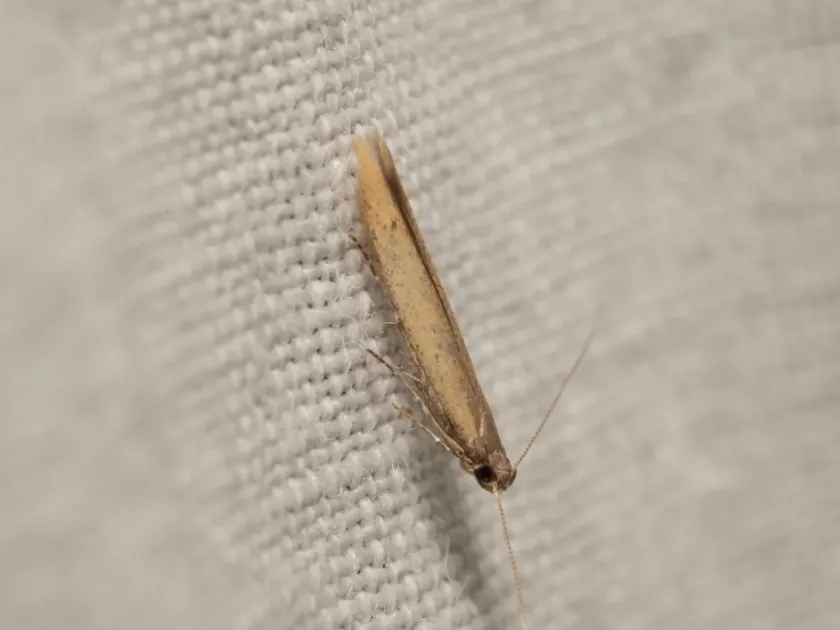
Adult moths are quite small, with a wingspan ranging from 10 to 12 millimeters, and possess very narrow, lanceolate forewings with a brownish-gray coloration.
The hindwings are even narrower and are fringed with long hairs, a distinct structural characteristic of this group of Lepidoptera.
The larvae are yellowish-green caterpillars with dark head capsules, growing up to approximately 10 millimeters before pupation.
The pupal stage occurs inside a white, silk-like cocoon, which the caterpillar weaves within the needles and twigs of the host tree.
What it damages
The primary host for this pest is the Norway spruce (Picea abies), where larvae feed on the needles of the current year's growth.
Larvae consume the internal tissues of the needles, leaving the outer epidermal layer intact, which causes the needles to wither and turn yellow.
Significant infestations lead to widespread yellowing and premature needle drop, severely impacting the tree's photosynthesis and overall health.
In forest nurseries and ornamental plantings, heavy attacks can result in stunted growth and a significant loss of the tree's aesthetic appeal.
The cumulative damage caused by multiple caterpillars can make an entire section of the canopy appear sparse and brownish in late summer.
When it appears
Adult moths are typically active during the months of June and July, when they mate and lay eggs directly on the spruce needles.
After hatching, the young caterpillars begin feeding immediately, constructing protective webbed structures among the needles.
Larval development occurs throughout the second half of the summer, with the insects actively feeding until they reach maturity.
The species overwinters as a larva inside a protective cocoon, securely hidden among the needles on the branches of the spruce tree.
Pupation takes place during the following spring, leading to the emergence of the next generation of moths at the start of summer.
Signs of infestation
The first visual sign of an infestation is the presence of fine silk webbing connecting the needles together on the tips of the branches.
Affected needles begin to change color, fading from vibrant green to a pale yellow and eventually turning a dry, rusty brown.
Small black droppings (frass) may be found trapped within the silk webs, indicating the presence of active larvae within the canopy.
A noticeable needle drop when shaking the branches is a strong indicator of the damage caused by the larvae feeding inside the needle tissues.
The presence of small, whitish, elongated cocoons attached to the base of the needles provides definitive proof of a spruce needle moth population.
Control measures
Chemical control involving systemic or contact insecticides should be applied when the larvae begin to emerge, usually in early summer.
In ornamental settings, pruning and removing heavily infested branches can effectively reduce the local population density of the pest.
Maintaining tree health through proper fertilization and watering helps spruce trees recover more quickly from potential needle loss.
Encouraging natural predators, such as birds and beneficial insects, can contribute to the biological control of the moth population.
Regular monitoring of young spruce plantations in late spring allows for early intervention before the caterpillars cause widespread damage to the new growth.
Taxonomy
- Latin name
- Batrachedra pinicolella
- Order
- Lepidoptera (butterflies)
- Family
- Batrachedridae
- EPPO code
- EUSTPI
Discussion
No discussions yet — be the first.