

Pest · Coleoptera (beetles) · affects Winter rapeseed, Winter wheat, Fodder beet
Cabbage stem weevil
Baris strenua
Description
How to identify
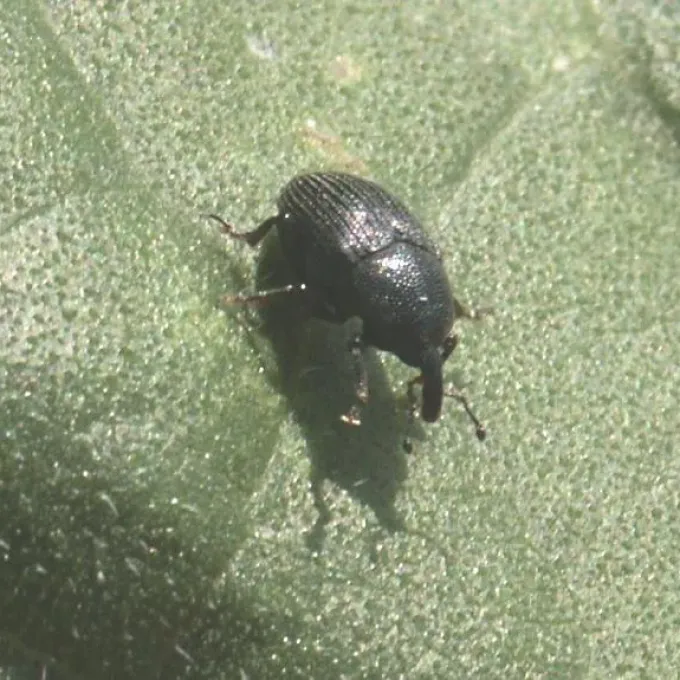
The cabbage stem weevil (Baris strenua) is a member of the Curculionidae family within the Coleoptera order. It is a small beetle, typically measuring between 3 and 5 mm in length, characterized by its distinctive elongated rostrum (snout).
The insect possesses an oval-shaped body with a black, metallic sheen. The elytra feature small, longitudinal grooves, which serve as a primary morphological identifier when inspecting crops for potential infestations.
Larvae are legless, white to cream-colored, with a darkened head capsule. Due to their endophagous lifestyle, they remain hidden inside plant tissues, making detection difficult until significant structural damage has already occurred.
The pupal stage occurs either within the soil or inside the damaged stems of the host plant. The life cycle involves complete metamorphosis, progressing through egg, larval, pupal, and adult stages.
Adult weevils overwinter in the soil or under plant debris. They emerge in the spring once temperatures become favorable, marking the beginning of their active feeding period and the start of the primary infestation window for the season.
What it damages
The primary hosts for the cabbage stem weevil include members of the Brassicaceae family. Key commercial crops affected include various types of cabbage, such as white, red, and Savoy cabbage, as well as cauliflower and broccoli.
Beyond cultivated vegetables, the weevil thrives on wild cruciferous weeds like shepherd's purse and field mustard. These wild hosts often serve as primary reservoirs, allowing the pest to persist near fields even when cabbage is not present.
Larval feeding is the most destructive phase. Larvae bore into the stems and leaf stalks, creating tunnels that disrupt nutrient and water transport within the plant. This structural damage can stunt growth and weaken the plant significantly.
Adult weevils also cause damage by consuming leaf tissue, creating small "shot-hole" patterns. While this is less destructive than larval tunneling, it can weaken the plant and serve as an entry point for secondary bacterial or fungal infections.
Severe infestations in young cabbage stands can lead to total crop loss or significantly delayed development, which prevents the plants from reaching the necessary size and quality for market requirements.
When it appears
Adult emergence from hibernation typically occurs in April or May, coinciding with the transplanting season for cabbage. Upon emergence, adults begin feeding on young leaves to gain energy for the mating process.
Egg-laying usually takes place in May and June. Females chew small cavities into the stalks or petioles of the host plants, depositing eggs inside, which protects the offspring from external environmental stressors and predators.
The larval development stage lasts approximately one month. During this period, larvae feed voraciously on the internal tissues of the stem, progressing through several instars before they are ready to pupate.
Pupation generally occurs toward the end of summer or early autumn. Following this phase, the new generation of adults emerges, feeds for a brief period, and eventually migrates to soil depths of 10-15 cm to overwinter.
Climate factors heavily influence population dynamics. While the species typically completes one generation per year, warmer regions may support partial second generations if host availability and temperatures remain optimal.
Signs of infestation
Early identification of the cabbage stem weevil is challenging, as the most damaging life stages are hidden. The first visible symptoms are often small, punctate feeding holes on the leaves caused by adults.
A closer inspection of the plant stem is essential. If the stem appears thickened, deformed, or shows signs of darkening or necrosis at the base, it is a strong indicator of larval tunneling inside.
Plants that show signs of wilting during the day, despite adequate irrigation, may be suffering from compromised vascular systems due to internal larval feeding. Splitting the stem usually reveals tunneling or the larvae themselves.
- Small feeding holes on foliage (adult damage).
- Stunted or retarded growth of cabbage transplants.
- Visible deformation or thickening of the main stem.
- Darkening or decaying tissue near the soil line.
- Wilting of lower leaves despite regular moisture levels.
Monitoring can be improved by using yellow sticky traps placed near the field edges during the spring, which helps track the arrival of adult weevils before egg-laying becomes widespread.
Control measures
Cultural control is the cornerstone of effective management. Implementing a robust crop rotation system, avoiding planting brassicas on the same site for at least 3-4 years, significantly reduces local populations.
Rigorous control of cruciferous weeds in and around the field is vital. By eliminating wild hosts like shepherd's purse, farmers can destroy the weevil's alternative food sources and breeding grounds.
Deep autumn plowing is a highly effective mechanical measure. By turning the soil, overwintering adults are exposed to unfavorable conditions, resulting in increased mortality rates before the next season begins.
Chemical intervention should be timed specifically for the adult emergence period in spring, before females lay eggs. Once larvae are inside the stem, contact insecticides are largely ineffective, and systemic options must be used.
Biological control agents, such as entomopathogenic nematodes or fungi, can provide a sustainable management option in protected cultivation environments, offering an effective alternative to chemical pesticide use.
Content graph
Connections · Cabbage stem weevil
Most often together:
Marketplace
Products · 3

Festuco Protect
Hangzhou Ruijiang Chemical Co., Ltd.
Insecticides
0
0
·
62
3 offers
4.53 €per 1 l
Buy

Biology
Taxonomy
- Latin name
- Baris strenua
- Order
- Coleoptera (beetles)
- Family
- Curculionidae
- EPPO code
- BARIST
Community
Discussion
No discussions yet — be the first.