
Azelia cilipes
Azelia cilipes
Description
How to identify
Azelia cilipes belongs to the family Muscidae (house flies). As a pest, it is primarily identified by its impact on seedling health, although adults are common in agricultural ecosystems.
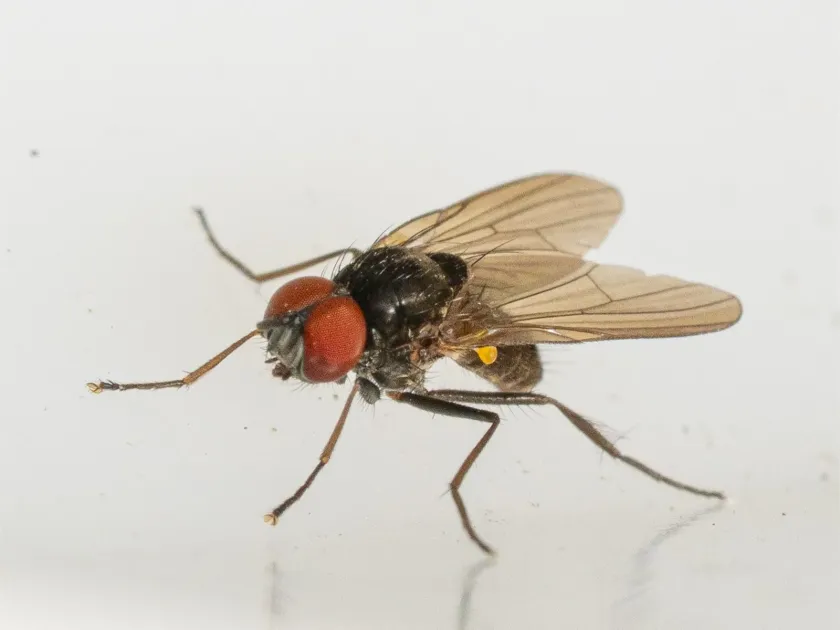
Adult flies are typically 5–7 mm in length. Their appearance is generally dark, ranging from grey to black, and they are often found in proximity to decaying organic matter, which serves as a breeding ground.
The larvae are typical muscoid maggots: cylindrical, white or cream-colored, lacking legs and a distinct head capsule. They are moisture-loving organisms often found in decomposing plant material.
Correct identification often requires entomological expertise, focusing on the specific bristle arrangements on the legs, particularly in males, as many Muscidae species look superficially identical.
Recognizing the presence of this insect early is critical, as the larval stage is responsible for the economic damage caused to germinating seeds and developing root systems.
What it damages
The economic damage is caused by the larvae, which feed on the seeds and the soft tissues of young plant stems and roots, particularly during the germination phase.
Crops sown in direct soil contact are at highest risk. The larvae penetrate the seed coat or the hypocotyl, which disrupts the plant's nutrient uptake and can lead to total crop failure in severe cases.
Plants that are damaged but survive often show signs of stunted growth, chlorosis, and increased susceptibility to soil-borne pathogens, leading to late-stage decay.
The infestation is often correlated with fields containing high amounts of undecomposed organic matter or manure, which attracts adult females for oviposition.
The economic impact can be significant in vegetable production, where uniform stand density is essential for maximizing yield and maintaining quality standards.
When it appears
The life cycle begins with the emergence of adult flies in the spring, typically when soil temperatures rise, which coincides with the optimal planting windows for many spring crops.
The number of generations per year is dependent on temperature and moisture. Warm, wet seasons facilitate rapid development and can lead to multiple generations throughout the growing season.
Larval activity peaks when soil moisture is high, as they require a moist environment to thrive and avoid desiccation. Rainfall events often trigger increased feeding activity.
The insect typically overwinters in the puparial stage within the soil. This dormancy allows the species to survive low winter temperatures and re-emerge when conditions improve.
Monitoring the first flight of adults in spring provides a key indicator for potential larval pressure, allowing farmers to prepare appropriate protection measures.
Signs of infestation
The primary symptom is sparse and uneven crop emergence. If the soil is excavated, damaged seeds will show internal tissue destruction or rotting, often accompanied by the presence of small maggots.
Young plants may appear wilted or show signs of necrosis on the stem base. This occurs because the larvae have severed the vascular tissue, hindering the flow of water and nutrients.
Visible feeding damage on the roots or underground stem portions is a diagnostic indicator that indicates the presence of soil pests, including Azelia cilipes.
A foul odor near the base of damaged plants may indicate that the larval feeding has opened pathways for secondary bacterial rot, exacerbating the damage to the root system.
- Irregular seedling emergence patterns.
- Evidence of larval feeding on buried seeds.
- Necrotic lesions on the hypocotyl.
- Presence of white maggots in the root zone.
Control measures
Effective management begins with sound agronomic practices. Avoiding the application of fresh manure just before sowing is essential to prevent attracting the flies to the crop area.
Seed treatment with systemic insecticides is a highly recommended practice for protecting seeds and young seedlings from early-season soil pest damage.
Implementing crop rotation disrupts the life cycle of the pest, making it more difficult for populations to build up to damaging levels in the soil.
Maintaining proper soil drainage and weed control helps limit the availability of moist microhabitats that favor larval survival and development.
In cases of heavy infestation, specific soil-applied insecticides may be used, though these should be applied based on economic thresholds to ensure environmental sustainability.
Taxonomy
- Latin name
- Azelia cilipes
- Order
- Diptera (flies)
- Family
- Muscidae
- EPPO code
- AZELCI
Discussion
No discussions yet — be the first.