
Azelia
Azelia
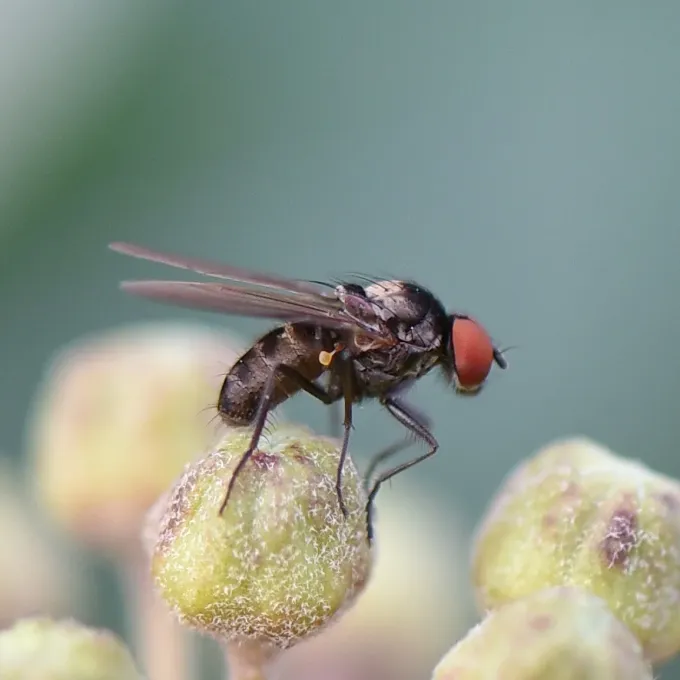
Description
How to identify
The genus Azelia belongs to the family Muscidae (house flies) within the order Diptera. These small flies are commonly found in environments with decomposing organic matter or high moisture levels.
Adult specimens exhibit morphological traits characteristic of the Muscidae family, including specific wing venation and leg structure. They possess specialized mouthparts for feeding on liquids.
Larvae are typical of muscid flies: apodous (legless), tapered, and whitish in color. They reside primarily in soil or dense accumulations of decaying plant materials, acting as saprophages.
Identification of the specific species within the genus Azelia usually requires microscopic examination of the thorax bristles and leg morphology by professional entomologists.
While most Azelia species are decomposers, certain members can occasionally act as opportunistic pests, damaging weakened plant tissues under stress or improper cultivation conditions.
What it damages
The primary damage caused by Azelia occurs in greenhouse operations and fields with high organic matter content. The pest is particularly problematic for seedlings and young vegetables.
Larvae feed on roots and the root collar of seedlings, often leading to wilting, stunted growth, or plant mortality. Such feeding sites are highly susceptible to secondary bacterial and fungal infections.
The risk of infestation increases significantly when the growing medium contains incompletely decomposed manure or compost, which attracts flies for oviposition.
Secondary damage often involves larvae colonizing plants already weakened by other pests or pathogens, further accelerating the degradation process of the plant tissues.
Seedlings grown in high-humidity conditions are especially vulnerable, as larvae remain active in the wet soil medium, continuously affecting the root system development.
When it appears
Adult activity peaks during the spring when temperatures allow for insect development. In greenhouse environments, this can occur throughout the year given favorable microclimates.
The reproductive cycle is rapid, allowing for multiple generations per season. Under optimal conditions, continuous breeding occurs, making it a persistent threat to commercial crops.
Summer heat can temporarily reduce activity in the topsoil if it dries out, but regular irrigation maintains the favorable conditions required for larval survival and development.
Autumn brings migration to overwintering sites such as compost piles, building crevices, or sheltered garden waste, where they remain until the next favorable period.
The persistence of the population is supported by the ability of puparia to withstand various environmental stressors during the non-growing season in soil.
Signs of infestation
Visual symptoms of infestation include general plant weakness, chlorosis (yellowing of lower leaves), and a noticeable lag in growth compared to healthy plants.
Examination of the root system often reveals damaged, rotted tissue. Larvae are typically found in the immediate vicinity of the root collar or within the decomposing root mass.
A high density of adult flies near seedlings or irrigation lines serves as a primary warning sign that the population is expanding and immediate action is required.
Persistent moisture on the soil surface combined with the presence of adult flies often marks the zones of highest larval activity within the greenhouse plot.
Wilting of seedlings that persists despite adequate moisture and the absence of clear fungal disease symptoms is a strong indicator of root-feeding dipteran larvae.
Control measures
The primary control strategy is proper cultural management: using fully decomposed compost and ensuring optimal irrigation to prevent stagnant water in the root zone.
Regular cultivation and loosening of the topsoil layer can disrupt the lifecycle by drying out the surface, making it less attractive for egg-laying and exposing larvae to desiccation.
Yellow sticky traps are highly effective for monitoring and capturing adult flies in greenhouses, providing a means to assess population density and timing for interventions.
In cases of heavy infestation, registered soil-applied insecticides can be used to treat the root zone and suppress larval populations during critical growth stages.
- Crop rotation to break the pest cycle.
- Sterilization of soil mixes before planting.
- Use of entomopathogenic nematodes as biological control.
- Strict sanitation protocols for greenhouse floors and debris removal.
Taxonomy
- Latin name
- Azelia
- Order
- Diptera (flies)
- Family
- Muscidae
- EPPO code
- AZELSP
Discussion
No discussions yet — be the first.