
Austroasca
Austroasca
Description
How to identify
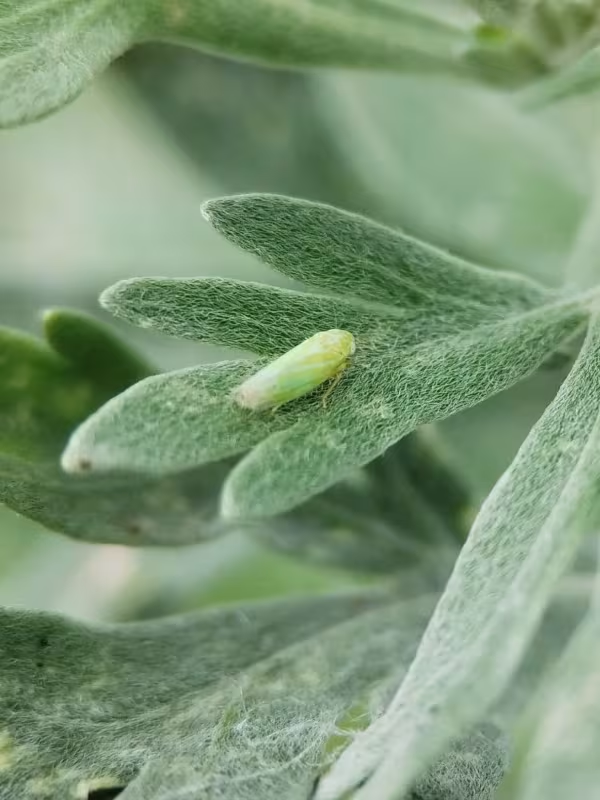
Austroasca belongs to the family Cicadellidae, commonly known as leafhoppers. These insects are small, typically ranging from 2 to 4 mm in length, and are characterized by their slender, wedge-shaped bodies that are often light green in color, aiding their camouflage on plant foliage.
Adults are highly active and possess strong jumping capabilities, often taking flight immediately when plants are disturbed. Their bodies are perfectly adapted for movement among dense vegetation, allowing them to hide effectively on the undersides of leaves.
Nymphs, which pass through several instars, are wingless but otherwise resemble the adults in appearance. They are often lighter in color, sometimes appearing pale yellow or translucent, and can be found feeding in close proximity to their exuviae.
The reproductive cycle involves females laying eggs into the plant tissue, particularly within leaf veins or petioles. This behavior provides the eggs with protection from environmental factors and, partially, from contact insecticides.
The population growth rate of Austroasca is heavily dependent on ambient temperature. During warm and dry seasons, the insect can complete multiple generations in a short timeframe, potentially leading to explosive outbreaks in susceptible crop fields.
What it damages
Austroasca acts as a significant pest for a variety of horticultural and field crops. It is known to impact species such as potatoes, tomatoes, beans, and other economically important plants, causing direct and indirect damage.
The pest feeds by piercing the leaf epidermis and sucking out plant cell sap. This activity removes nutrients and causes the breakdown of chlorophyll, leading to visible chlorotic stippling on the leaves that eventually turns into necrotic patches.
As the feeding continues, the leaves may show signs of severe stress, including wilting, browning, and premature senescence. In severe cases, massive defoliation occurs, which directly disrupts the plant's ability to produce energy through photosynthesis.
A critical aspect of Austroasca damage is its role as a vector for various plant pathogens, including viruses and phytoplasmas. These diseases often cause stunted growth, leaf curling, and severe deformities in developing fruit.
Economic losses arise not only from the decline in total crop yield but also from the reduced quality and marketability of the produce. Plants infested with Austroasca also demonstrate increased susceptibility to other environmental and biotic stressors.
Control measures
Integrated Pest Management (IPM) is essential for controlling Austroasca populations. A key practice involves rigorous weed management, as many wild hosts serve as reservoirs for the pest, allowing it to migrate to crops early in the season.
Monitoring using yellow sticky traps is a standard procedure in commercial cultivation. These traps provide an early warning system, allowing growers to assess population density and timing of migration before the pest causes substantial economic injury.
Biological control options include the introduction of natural enemies such as parasitic wasps or predatory insects. These biological agents can effectively regulate leafhopper populations if utilized during the early stages of the infestation.
When chemical intervention is required, systemic insecticides are usually the most effective tools. Rotating chemical classes is a critical strategy to manage and prevent the development of insecticide resistance in Austroasca populations.
Cultural practices, such as optimizing plant spacing and maintaining healthy soil conditions, can enhance plant vigor and help them better withstand the feeding pressure of leafhoppers. Consistent field scouting remains the most reliable way to prevent large-scale crop damage.
Taxonomy
- Latin name
- Austroasca
- Order
- Hemiptera (bugs, aphids, leafhoppers)
- Family
- Cicadellidae
- EPPO code
- AUSSSP
Discussion
No discussions yet — be the first.