
Glasshouse potato aphid
Aulacorthum solani
Description
How to identify
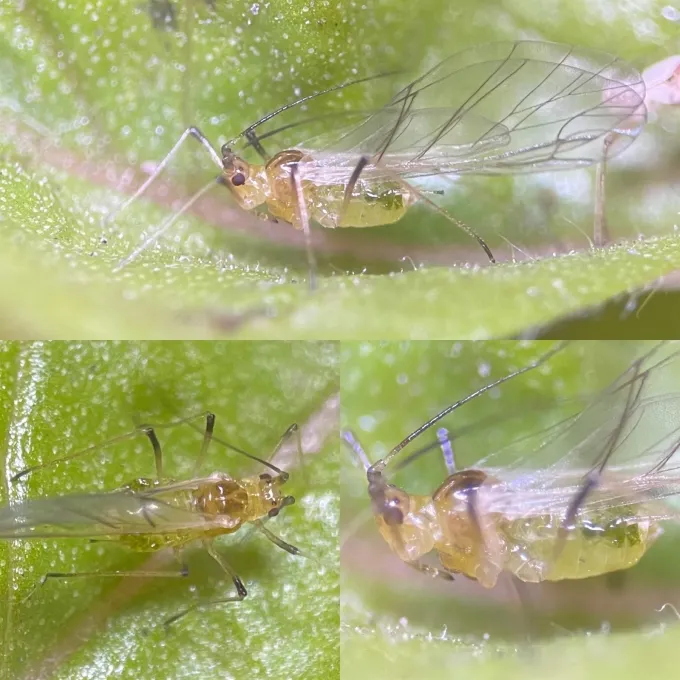
The Glasshouse potato aphid (scientific name: Aulacorthum solani) is a member of the Aphididae family. Adults typically reach 2–3 mm in length and exhibit colors ranging from yellowish-green to orange.
A key identifying feature is the presence of dark-colored patches located at the base of the cornicles (siphunculi) on their abdomen, which distinguishes them from other greenhouse aphid species.
These insects reproduce through parthenogenesis, allowing populations to grow exponentially in protected environments where temperatures remain stable throughout the year.
Both winged and wingless forms exist within the colony; winged aphids are primarily responsible for the rapid dispersal of the pest across different plants in the greenhouse.
They are highly active and can rapidly colonize new plant tissue, making early detection and rapid intervention crucial for effective population management.
What it damages
This species is highly polyphagous, meaning it feeds on a wide variety of plants. Primary targets include tomatoes, potatoes, peppers, and various ornamental greenhouse plants.
By piercing and sucking plant sap, the aphids extract essential nutrients, which leads to the weakening of the host plant and disruption of its natural developmental cycles.
Beyond direct feeding damage, Aulacorthum solani is a significant vector for several plant viruses, including Cucumber Mosaic Virus, which causes severe crop losses.
Affected plants often display stunted growth, reduced internode length, and premature shedding of flower buds, significantly lowering the overall yield of the harvest.
In ornamental crops, the physical damage and subsequent deformation of leaves make the plants commercially unsellable, resulting in direct economic losses for greenhouse owners.
Signs of infestation
The most common sign of an infestation is the curling and twisting of young leaves, particularly at the growing tips (apical meristems) of the plants.
Clusters of aphids can usually be found on the underside of leaves. You may also see shed skins (exuviae), which appear as tiny, white, papery flakes on the foliage.
Aphids excrete a sticky substance known as honeydew. This substance often leads to the growth of sooty mold, a black fungus that covers leaves and hinders photosynthesis.
A decline in flower production or the abortion of fruit sets are late-stage indicators that the infestation has reached a critical level requiring immediate control.
The presence of ants on the plants is a strong indicator of aphid activity, as ants protect the aphids to feed on the sugary honeydew they secrete.
Control measures
Prevention starts with strict greenhouse hygiene, including the removal of weeds around the facility and the cleaning of equipment before planting new crops.
Biological control is highly effective in greenhouse settings; introducing natural predators like the parasitoid Aphidius ervi can keep populations under control without chemicals.
Chemical control should be implemented if populations exceed the economic threshold, focusing on systemic insecticides that are absorbed by the plant tissues.
- Application of systemic insecticides like neonicotinoids where permitted.
- Use of yellow sticky traps to monitor aphid activity and detect arrival.
- Applying insecticidal soaps for early, minor outbreaks to reduce population numbers.
Integrated Pest Management (IPM) practices, such as rotating chemicals to prevent resistance and promoting beneficial insect habitats, are the best long-term solutions.
Taxonomy
- Latin name
- Aulacorthum solani
- Order
- Hemiptera (bugs, aphids, leafhoppers)
- Family
- Aphididae
- EPPO code
- AULASO
Discussion
No discussions yet — be the first.