
Glasshouse potato aphid
Aulacorthum
Description
How to identify
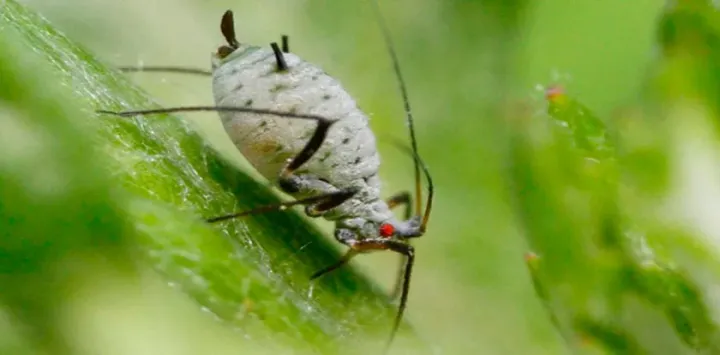
The glasshouse potato aphid (Aulacorthum solani) is a member of the Aphididae family. It is a small, sap-sucking insect characterized by a shiny, yellow-green to brownish-green body that typically reaches 2–3 mm in length.
The most reliable identification feature is the presence of distinctive dark brown spots at the base of the cornicles (the two tubes on the insect's abdomen). Both winged and wingless forms exist within the colony to facilitate rapid reproduction and migration.
What it damages
This pest is a highly polyphagous species capable of feeding on a vast range of host plants. Major targets include solanaceous crops like potatoes, tomatoes, peppers, and various ornamental plants such as begonias and primulas.
Feeding occurs primarily on the undersides of leaves and at the growing points of the plant. By extracting plant sap, the aphid not only weakens the host but also injects saliva that contains viruses, leading to systemic plant infections and malformation.
When it appears
In greenhouse environments, the glasshouse potato aphid reproduces continuously throughout the year. Development is rapid, with one generation being completed in about 7 to 10 days under favorable conditions.
The population consists almost entirely of females that reproduce parthenogenetically. As host plants become overcrowded or their nutritional quality declines, winged adults are produced to fly to neighboring plants and initiate new colonies.
Signs of infestation
The presence of this pest is typically indicated by the curling and yellowing of young leaves. Infected plants show stunted growth and decreased vigor due to the loss of essential nutrients through the aphid's feeding process.
- The accumulation of honeydew on foliage and stems.
- Development of sooty mold fungus on top of the sticky honeydew.
- Deformed or puckered leaves with chlorotic spotting.
- Presence of ants attracted to the sugar-rich honeydew secretions.
Control measures
Effective management requires a combination of monitoring and intervention. Yellow sticky traps should be deployed throughout the greenhouse to detect early infestations and monitor population dynamics.
Biological control agents, such as the parasitic wasp Aphidius ervi, are highly effective against this species. For severe outbreaks, apply systemic insecticides carefully, ensuring that applications target the undersides of leaves where colonies are most concentrated.
Taxonomy
- Latin name
- Aulacorthum
- Order
- Hemiptera (bugs, aphids, leafhoppers)
- Family
- Aphididae
- EPPO code
- AULASP
Discussion
No discussions yet — be the first.