
Atanus perspicillatus
Atanus perspicillatus
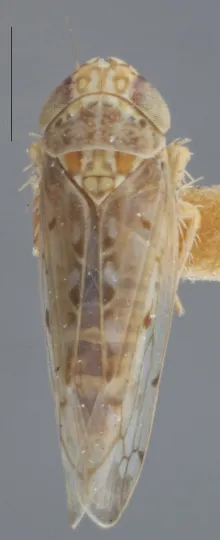
Description
How to identify
Atanus perspicillatus is a species of leafhopper belonging to the family Cicadellidae, order Hemiptera. It is a small insect characterized by its ability to jump and move rapidly across the host plant.
The adult insects have transparent wings with a distinct vein pattern, which provides effective camouflage on green foliage, making them difficult to spot without close inspection.
Nymphs resemble smaller versions of adults but lack fully developed wings. They pass through several developmental stages (instars) while growing on the underside of leaves.
These insects are highly mobile, often shifting to the opposite side of the leaf or jumping away when disturbed, which complicates early detection in field conditions.
Accurate identification of the species often requires professional entomological examination, especially when dealing with mixed populations of leafhoppers in agricultural environments.
What it damages
As a polyphagous pest, Atanus perspicillatus feeds on a wide range of host plants, including various vegetable, industrial, and ornamental crops.
The primary damage is caused by the extraction of phloem sap from plant tissues, which depletes the plant's resources and disrupts vital metabolic processes, including photosynthesis.
Beyond direct feeding damage, this species serves as a vector for various plant pathogens, such as viruses and phytoplasmas, which often cause more severe crop losses than the insects themselves.
Affected plants often show stunted growth, chlorosis (yellowing), and deformed leaves, significantly reducing the overall vigor and yield of the crop.
In cases of severe infestation, the cumulative impact of sap loss and disease transmission can lead to significant economic damage, impacting harvest quality and yield volume.
When it appears
The life cycle of Atanus perspicillatus is highly dependent on ambient temperature, with overwintering individuals becoming active as soon as spring temperatures rise.
Population peaks are typically observed during the summer months when environmental conditions are optimal for rapid reproduction and multiple generation turnovers.
The number of generations per year is determined by the accumulated heat units, allowing the pest to multiply quickly under favorable climatic conditions during the growing season.
As autumn arrives and temperatures drop, the population declines as individuals move to overwintering sites, such as crop debris, weeds, or sheltered wild vegetation.
Monitoring programs should be initiated early in the season, focusing on field edges and sensitive crops to detect colonization before populations reach damaging levels.
Signs of infestation
The first visual signs of infestation are small, light-colored stippling or spotting on the upper leaf surface, resulting from the insect's mouthparts piercing the plant tissue.
Closer inspection of the lower leaf surface usually reveals the presence of nymphs or cast-off exuviae, which serve as clear evidence of a resident population.
Feeding activity is often associated with the excretion of honeydew, which can lead to the subsequent growth of sooty mold on the foliage, further inhibiting plant respiration.
Severe infestations manifest as leaf curling, chlorosis, and the overall yellowing of leaves, which may eventually lead to premature senescence and drop.
- Light-colored chlorotic spots on leaves
- Presence of cast-off exuviae on leaf undersides
- Stunted growth and leaf curling
- Development of sooty mold due to honeydew
Control measures
Effective management requires an integrated approach, starting with the maintenance of clean fields by removing weeds that act as alternate hosts or infection reservoirs.
Crop rotation and spatial separation of fields are essential strategies to reduce the likelihood of heavy colonization by migratory populations of leafhoppers.
Chemical control is applied when monitoring confirms that population levels have crossed established economic thresholds, using targeted systemic insecticides where possible.
Application timing is critical; spraying during cooler times of the day when the insects are less active ensures better coverage and higher efficiency of the treatment.
Preserving natural predators and parasitoids is a key component of sustainable management, as biological control can often suppress population growth without the need for intensive chemical use.
Taxonomy
- Latin name
- Atanus perspicillatus
- Order
- Hemiptera (bugs, aphids, leafhoppers)
- Family
- Cicadellidae
- EPPO code
- ATANPE
Discussion
No discussions yet — be the first.