
Asymmetrasca
Asymmetrasca decedens
Description
How to identify
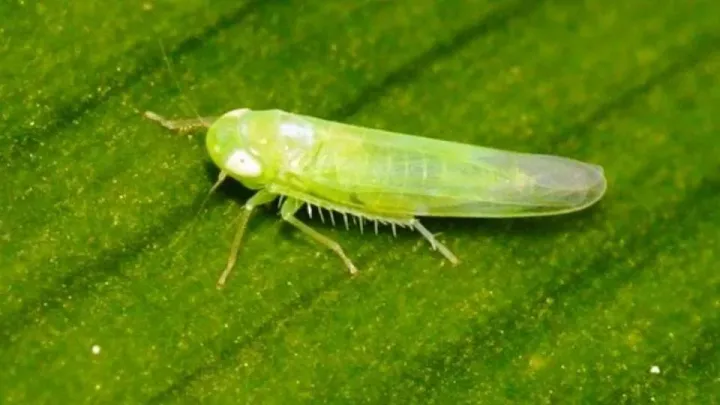
Asymmetrasca decedens is a small leafhopper species belonging to the family Cicadellidae, order Hemiptera. These insects are well-adapted to warm environments and are found across many agricultural regions.
The adult insect has a slender, wedge-shaped body typically measuring about 2.5 to 3 mm in length. Its color is generally light green to yellowish, which provides excellent camouflage.
Nymphs are smaller than adults and lack fully developed wings. They are extremely active and tend to move sideways or hop rapidly when disturbed on the underside of leaves.
The life cycle consists of egg, five nymphal instars, and the adult stage. In favorable temperatures, the life cycle is rapid, allowing for multiple overlapping generations per year.
Correct identification often involves examining the specific morphological traits of the male genitalia, but general field identification relies on host plant observations and characteristic leafhopper activity.
What it damages
This pest is a highly polyphagous insect, meaning it feeds on a wide variety of plant species. It is a major pest for solanaceous crops, including tomatoes, peppers, potatoes, and eggplants.
Cucurbitaceous crops like cucumbers and melons are also frequently attacked. Additionally, the pest can impact fruit orchards by feeding on the soft tissues of developing shoots.
The primary damage is caused by the piercing-sucking mouthparts used to extract plant sap. This process removes essential nutrients and moisture, weakening the plant's overall vitality.
Beyond physical damage, the insect is known to vector various phytoplasmas, leading to diseases that can cause stunting, leaf curling, and overall crop failure.
In greenhouses, the absence of natural predators often leads to outbreaks, resulting in severe economic losses if the population is not monitored closely.
Signs of infestation
The first signs of infestation are light-colored stippling or spotting on the leaves, caused by the localized depletion of chlorophyll due to insect feeding.
As the infestation progresses, leaves may become chlorotic, curl upwards, and eventually turn brown or necrotic. Plants show stunted growth and a noticeable reduction in leaf area.
Exuviae, or cast-off skins from nymphs, are commonly found on the undersides of leaves, indicating that the population is actively breeding and completing its development on the plant.
In advanced cases, the foliage may look "burned," and the plants may drop leaves prematurely. This significantly impairs the plant's ability to produce healthy fruits.
Increased insect activity is often visible when shaking the leaves, causing the small green leafhoppers to fly or hop away from the disturbance.
Control measures
Sanitation is a critical step in control; eliminating host weeds surrounding the fields prevents the pest from migrating into the main crop area.
Yellow sticky traps are highly recommended for monitoring purposes, as they help identify the arrival and density of the pest before an outbreak occurs.
Chemical control involving systemic insecticides is often necessary when populations exceed economic thresholds. Choosing products that target sucking pests is essential.
Biological control methods, including the release of natural predators such as lacewings or minute pirate bugs, can help manage populations without heavy reliance on chemicals.
Rotating chemical classes is vital to prevent the development of insecticide resistance, as these leafhoppers are known to adapt to frequently used compounds over time.
Taxonomy
- Latin name
- Asymmetrasca decedens
- Order
- Hemiptera (bugs, aphids, leafhoppers)
- Family
- Cicadellidae
- EPPO code
- EMPODC
Discussion
No discussions yet — be the first.