
Asymmetrasca
Asymmetrasca
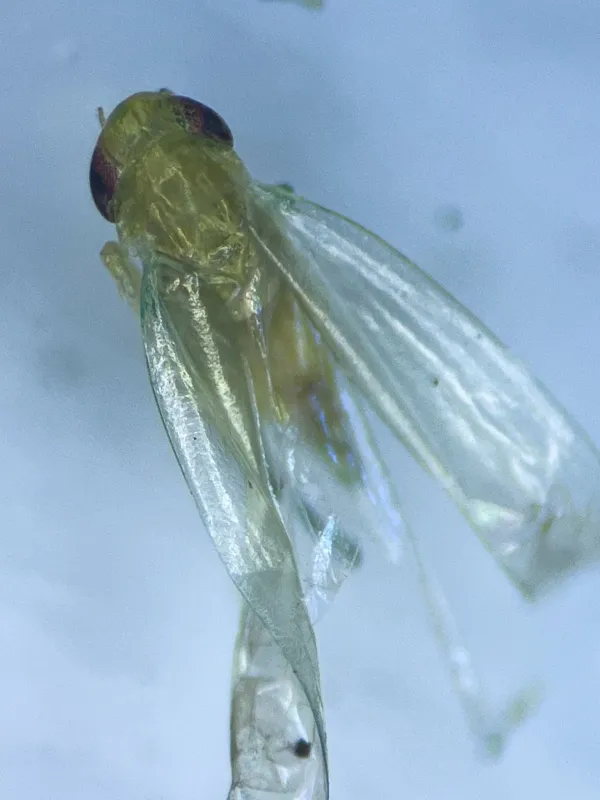
Description
How to identify
Asymmetrasca is a genus of insects belonging to the family Cicadellidae (leafhoppers) within the order Hemiptera. The most significant species in terms of economic damage is Asymmetrasca decedens.
Adult insects are small, usually ranging from 2.5 to 3.5 mm in length, with a wedge-shaped body. They typically exhibit a pale green or yellowish coloration, which provides camouflage on host plant foliage.
The life cycle encompasses eggs, five nymphal instars, and the adult stage. Nymphs closely resemble adults but lack wings and exhibit a characteristic side-stepping motion when disturbed.
These insects possess piercing-sucking mouthparts, which they use to penetrate the epidermis of plant leaves and stems to extract sap, disrupting the plant's vascular and metabolic functions.
Females lay their eggs internally within plant tissue, providing a protected environment for the developing embryos and ensuring immediate access to food upon hatching.
What it damages
Asymmetrasca is a polyphagous pest, meaning it attacks a wide variety of plant species, including vegetables, field crops, fruit-bearing plants, and various ornamentals.
Key agricultural crops prone to infestation include cotton, potatoes, tomatoes, eggplants, cucumbers, and grapevine, among others grown in temperate and warm climates.
The primary damage is caused by the extraction of large volumes of phloem sap, which weakens the plant, reduces vigor, and leads to stunted growth and reduced yields.
Beyond direct feeding damage, these leafhoppers act as important vectors for phytoplasmas and viruses, which can cause severe stunting, leaf curling, and total crop failure.
Infestations typically lead to significant leaf senescence and premature leaf drop, which severely hinders the plant's ability to photosynthesize and mature fruit properly.
When it appears
The activity of Asymmetrasca begins in the spring, triggered by rising temperatures that allow the insects to emerge from their overwintering sites on weeds or crop residues.
Populations tend to reach their peak during the hot summer months, as warm, dry conditions accelerate the developmental rate of nymphs and increase the fecundity of females.
Multiple generations can occur within a single growing season, depending on the climatic conditions, often resulting in a continuous presence of the pest from late spring through autumn.
As temperatures drop in the autumn, adult leafhoppers seek sheltered areas, such as leaf litter, bark crevices, or soil debris, to enter a period of overwintering diapause.
Effective scouting during the early stages of the growing season is crucial to detect initial colonizations before populations reach levels that cause irreversible damage.
Signs of infestation
Early symptoms of an infestation often include small, chlorotic stippling marks on leaves caused by the insects feeding on individual mesophyll cells.
As the population density increases, the margins of the leaves begin to yellow and eventually turn brown, a condition frequently referred to as "hopperburn" or marginal necrosis.
Physical inspection of the underside of leaves typically reveals the presence of mobile nymphs and adults, as well as their cast skins (exuviae) left behind after molting.
Leaves may show signs of curling, crinkling, or severe deformation, and the presence of sticky honeydew on the foliage often encourages the growth of black sooty mold.
Overall plant development is noticeably retarded, and in severe cases, the plants may wilt and lose their foliage entirely, leading to a significant loss of harvestable produce.
Control measures
Integrated Pest Management (IPM) is essential for controlling Asymmetrasca, focusing on minimizing chemical reliance through cultural and biological interventions.
Sanitation practices, including the removal of weeds and crop debris from the field and surrounding areas, significantly reduce overwintering sites and early-season host plants.
Natural enemies play a vital role in population suppression; predators like spiders, lacewings, and various hemipteran bugs should be conserved to manage the leafhopper numbers naturally.
- Application of systemic insecticides during early nymphal stages to interrupt the reproductive cycle and prevent population explosions.
- The use of yellow sticky traps to monitor adult flight activity and density, which helps time the application of controls more effectively.
Chemical treatments should be rotated using different modes of action to prevent the development of insecticide resistance, ensuring long-term efficacy in protecting high-value crops.
Taxonomy
- Latin name
- Asymmetrasca
- Order
- Hemiptera (bugs, aphids, leafhoppers)
- Family
- Cicadellidae
- EPPO code
- ASYMSP
Discussion
No discussions yet — be the first.