
Bamboo aphid
Astegopteryx bambusae
Description
How to identify
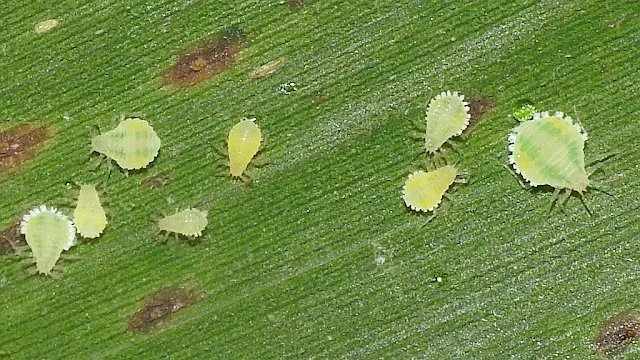
The bamboo aphid, Astegopteryx bambusae, belongs to the Hormaphididae family within the Hemiptera order. These are tiny insects often found on the underside of leaves.
The insect is known for its polymorphic life cycle, meaning different generations may exhibit different physical forms and behaviors throughout the season.
Adult aphids are often covered with white wax secretions or filaments, which make them look like tufts of fluff, serving as a defense and camouflage mechanism.
The colony structure is complex, often involving both winged forms for migration and wingless forms that remain on the host plant for reproduction.
Due to their small size and ability to hide inside rolled leaf margins, a magnifying glass is essential for early detection in bamboo groves.
What it damages
As a sap-sucking pest, the bamboo aphid feeds on the cell contents of young shoots and leaves, causing a significant loss of vitality in the host plant.
Damage manifests as leaf curling, yellowing, and stunted growth, which severely compromises the aesthetic and structural health of the bamboo.
The extraction of sap disrupts the plant's metabolic functions, weakening its immune system and making it susceptible to secondary environmental stresses.
Heavy infestations lead to leaf senescence and premature drop, which can stunt the development of new bamboo culms and decrease yield.
The accumulation of honeydew and subsequent growth of sooty mold block light absorption on the leaf surface, further inhibiting photosynthesis.
When it appears
Population growth is most aggressive during the warm spring and summer months when bamboo shoots are actively developing.
Migration of winged adults typically occurs when host plant quality declines or when colonies reach high densities, leading to the colonization of nearby plants.
In greenhouse or indoor conditions, the species can bypass seasonal cycles, maintaining active colonies throughout the entire year.
Winter survival is typically achieved through the egg stage, which remains on the bamboo bark or nodes until environmental conditions trigger hatching.
Humidity levels play a critical role, as drought conditions can sometimes exacerbate aphid outbreaks by stressing the host plant.
Signs of infestation
The presence of honeydew, a sticky substance excreted by the aphids, is a primary indicator of an ongoing infestation on the bamboo foliage.
Black sooty mold growth on leaves is a secondary symptom caused by the colonization of fungi on the aphid’s sugary secretions.
Increased ant activity on the culms is a reliable sign, as ants often protect and farm the aphids to collect the honeydew.
Leaf curling and the appearance of pale, discolored spots indicate localized feeding damage where aphids have been concentrated for some time.
White powdery or waxy residues on stems and nodes are diagnostic features of an Astegopteryx bambusae colony presence.
Control measures
Systemic insecticides are highly effective as they move through the plant's vascular system, ensuring the aphid ingests the toxin during feeding.
For smaller infestations, manual removal using a strong water jet or an insecticidal soap solution can significantly reduce colony numbers.
Encouraging biological control agents, such as lady beetles, lacewings, and parasitic wasps, is a sustainable long-term strategy for grove management.
Avoid over-fertilizing with nitrogen, as this promotes soft, succulent growth that is highly attractive and nutritious for aphid development.
Regular monitoring of young shoots, especially during the peak growing season, is essential for early intervention and preventing widespread damage.
Taxonomy
- Latin name
- Astegopteryx bambusae
- Order
- Hemiptera (bugs, aphids, leafhoppers)
- Family
- Aphididae
- EPPO code
- ASPXBM
Discussion
No discussions yet — be the first.