
Astegopteryx
Astegopteryx
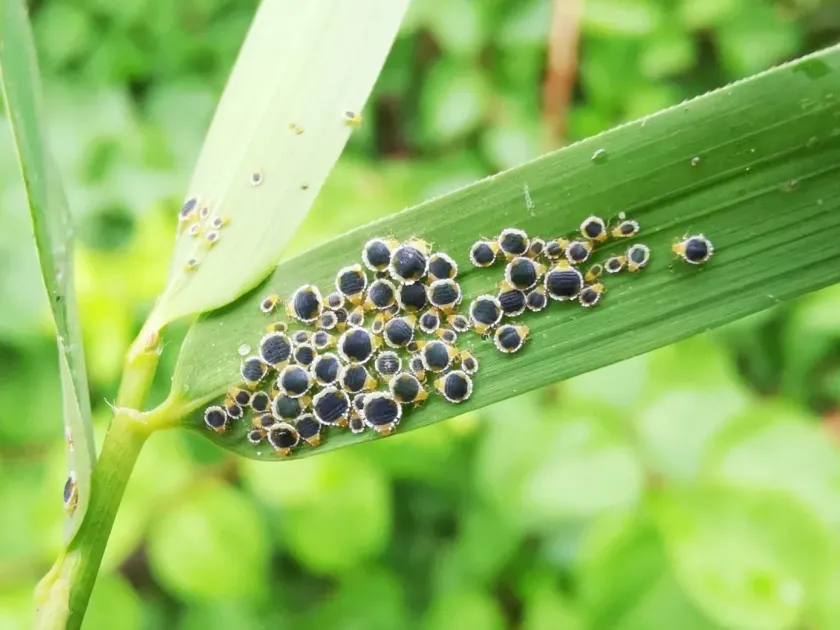
Description
How to identify
Astegopteryx is a genus of aphids belonging to the Hormaphididae family. These insects exhibit a complex lifecycle, often involving alternation between different host plants during the season.
Adults are frequently covered in waxy secretions that serve as protection against environmental stressors and predators. These are small insects that establish dense colonies on specific parts of host plants.
The reproduction cycle includes both sexual and asexual generations. This biological strategy allows the species to adapt effectively to changing climates and ensures overwintering success.
Entomologists typically identify this species through microscopic analysis of key morphological features, such as the structure of antennae and siphons. In field settings, the waxy coating is a diagnostic trait.
This species maintains a mutualistic relationship with ants, which protect the aphid colonies in exchange for the honeydew they produce. This symbiosis makes pest management more challenging.
What it damages
The primary host plants for Astegopteryx are various bamboo species. The insects feed on phloem sap, which significantly depletes the plant's resources and disturbs its metabolic processes.
Colonies usually settle on the underside of leaves and within shoot sheaths. Heavy infestations cause leaf deformation and stunted growth of young bamboo shoots.
As a byproduct of feeding, the aphids excrete honeydew, which creates a substrate for sooty mold. This mold covers the leaves in a black layer, drastically reducing the efficiency of photosynthesis.
Affected plants lose their ornamental value and become susceptible to secondary pathogens. In nursery environments, this can lead to the widespread loss of nursery stock.
Continued sap-sucking throughout the growing season weakens the plant's overall health and reduces its cold hardiness, which is especially detrimental in temperate regions.
Signs of infestation
The first signs of infestation include leaf curling and yellowing. Inside the curled leaves, one can usually find clusters of aphids protected from external conditions.
A distinctive white, cotton-like waxy secretion on the stems and leaf sheaths is a primary indicator of an Astegopteryx infestation. This appearance sets it apart from many other aphid species.
The presence of sooty mold, appearing as black soot on foliage, confirms a long-term infestation that has been producing excess honeydew for a significant period.
Increased ant activity on the stems is a reliable indicator that aphid colonies are present nearby, as ants actively farm the aphids for their sweet secretions.
The cessation of growth at the apex of new shoots and general loss of plant vigor are clear indicators of severe sap loss that requires immediate agronomic intervention.
Control measures
Integrated pest management starts with maintaining optimal plant health. Healthy, properly fertilized bamboo plants are naturally more resilient to aphid attacks.
Mechanical removal of heavily infested shoots is an effective way to suppress initial populations. This approach is best used at the first sign of infestation in early spring.
Systemic insecticides are the most effective chemical method for control. Products containing imidacloprid or similar active ingredients are highly effective against sap-sucking insects.
Biological control, including the introduction of natural predators like ladybugs, lacewings, and hoverflies, is a sustainable approach for managing populations in garden environments.
Limiting ant access to the colonies by using sticky barriers on stalks can significantly disrupt the aphid-ant relationship, making the aphids more vulnerable to natural predators.
Taxonomy
- Latin name
- Astegopteryx
- Order
- Hemiptera (bugs, aphids, leafhoppers)
- Family
- Aphididae
- EPPO code
- ASPXSP
Discussion
No discussions yet — be the first.