
Arboridia
Arboridia
Description
How to identify
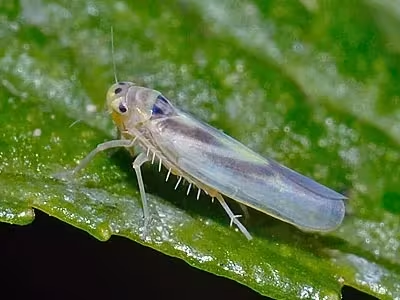
Arboridia belongs to the family Cicadellidae (leafhoppers) within the order Hemiptera. These are tiny insects, with adult body lengths typically ranging from 3 to 4 millimeters.
Their coloration varies from pale yellow to greenish, often featuring distinct dark spots or stripes on the pronotum and wings, which provides excellent camouflage on the undersides of leaves.
Nymphs resemble the adults but are smaller, lack fully developed wings, and are generally lighter in color. They are highly mobile and scatter rapidly when disturbed.
These insects undergo incomplete metamorphosis (hemimetaboly), progressing through egg, nymph, and adult stages. Adults overwinter in leaf litter, debris, or bark crevices.
In warm climates, the pest can complete several generations within a single growing season, which significantly complicates efforts to maintain low population levels.
What it damages
Grapevines are the primary host for Arboridia. These pests prefer to colonize the undersides of leaves, where they feed by sucking sap from plant tissues.
In addition to grapes, various Arboridia species attack a wide range of woody plants and shrubs, including many ornamental and fruit-bearing varieties found in residential gardens.
By consuming cell sap, Arboridia infestations disrupt the plant's photosynthetic process, ultimately leading to reduced vigor and declining yields in infested crops.
Significant damage often occurs during hot, dry summers when populations expand rapidly and host plants are already stressed by drought conditions.
Heavy infestations lead to reduced sugar content in berries and poor fruit quality. Furthermore, the damage hinders the proper maturation of vine canes, which is vital for winter survival.
Signs of infestation
The first visual sign of an infestation is the appearance of tiny white spots or "stippling" on the leaf surface, which eventually merge into large discolored areas.
Severely affected leaves may turn yellow, develop necrotic edges, and drop prematurely. As a result, the overall health and aesthetic appeal of the plant are significantly compromised.
Inspecting the underside of the leaves reveals numerous exuviae (cast-off larval skins), which are left behind each time the insect molts during its development.
Adult leafhoppers are known for their rapid dispersal behavior; they will quickly take flight or jump when the plant foliage is shaken or touched.
- Stippling or mottled white spots on leaves.
- Yellowing and premature leaf senescence.
- Presence of discarded white larval skins on leaf undersides.
- Sudden dispersal of adult insects upon physical contact.
Control measures
Cultural control practices include the thorough cleanup and destruction of fallen leaves and organic debris, as these provide critical overwintering sites for the insects.
Effective canopy management, such as thinning shoots and suckering, improves air circulation within the vine, creating an environment less favorable for pest reproduction.
Biological control involves promoting native beneficial insects, such as predatory bugs and parasitic wasps, which can help naturally regulate Arboridia populations.
When infestation levels reach an economic threshold, systemic insecticides may be necessary. Applications should be timed before flowering or after harvest to ensure safety.
Targeted application is crucial; sprays must be directed toward the undersides of the leaves where nymphs congregate and are most susceptible to chemical treatment.
Taxonomy
- Latin name
- Arboridia
- Order
- Hemiptera (bugs, aphids, leafhoppers)
- Family
- Cicadellidae
- EPPO code
- ARBOSP
Discussion
No discussions yet — be the first.