
Tragopogon aphid
Appelia tragopogonis
Description
How to identify
The Tragopogon aphid (Appelia tragopogonis) is a member of the order Hemiptera and the family Aphididae. It is a highly specialized species that primarily targets plants within the Asteraceae family.
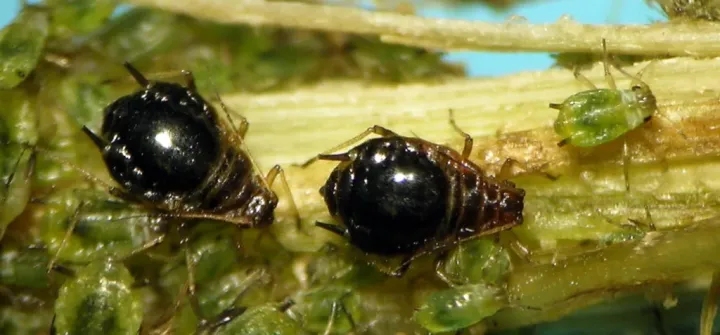
Adults and nymphs possess piercing-sucking mouthparts designed to penetrate plant tissues. They often appear in colonies, with colors ranging from pale green to brownish, providing effective camouflage against host stems.
The life cycle involves both sexual and asexual reproduction, with the asexual phase (parthenogenesis) allowing for explosive population growth during the active growing season.
Eggs serve as the primary overwintering stage, usually attached to the plant debris or the base of host plants to withstand harsh winter conditions.
Their colonial lifestyle ensures that they can quickly monopolize plant resources, often causing severe stress to the host within a short timeframe.
What it damages
The primary hosts of this aphid are species of the genus Tragopogon (goatsbeard). Under favorable conditions, the pest can also spread to related Asteraceae species.
Aphids inflict damage by feeding on nutrient-rich phloem sap, which deprives the plant of energy required for robust growth and reproductive development.
This species is known to transmit various plant viruses, which can lead to systemic infections, leaf curling, and overall stunted growth throughout the crop.
The accumulation of honeydew (aphid excrement) promotes the growth of sooty mold, a dark fungal layer that covers the foliage and hinders essential photosynthesis.
During heavy infestations, the reproductive organs are severely affected, leading to bud abortion and a significant decrease in total seed production.
Signs of infestation
Visual identification usually begins with the curling and yellowing of young, tender leaves, which are the preferred feeding sites for aphid colonies.
A sticky, shiny residue on leaves and stems, known as honeydew, is a classic sign of infestation that is often visible before the insects themselves are spotted.
The constant presence of ants patrolling the plants is a strong indicator of aphid presence, as ants protect the colony to harvest the sugary secretions.
Plants may show signs of premature wilting during warm periods, as the loss of sap impairs the plant's ability to regulate its internal water balance.
Inspecting the undersides of leaves will reveal dense clusters of aphids, which act as the epicenter for the spread of the colony across the entire plant.
Control measures
Integrated Pest Management (IPM) is essential for effective control, starting with cultural practices like removing weed hosts and clearing crop debris post-harvest.
Chemical control involving systemic insecticides is often required for large-scale infestations to ensure the active ingredients reach the aphids through the plant's vascular system.
Encouraging biological control by fostering habitats for natural predators like ladybugs, lacewings, and hoverflies can provide long-term population stability.
- Regular monitoring with yellow sticky traps to detect early migration.
- Application of horticultural soaps or neem-based oils for smaller plants.
- Ensuring proper irrigation to prevent water-stressed plants, which are more susceptible.
Timely field inspections are crucial, as the reproductive rate of the Tragopogon aphid allows for massive outbreaks if left untreated during the critical growth stages.
Taxonomy
- Latin name
- Appelia tragopogonis
- Order
- Hemiptera (bugs, aphids, leafhoppers)
- Family
- Aphididae
- EPPO code
- APPETR
Discussion
No discussions yet — be the first.