
Aploneura
Aploneura
Description
How to identify
Aploneura is a genus of aphids belonging to the family Pemphigidae. These insects are characterized by a complex life cycle that involves both woody hosts, such as pistachios, and herbaceous plants, particularly grasses.
The insects are typically small, with adults exhibiting an oval body shape and short antennae. Their coloration usually ranges from pale green to dark brown, often covered by a protective waxy powder.
Identification is frequently complicated by their subterranean lifestyle during the summer months, making them hard to detect without inspecting the root systems of the host plants.
The life cycle involves an alternation of asexual reproduction on herbaceous plants and sexual reproduction on the primary woody host.
Agronomists identify these pests by their specific feeding behavior and the characteristic white waxy secretions left behind in the soil near the root zone.
What it damages
On pistachio trees, Aploneura aphids cause the formation of leaf galls, which significantly impair the tree's overall vigor and photosynthetic ability.
When they migrate to grasses, they feed on the roots, causing nutrient depletion and a marked decline in the health of the plant.
Root damage results in stunted growth, reduced tillering, and increased vulnerability to soil-borne fungal pathogens that exploit the aphid-damaged tissues.
The cumulative effect of their feeding can lead to significant yield losses in cereal crops and agricultural pastures, especially during drought years.
Furthermore, these aphids can serve as vectors for various plant viruses, adding a secondary layer of risk to the infected crop.
When it appears
The life cycle begins in early spring with the emergence of fundatrices from eggs that have overwintered in bark crevices on the primary host tree.
As the season progresses, winged forms (alatae) develop and migrate to secondary herbaceous hosts to establish summer colonies.
Peak infestation on roots usually occurs during mid-to-late summer, coinciding with optimal temperature conditions for the aphid's rapid population growth.
In autumn, a reverse migration occurs, bringing the insects back to their primary woody hosts to deposit eggs for the upcoming winter.
Warm and dry spring weather conditions often trigger earlier migration and more severe infestations on secondary host crops.
Signs of infestation
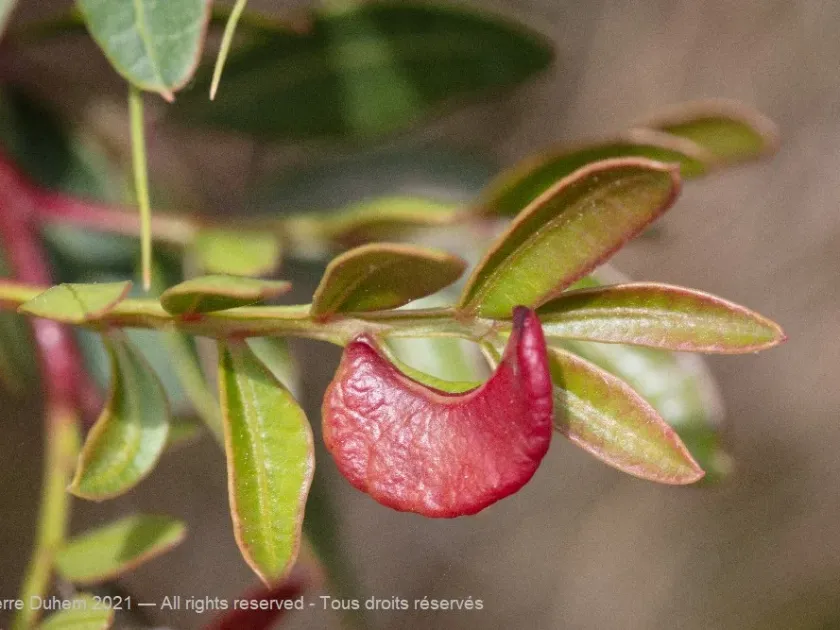
On pistachio trees, the most visible signs are the distorted, reddish-tinted leaf galls that appear shortly after bud break.
On grasses, the presence of the pest is indicated by a general loss of vigor, yellowing of foliage, and premature wilting during dry periods.
Digging near the base of the plant reveals white, powdery flocculent secretions, which are characteristic of the aphid's protective wax production.
Increased ant activity around the root zone is a strong behavioral signal that aphids are being farmed by ants for their honeydew secretions.
Root inspection during the vegetative stage often reveals clustered colonies of aphids attached to the primary and secondary lateral roots.
Control measures
Effective management requires a multi-pronged approach that integrates chemical, cultural, and biological control methods to suppress populations.
- Implementing strict spatial isolation between susceptible tree orchards and field crops.
- Using systemic soil insecticides to treat infested areas during the peak migration window.
- Maintaining field hygiene by removing alternative grass hosts to prevent summer population build-up.
- Enhancing biological control by protecting natural predators like ladybird beetles and lacewing larvae in the agroecosystem.
Regular scouting and early detection are crucial, as uncontrolled infestations can rapidly multiply and cause irreparable damage to the crop's root system.
Taxonomy
- Latin name
- Aploneura
- Order
- Hemiptera (bugs, aphids, leafhoppers)
- Family
- Aphididae
- EPPO code
- APLNSP
Discussion
No discussions yet — be the first.