

Description
How to identify
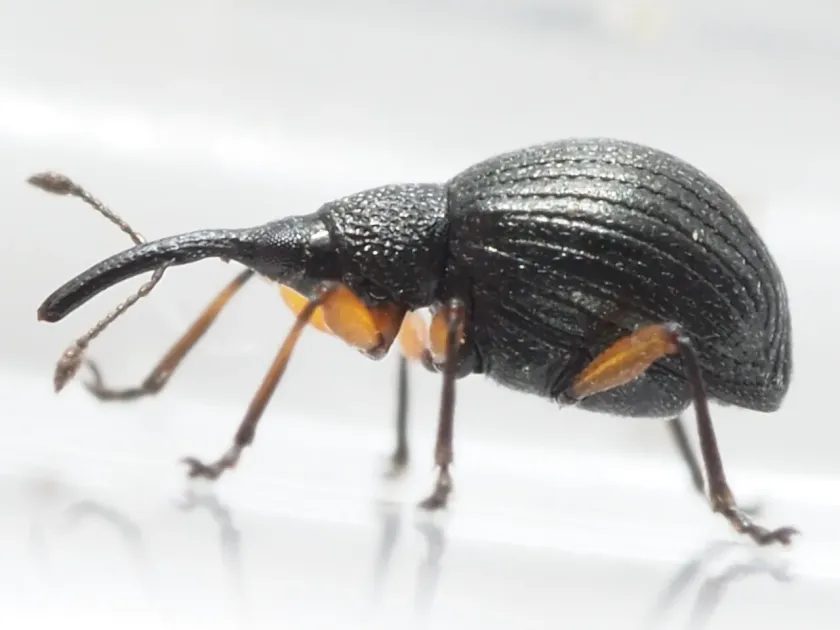
The clover seed weevil (Apion trifolii) belongs to the Curculionidae family of the order Coleoptera. Adult beetles are small, typically ranging from 2 to 3 millimeters in length, with a distinct elongated rostrum.
The body is generally black with a subtle metallic or greenish sheen. The shape is pear-like, and the surface is covered with sparse, fine hairs that are characteristic of this species under magnification.
The larvae are legless, slightly curved, and white or yellowish in color with a dark brown head. They are specifically adapted to feed and develop within the tightly packed tissues of flower heads.
Eggs are extremely small, oval-shaped, and pale yellow. Females deposit them inside the developing buds or flowers of clover plants, ensuring the larvae are positioned directly in their food source.
The pupae are also light-colored and develop within the damaged generative organs of the plant, remaining hidden until the adult beetle emerges to exit the flower head.
What it damages
This pest specifically targets clover crops (Trifolium spp.), causing significant losses in seed yield. The larvae are the primary cause of damage by consuming developing seeds.
Adult beetles feed on the leaves in early spring, creating small, visible holes in the foliage. While this rarely kills the plant, it stresses young growth during the critical early season.
The larvae bore into the developing seed heads, feeding on the ovary and the forming seeds. This destruction prevents proper seed development and reduces the overall harvest volume.
High infestation levels can result in the loss of up to 50–70% of the potential seed yield. Such damage severely compromises the economic viability of seed production fields.
Affected flower heads often turn brown and dry up prematurely. Farmers observing "empty" or underdeveloped clover heads during the harvest season are likely dealing with seed weevil activity.
When it appears
The clover seed weevil overwinters as an adult in the soil, leaf litter, or nearby hedgerows. They emerge when temperatures reach approximately 10-12 degrees Celsius in the spring.
The emergence period typically aligns with the early vegetative growth of clover. After a period of initial feeding, the beetles move on to mating and finding suitable buds for egg-laying.
The egg-laying phase coincides with the budding stage of the clover. The larvae hatch and develop within the buds, feeding for several weeks as the plant matures.
The full life cycle, from egg to adult, lasts between 30 and 45 days depending on the climate. In many regions, the species completes one or two generations per growing season.
By late summer, the new generation of adults emerges. They feed on the remaining foliage for a short period before seeking shelter for the upcoming winter hibernation.
Signs of infestation
The earliest signs of an infestation are small, circular holes in the clover leaves, often referred to as "shot-hole" damage, caused by the feeding adults.
Distorted, stunted, or premature browning of flower heads is a clear indicator that larvae are feeding internally. These heads often fail to produce viable seeds.
Careful dissection of suspected flower heads will reveal the presence of larvae or the hollowed-out remains of seeds and floral parts.
A significant reduction in seed weight during processing is a definitive sign of past infestation, as the damage to the seeds significantly reduces total weight.
Using a sweep net is an effective scouting method to determine adult population levels. Monitoring should intensify as the crop reaches the late bud stage.
Control measures
Effective management relies on cultural practices, including crop rotation and ensuring sufficient distance between old and new clover fields to disrupt the pest's cycle.
Harvesting clover for seed slightly earlier than usual can help kill the larvae before they emerge, effectively reducing the pest population for the next season.
Deep autumn plowing of fields helps destroy the overwintering sites of the adults, significantly reducing the pressure on the subsequent crop.
Chemical control involving insecticides is effective if applied during the late budding stage, but must be timed to avoid harming pollinators like bees.
Adherence to integrated pest management (IPM) guidelines is essential to ensure that chemical interventions are used only when necessary, protecting beneficial insect populations.
Content graph
Connections · Clover seed weevil
Most often together:
Marketplace
Products · 1
Biology
Taxonomy
- Latin name
- Apion trifolii
- Order
- Coleoptera (beetles)
- Family
- Apionidae
- EPPO code
- APIOAE
Community
Discussion
No discussions yet — be the first.