
Aphrodes bicinctus
Aphrodes bicinctus
Description
How to identify
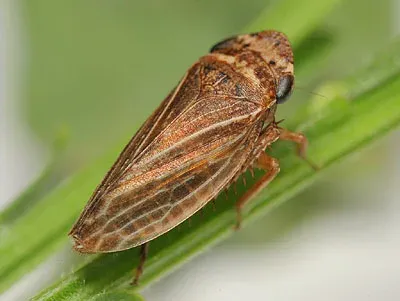
Aphrodes bicinctus is a species of leafhopper belonging to the family Cicadellidae within the order Hemiptera. Adult insects typically reach 5 to 7 mm in length and feature a robust body with two characteristic pale or dark transverse bands.
The head is relatively broad with a distinct anterior margin, and the eyes are large and well-developed. The coloration ranges from yellowish-grey to brownish, providing excellent camouflage on various host plants.
Nymphs resemble the adults in appearance but are significantly smaller and lack developed wings. They tend to lead a secluded lifestyle, usually dwelling on the undersides of leaves or near the stem base.
The development of this pest occurs via incomplete metamorphosis, moving through egg, nymph, and adult stages. This life cycle allows the species to propagate efficiently under favorable weather conditions.
For accurate identification, agronomists often use sweep nets to collect samples from the vegetation, which helps estimate the population density in the fields.
What it damages
Aphrodes bicinctus is a polyphagous pest that affects a wide range of plants, including cereal crops, legumes, and various perennial grasses found in meadows and pastures.
Although wild grasses are their primary food source, these leafhoppers readily migrate to agricultural crops when their population densities are high, creating localized infestation patches.
They damage crops by sucking sap from the plant tissues, which causes a significant loss of vitality, stunted growth, and a reduction in the overall biomass of the plant.
Beyond direct mechanical damage, this leafhopper is a known vector for phytoplasma and viral diseases, which can result in severe yield losses even if the insect population is low.
Infested plants often show signs of physiological decline, which impacts their ability to form healthy grains or produce sufficient green mass for harvesting.
When it appears
The life cycle of Aphrodes bicinctus generally consists of one or two generations per year, depending on the climatic conditions and the regional temperature profile.
Peak adult activity is typically observed during the summer months, specifically June and July, which represent the most favorable window for their reproduction and development.
These pests generally overwinter at the egg stage, laying their eggs within plant tissues or under organic debris, which protects them from extreme winter temperatures.
The activity of both nymphs and adults is highly correlated with humidity and temperature; arid conditions in irrigated fields can often lead to rapid population spikes.
By the end of the summer season, the adults complete their reproductive cycle, ensuring that the overwintering eggs are deposited to persist until the next growing season.
Signs of infestation
One of the earliest signs of Aphrodes bicinctus infestation is leaf chlorosis, which occurs as a result of the insect feeding on the plant's nutrient-rich sap.
Careful inspection may reveal curled or deformed leaves, often accompanied by spotting or mosaic-like patterns that serve as indicators of viral infections transmitted by the leafhoppers.
Plants under high pressure from this pest show reduced vigor, stunted development, and a yellowed appearance compared to their healthy counterparts in the same field.
The presence of honeydew on leaf surfaces may encourage the growth of sooty mold, further impairing the plant's photosynthesis and overall health status.
Upon disturbing the plants, the quick jumping movement of adults is a reliable visual indicator of a population presence within the crop canopy.
Control measures
The primary control method is cultural: keeping field margins free of weeds is crucial, as these areas serve as essential reservoirs for the leafhopper population.
Implementing crop rotation and maintaining spatial isolation between field crops and perennial grasslands significantly reduces the risk of migration to the farm.
Chemical protection involves the application of systemic insecticides that are effective against sucking insects, typically timed during peak infestation periods.
Biological control strategies include the encouragement of natural predators, such as predatory bugs or parasitic wasps, which can help regulate leafhopper numbers.
- Monitor field populations using yellow sticky traps
- Choose crop varieties with known tolerance or resistance
- Ensure timely field scouting to intervene before damage reaches economic thresholds
Taxonomy
- Latin name
- Aphrodes bicinctus
- Order
- Hemiptera (bugs, aphids, leafhoppers)
- Family
- Cicadellidae
- EPPO code
- APROBI
Discussion
No discussions yet — be the first.