
Aphrodes
Aphrodes
Description
How to identify
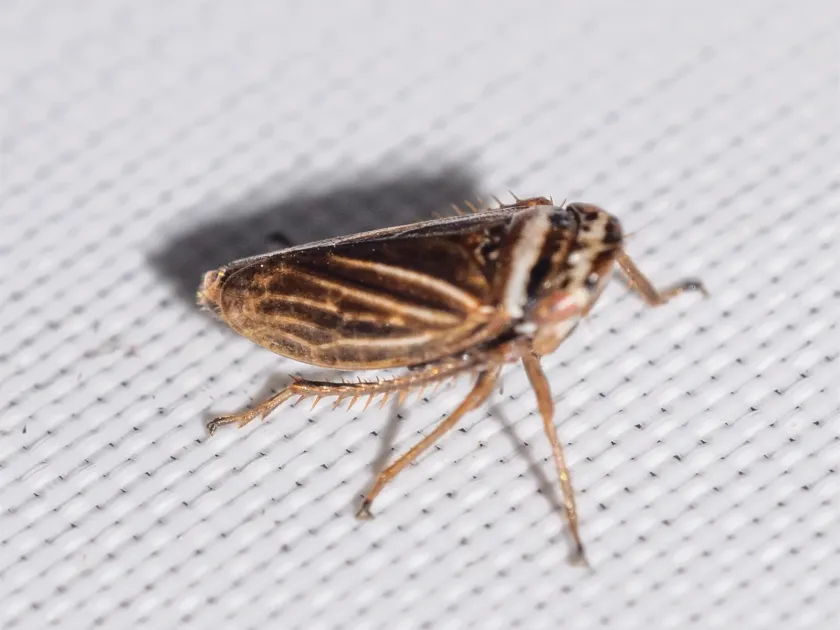
The genus Aphrodes comprises small insects belonging to the family Cicadellidae (leafhoppers), which are common in various agricultural landscapes.
Adult specimens typically reach 5 to 8 mm in length, possessing a wedge-shaped body that is usually brown or tan, providing excellent camouflage in vegetation.
The head of an Aphrodes specimen is characteristically blunt and rounded at the front, a feature that serves as a primary diagnostic trait for experts.
Nymphs look like miniature versions of the adults but lack developed wings, displaying wing pads instead as they progress through their developmental stages.
These insects are highly mobile and exhibit rapid jumping behavior, which is a defensive mechanism used when they perceive a threat or vibrations in their environment.
What it damages
Aphrodes leafhoppers are polyphagous pests, meaning they feed on a diverse array of plant species including cereals, grasses, and various legumes.
They damage crops by piercing plant tissues with their specialized mouthparts to suck sap from leaves and stems, which disrupts normal plant physiological processes.
This feeding activity often leads to nutrient depletion, resulting in stunted growth, chlorosis, and, in severe cases, the death of individual leaves or shoots.
Beyond direct physical harm, these leafhoppers act as potential vectors for various plant pathogens, including phytoplasmas and viruses that reduce yield quality.
The economic impact is particularly significant when high populations occur early in the growing season, potentially compromising the overall vitality of the crop stand.
When it appears
The seasonal activity of Aphrodes is heavily influenced by temperature, typically initiating in early spring as the overwintering eggs begin to hatch.
As spring progresses, nymphs start feeding on available vegetation, with populations building up significantly as temperatures rise toward mid-summer.
Depending on the climatic zone, these insects may complete one or several generations within a single growing year, contributing to late-season population surges.
Adults migrate between hosts, moving from maturing wild grasses to succulent agricultural crops in search of higher quality food sources during dry periods.
Overwintering occurs primarily in the egg stage, with eggs laid within plant tissues or the upper soil layer, where they remain protected until favorable conditions return.
Signs of infestation
The primary symptom of an infestation is the appearance of small, chlorotic spots on leaves, which occur as the insects extract chlorophyll from the plant cells.
Infested plants often display leaf curling, particularly along the margins, as the plant reacts to the physiological stress caused by the feeding insects.
In cases of high infestation, the foliage may take on a bleached or yellowed appearance, indicating that photosynthesis is being significantly impaired.
A simple field test for detection involves agitating the crop canopy, which causes the leafhoppers to jump, making their presence visible to the observer.
Evidence of secondary issues, such as the growth of sooty mold on the honeydew excreted by these insects, further confirms the presence of a sucking pest colony.
Control measures
Effective management of Aphrodes relies on an integrated pest management (IPM) approach that combines cultural practices with chemical interventions.
Cultural control is essential, focusing on the reduction of nearby weed reservoirs and maintaining field borders to limit the initial pest population influx.
When monitoring confirms that the pest population has reached the economic threshold, the application of registered systemic or contact insecticides is recommended.
- Utilizing proper crop rotation schedules to disrupt the life cycle.
- Encouraging natural predators and parasitoids within the field ecosystem.
- Monitoring with yellow sticky traps to track population fluctuations.
Early detection and timely intervention are crucial for preventing mass outbreaks and minimizing the risk of pathogen transmission to the primary crop.
Taxonomy
- Latin name
- Aphrodes
- Order
- Hemiptera (bugs, aphids, leafhoppers)
- Family
- Cicadellidae
- EPPO code
- APROSP
Discussion
No discussions yet — be the first.