
Viburnum aphid
Aphis viburniphila
Description
How to identify
The Viburnum aphid (Aphis viburniphila) is a small sap-sucking insect belonging to the family Aphididae, order Hemiptera, specifically targeting Viburnum species.
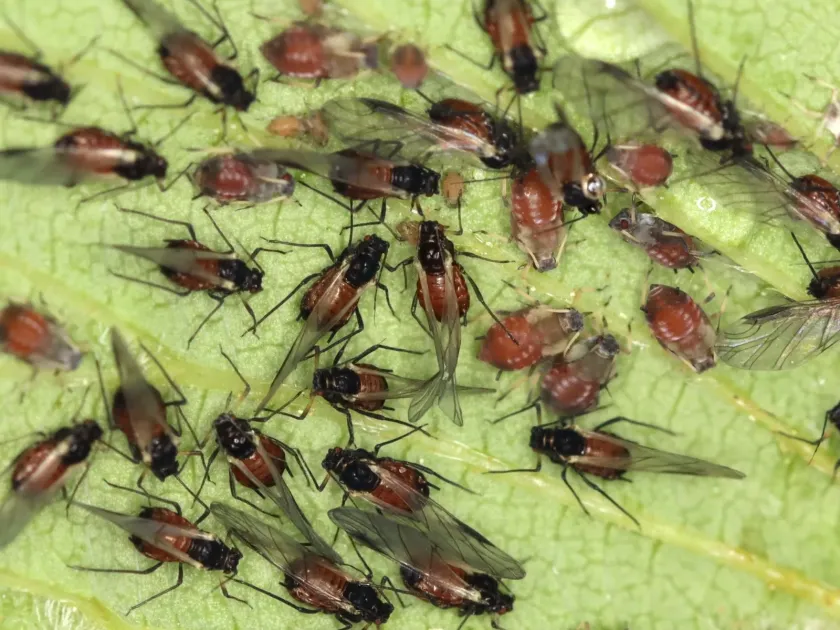
Adult aphids are tiny, typically measuring 2 mm in length, with a coloration that ranges from yellowish-green to deep olive, allowing them to blend into the foliage.
The life cycle involves multiple generations per year, beginning with eggs that overwinter on the bark and near the buds of the host plant to ensure early-season access to food.
Both wingless and winged forms occur within the population; the winged forms are responsible for the rapid spread of the infestation to new shrub branches.
Reproduction is largely parthenogenetic during the spring and summer, leading to exponential population growth that can overwhelm a plant in a matter of weeks.
What it damages
The primary damage is caused by the extraction of phloem sap from developing leaves and terminal shoots, which is essential for the plant's structural development.
Feeding causes leaves to curl, twist, and turn yellow, resulting in a stunted appearance that severely degrades the decorative quality of the Viburnum shrub.
Infested shoots often fail to grow properly, leading to deformities and a lack of proper vigor, which can stunt the overall size of the plant over several growing seasons.
Flowers and fruit clusters are also susceptible, leading to malformed blossoms and poor yield, which is detrimental for gardeners growing these plants for fruit.
The constant drain of nutrients weakens the plant's immune system, making it more susceptible to secondary environmental stresses, including drought and winter injury.
When it appears
The infestation cycle initiates in early spring when the overwintering eggs hatch in synchronization with the opening of the plant's buds.
Peak population levels typically occur during late spring and early summer when the plant exhibits rapid succulent growth, providing the most nutritional resource for the aphids.
As summer progresses and the foliage hardens, the rate of aphid reproduction may fluctuate, but colonies often persist in sheltered areas until early autumn.
The transition to the sexual phase occurs as temperatures cool in the fall, resulting in the production of eggs that remain on the twigs to endure the winter.
Monitoring the plant during the early growth phase is crucial, as early intervention can prevent the mass colonization that occurs in the later weeks of spring.
Signs of infestation
The most distinctive symptom of a Viburnum aphid infestation is the presence of distorted, curled terminal leaves that form dense clusters at the tips of branches.
The presence of sticky honeydew on the leaves and stems is a major sign, which eventually encourages the growth of sooty mold, appearing as a black coating on the plant.
Increased ant activity around the shrub is a major indicator, as ants farm the aphids to collect the sugary honeydew they secrete during the feeding process.
A closer inspection of the underside of curled leaves will reveal small, dense clusters of aphids, often accompanied by shed white skins from their molting stages.
- Curled and twisted leaves
- Sticky honeydew residue
- Visible aphid colonies on undersides
- Sooty mold accumulation
- Presence of tending ants
Control measures
For minor infestations, manual pruning and disposal of affected shoot tips can effectively reduce the population size before it spreads throughout the shrub.
Horticultural soaps or neem oil applications are effective organic solutions that target the aphids directly while minimizing the impact on beneficial predator insects.
Systemic insecticides are recommended for severe infestations to provide long-term protection, as these chemicals are absorbed by the plant and kill the aphids upon feeding.
Encouraging beneficial insects such as lady beetles, lacewings, and parasitic wasps is a sustainable long-term strategy for keeping aphid populations below damaging thresholds.
Providing optimal growing conditions, including balanced fertilization, ensures the plant remains vigorous and resilient enough to withstand minor aphid pressure without significant health loss.
Taxonomy
- Latin name
- Aphis viburniphila
- Order
- Hemiptera (bugs, aphids, leafhoppers)
- Family
- Aphididae
- EPPO code
- APHIVP
Discussion
No discussions yet — be the first.