
Viburnum aphid
Aphis viburni
Description
How to identify
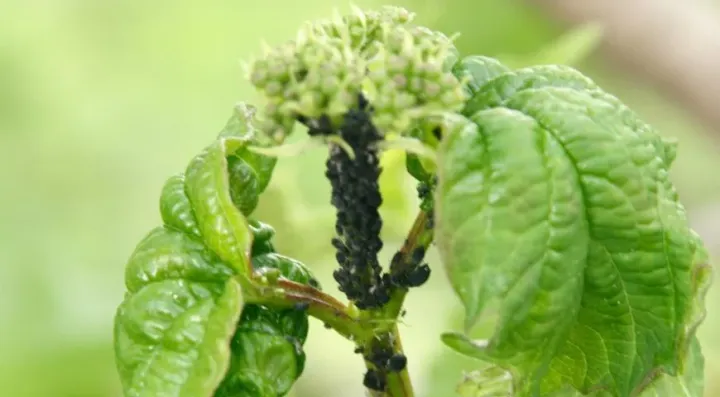
The viburnum aphid (Latin name Aphis viburni) is a small sap-sucking insect belonging to the order Hemiptera and the family Aphididae. Adult aphids typically measure about 2-2.5 mm in length and exhibit a dark brown to black coloration.
This species is specifically adapted to host plants of the genus Viburnum. The nymphs resemble the adults but are smaller in size and lack wings, often hiding in the crevices of tightly curled leaves during early development.
These insects form large, dense colonies on the undersides of leaves and on tender young shoots. Their life cycle includes both wingless generations and winged forms that facilitate dispersal to other host plants.
Reproduction is rapid throughout the growing season. The population density can increase significantly within a short period, especially under favorable warm and humid weather conditions common in late spring.
The overwintering stage consists of eggs laid by the sexual generation of females in the autumn. These eggs are securely attached near buds and in the bark fissures of young branches, ensuring survival through the winter months.
What it damages
The viburnum aphid primarily targets various species of viburnum, both ornamental and fruiting types. These pests pose a significant threat to the overall vitality and aesthetic appearance of the host plant.
By feeding on phloem sap, the aphids extract essential nutrients, causing the young leaves to curl, twist, and become severely deformed. This deformation significantly impairs the plant's photosynthetic capacity.
Heavy infestations lead to stunted growth and a general decline in the shrub's health. The accumulation of aphids on branch tips causes them to bend and twist, preventing the development of healthy, vigorous foliage.
The feeding activity also leaves the plants vulnerable to various secondary infections, such as fungal diseases that thrive on the sugary excretions left behind by the aphids.
In addition to physical damage, the stress caused by an aphid outbreak reduces the plant's ability to store energy for the winter, potentially leading to poor performance or increased susceptibility to frost damage in the following year.
When it appears
The infestation cycle typically begins in early spring, synchronized with the bud burst of viburnum plants. Nymphs emerge from overwintering eggs and start feeding immediately on the tender, developing leaf tissue.
Late spring and early summer represent the period of peak reproductive activity. It is during this time that the colonies grow most rapidly, often covering significant portions of the shrub's canopy.
The appearance of winged females in early summer marks the dispersal phase, allowing the aphids to spread across the garden and colonize new branches or even neighboring shrubs of the same genus.
While reproductive rates may fluctuate with high temperatures, the pest remains active throughout the summer. As autumn approaches, the development of the sexual generation ensures the survival of the species through the winter.
The lifecycle is strictly tied to the phenological stages of the host plant, making the viburnum a consistent provider of resources throughout the entire growing season, which supports continuous aphid development.
Signs of infestation
The most prominent sign of an infestation is the curling and distortion of terminal leaves. Upon inspection, the undersides of these leaves will reveal dense clusters of dark-colored aphids.
The presence of honeydew, a sticky, sugary substance secreted by the aphids, creates a shiny, wet appearance on the leaves. This substance frequently becomes a substrate for the growth of sooty mold, appearing as black soot.
A high level of ant activity on the shrub is a major indicator of an aphid colony. Ants cultivate and protect the aphids, effectively farming them for the sweet honeydew they produce.
Affected shoots often show inhibited elongation, appearing twisted or bunched together. These stunted areas are a clear departure from the natural, graceful growth pattern of healthy viburnum branches.
Premature leaf drop occurring in mid-summer is a sign that the infestation has reached a critical level, seriously depleting the plant's internal resources and triggering an early senescence response.
Control measures
Mechanical control is effective in the early stages; simply pruning and disposing of the infested branch tips can significantly reduce the initial population size and prevent further spread.
Managing the ant population is essential for control. Using sticky barriers on the stems of the viburnum prevents ants from tending the aphids, leaving the pests vulnerable to natural predators.
For chemical-free control, organic options such as insecticidal soaps or neem oil are highly effective if applied directly to the colonies, ensuring thorough coverage of the undersides of the leaves.
Systemic insecticides should be reserved for severe outbreaks where other methods fail. Application should be timed to avoid harming pollinators, and label instructions regarding dosage must be strictly followed.
Promoting a garden environment that supports natural enemies, such as ladybugs, lacewings, and hoverflies, provides long-term biological control and keeps aphid populations at manageable levels.
Taxonomy
- Latin name
- Aphis viburni
- Order
- Hemiptera (bugs, aphids, leafhoppers)
- Family
- Aphididae
- EPPO code
- APHIVB
Discussion
No discussions yet — be the first.