
Mullein aphid
Aphis verbasci
Description
How to identify
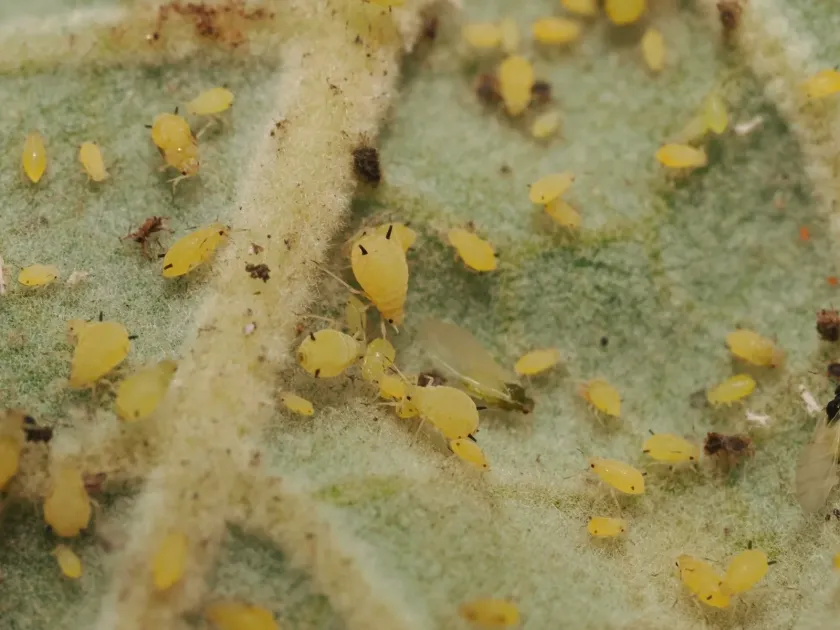
The mullein aphid Aphis verbasci is a small insect belonging to the order Hemiptera and the family Aphididae. It is a common pest that specializes in certain types of plants.
These insects are small, typically measuring between 1.5 and 2.5 mm in length. Their bodies are soft and vary in color, appearing yellow-green to dark brown or black.
Like other aphids, they possess piercing-sucking mouthparts that allow them to extract vital sap directly from the plant's vascular system during all stages of their life.
They often live in dense colonies, frequently associated with ant species that farm them for the honeydew they produce, protecting them from natural predators.
The reproduction cycle includes both sexual and asexual generations, allowing the population to expand rapidly during the growing season when conditions are favorable.
What it damages
The primary host for this species is the mullein plant Verbascum, although it can also infest other species within the Scrophulariaceae family.
The damage caused by these insects is significant, as they feed on the most tender parts of the plant, including young leaves and developing flower spikes.
By consuming plant sap, they deprive the plant of nutrients needed for growth, resulting in stunted development and general weakness of the affected host.
Large colonies can cause extensive yellowing and wilting of foliage, which drastically reduces the overall vigor and aesthetic value of the ornamental plants.
Furthermore, the physical damage weakens the plant's immune system, making it much more susceptible to secondary fungal or viral diseases.
When it appears
The activity of the mullein aphid begins in the early spring as soon as the temperatures rise and the host plants begin their initial vegetation phase.
The highest population levels are typically observed during the early to mid-summer period, when temperature conditions are optimal for rapid reproduction.
In hot and dry weather, the life cycle of the aphid can be as short as a few days, leading to dramatic population explosions in a very brief timeframe.
As autumn approaches, the aphid produces overwintering eggs, which are capable of surviving the cold winter months on plant debris.
The survival of the population depends largely on the availability of these overwintering sites, emphasizing the need for proper garden sanitation at the end of the season.
Signs of infestation
Visible curling of the leaves is one of the most common early signs, as the aphids tend to congregate on the undersides of leaves where they feed.
The presence of honeydew, a sticky, sugary liquid excreted by the aphids, often covers the leaves and makes the plant look shiny or wet.
Sooty mold frequently grows on this sticky honeydew, manifesting as a black, dusty coating that further hinders photosynthesis and plant health.
Stunted growth, yellowing foliage, and the premature shedding of flower buds are clear indicators of a severe infestation that requires immediate attention.
- Curled and deformed leaves.
- Sticky honeydew residue on the plant.
- Presence of ants patrolling the stems.
- Black sooty mold covering the foliage.
- Deformed and stunted flower spikes.
Control measures
Physical removal or pruning of the heavily infested parts of the plant is an effective strategy if the infestation is detected early enough.
Biological control methods, such as introducing natural predators like ladybugs or lacewings, can help manage aphid populations naturally.
The use of insecticidal soaps or neem oil is often sufficient for minor infestations and is much safer for beneficial insects and the surrounding environment.
For more severe cases, systemic insecticides might be required, but they should be used cautiously to minimize the impact on local pollinators.
Good agricultural practices, such as removing weeds and cleaning up plant debris after the growing season, are essential for breaking the pest's life cycle.
Taxonomy
- Latin name
- Aphis verbasci
- Order
- Hemiptera (bugs, aphids, leafhoppers)
- Family
- Aphididae
- EPPO code
- APHIVE
Discussion
No discussions yet — be the first.