
Gorse aphid
Aphis ulicis
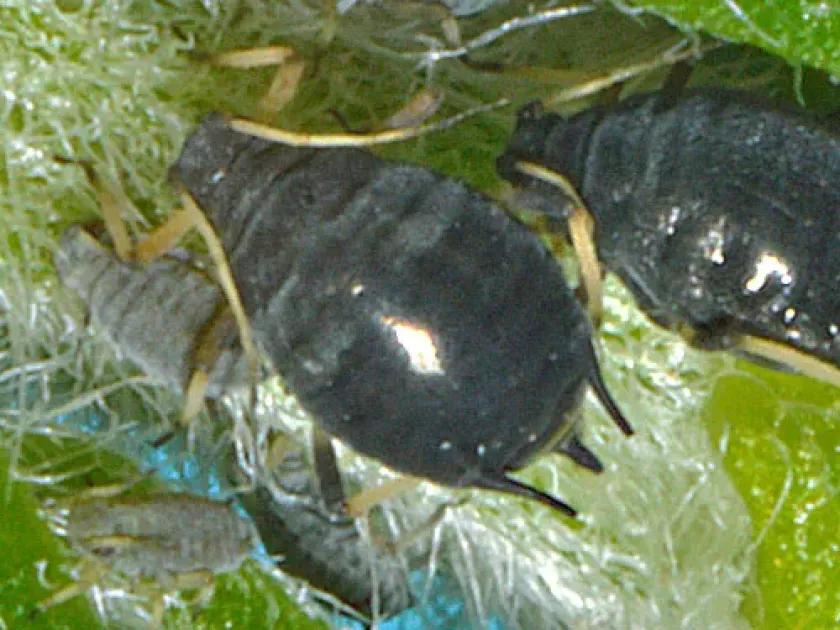
Description
How to identify
The gorse aphid (Aphis ulicis) is a member of the Hemiptera order and the Aphididae family, known as a specialized pest of specific woody legumes.
Physically, these aphids are small, often dark-colored insects that blend in with the dense foliage of their host plants, making them difficult to detect early.
Their life cycle involves complex generations, where spring populations arise from eggs that overwintered on the host plant, followed by rapid parthenogenesis.
These insects prefer secluded areas such as flower buds and young tender tips, where they can feed undisturbed by environmental changes.
The aphid's morphology is perfectly adapted for piercing plant tissues and extracting nutrient-rich phloem sap, which drives their rapid population growth.
What it damages
Aphis ulicis primarily targets species within the Fabaceae family, with a strong preference for gorse (Ulex) and broom (Cytisus) shrubs.
By constantly draining the sap, these aphids cause significant physiological stress to the plant, which often results in stunted growth and distorted foliage.
In high densities, the aphids drain so much energy from the plant that it becomes unable to produce healthy flowers or maintain its seasonal growth.
The feeding process causes hormonal imbalances in the plant, often leading to the curling of leaves and the death of young shoots.
Moreover, the extraction of sap severely weakens the plant's immune system, making it more susceptible to secondary environmental stresses.
Signs of infestation
The most visible symptom of an infestation is the deformation and tight curling of young, succulent leaves at the tips of branches.
Sticky, shiny honeydew excreted by the aphids can be found on the leaves below, which often attracts ants and promotes black sooty mold growth.
If you observe clusters of small, dark insects concentrated around the buds, it is a clear indication that a colony has established itself.
A premature drop of unopened flower buds is a common sign that the aphid population is significantly impacting the plant's reproductive health.
The presence of ants vigorously patrolling the branches is a strong secondary signal that honeydew-producing aphids are present.
Control measures
Effective management of the gorse aphid involves cultural practices that discourage pest outbreaks and maintain plant vigor.
Avoiding excessive nitrogen fertilizers is crucial, as lush, rapid growth is highly attractive to aphids and increases their colonization rates.
Encouraging beneficial insects, such as ladybird beetles, lacewings, and hoverflies, provides long-term biological suppression of the pest.
Chemical control should be reserved for severe infestations and ideally involves systemic insecticides that minimize harm to the surrounding environment.
- Pruning and removing infested tips to physically reduce the size of the initial colony.
- Monitoring plants frequently during early spring to identify and treat hot spots early.
- Using insecticidal soaps as a low-impact treatment for smaller plants.
- Applying biological control agents in greenhouses or controlled garden settings.
Taxonomy
- Latin name
- Aphis ulicis
- Order
- Hemiptera (bugs, aphids, leafhoppers)
- Family
- Aphididae
- EPPO code
- PERNUL
Discussion
No discussions yet — be the first.