
Spirea aphid
Aphis spiraecola
Description
How to identify
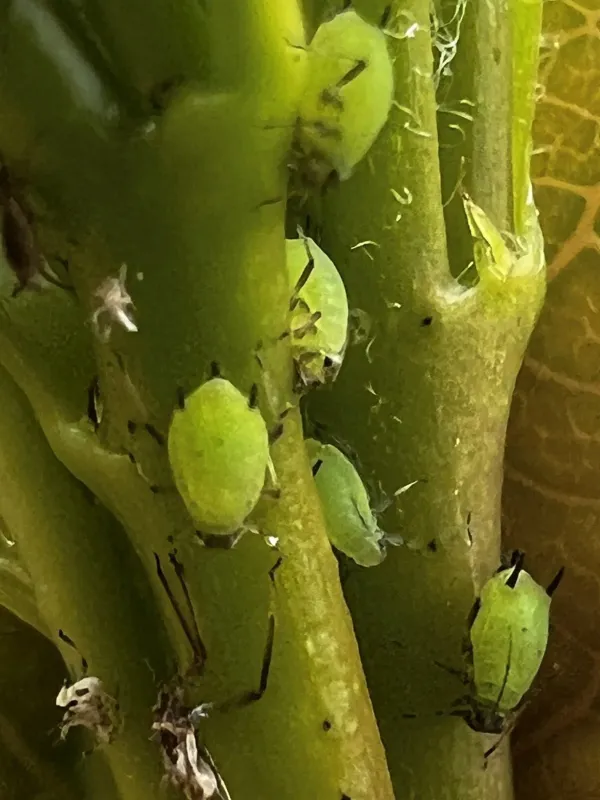
The Spirea aphid (Aphis spiraecola) is a common member of the Aphididae family, known for its small size and vibrant green to yellowish-green coloration.
Adult aphids measure approximately 1.2 to 2.2 mm in length and are distinguished by dark siphunculi and a dark cauda at the tip of the abdomen.
They exist in both wingless (apterous) and winged (alate) forms, with the winged adults serving as primary agents for dispersal between host plants during the season.
The aphids typically cluster in dense colonies on the undersides of young leaves and tender succulent shoots, often leading to rapid colonization of the host.
Microscopic examination of the specimens is often required for precise differentiation from other similar aphid species that inhabit the same host plants.
What it damages
While named for its association with Spiraea, this pest is a major threat to citrus industries worldwide, causing significant economic damage.
It also attacks a wide range of Rosaceae species, including apple, pear, and various ornamental shrubs, causing widespread plant distress.
The feeding process involves extracting phloem sap, which deprives the plant of essential nutrients and leads to stunted development of new growth.
Heavy infestations result in severe leaf curling and distortion, which significantly impairs the photosynthetic capability of the foliage.
Furthermore, the aphids excrete large amounts of honeydew, which serves as a medium for the growth of sooty mold, further damaging the plant’s health.
When it appears
The Spirea aphid follows a complex life cycle, overwintering as eggs on the twigs of primary host plants such as citrus or specific shrubs.
In spring, as temperatures rise, the eggs hatch into fundatrices, which initiate the establishment of the first colonies on emerging buds.
As the season progresses, generations of viviparous females are produced, leading to rapid population explosions during the peak of spring growth.
During the summer months, winged forms migrate to secondary hosts, allowing the species to persist and thrive throughout the entire growing season.
As autumn approaches, sexual forms are produced, and they migrate back to primary host plants to lay the eggs that will survive the winter cold.
Signs of infestation
The most prominent sign of infestation is the curling and puckering of young leaves at the tips of branches, hiding the aphid colonies.
The presence of a sticky, glistening substance on leaf surfaces, known as honeydew, is a classic indication of an active aphid population.
Ant activity on trees is a reliable secondary indicator, as ants actively farm the aphids to harvest the sugar-rich honeydew they secrete.
The appearance of a black, powdery coating on leaves and stems indicates the presence of sooty mold, which grows on the honeydew deposits.
Reduced shoot length and premature yellowing of leaves indicate that the plant is suffering from chronic nutrient loss due to aphid feeding.
Control measures
Biological control methods are highly effective, as the aphid population is suppressed by natural enemies such as ladybeetles, lacewings, and syrphid flies.
Cultural practices, including the strategic pruning of succulent "water sprouts," help reduce the number of colonization sites for the pest.
Chemical control should be implemented using systemic insecticides that are absorbed by the plant, ensuring that aphids are killed even in curled leaves.
It is essential to manage ant populations in the orchard to prevent them from protecting aphids from their natural predatory enemies.
- Application of horticultural oils for contact suppression.
- Use of selective systemic insecticides to protect beneficial insects.
- Monitoring with yellow sticky traps to detect early migration.
- Implementing integrated pest management (IPM) to minimize chemical residue.
Taxonomy
- Latin name
- Aphis spiraecola
- Order
- Hemiptera (bugs, aphids, leafhoppers)
- Family
- Aphididae
- EPPO code
- APHISI
Discussion
No discussions yet — be the first.