
Broom aphid
Aphis sarothamni
Description
How to identify
The broom aphid (Aphis sarothamni) is a small sap-sucking insect belonging to the family Aphididae. It is a specialized pest that primarily targets plants within the legume family, most notably the broom (Cytisus) species.
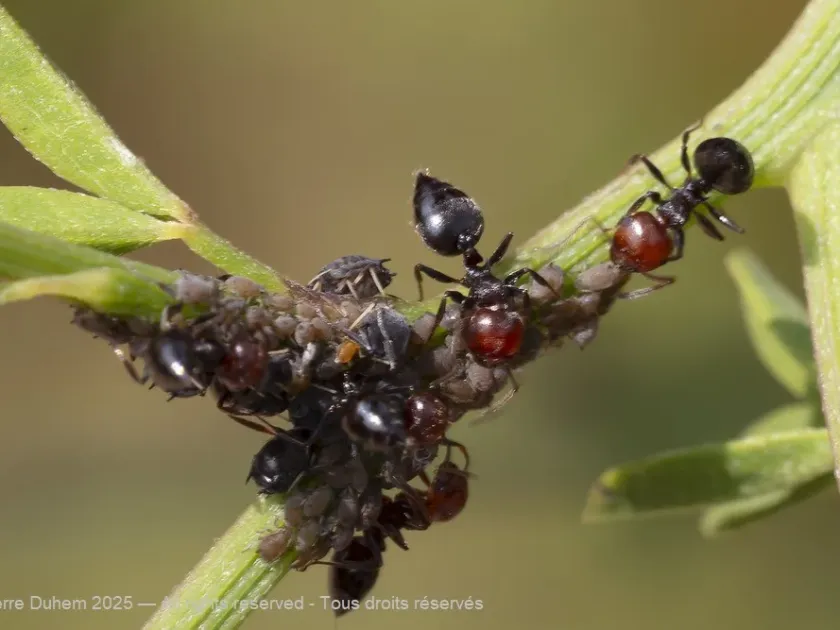
Adult aphids appear in shades of dark green to black, allowing them to blend into the stems of the host plant. The species exhibits polymorphism, meaning both winged and wingless forms exist within a single colony to facilitate rapid spread during the growing season.
The life cycle involves an overwintering egg stage, typically found on the bark or dormant buds of host shrubs. In spring, these eggs hatch into fundatrices, which initiate the establishment of new colonies through parthenogenetic reproduction.
During the peak of the season, these insects multiply rapidly. The high reproductive rate allows them to form dense clusters on tender plant tissues, which serve as the primary source of nutrients for their development.
Understanding their lifecycle is crucial for timing control measures. By targeting the early generations in spring, gardeners can prevent massive infestations that occur later in the summer when environmental conditions are optimal for aphid development.
What it damages
Aphis sarothamni causes damage by inserting its stylets into the plant's phloem to feed on sap. This process saps the plant of vital nutrients, leading to reduced vigor and stunted growth of the affected shoots.
The most visible damage is the deformation of young leaves and shoots, which become twisted or curled. Furthermore, the constant feeding causes stress, often leading to the abscission of buds and significantly reducing the ornamental bloom of the shrubs.
As they feed, aphids excrete honeydew, a sticky substance that coats the leaves. This honeydew provides a perfect substrate for the growth of sooty mold, a fungal disease that further impairs photosynthesis by blocking sunlight.
Besides direct physical damage, these aphids act as vectors for various plant viruses. Transmission of these pathogens can occur during feeding, potentially leading to long-term systemic infections that weaken or kill the host plant over time.
In addition to the physiological stress, the aesthetic quality of the plant is compromised, making it unsuitable for display in formal gardens or public parks. Chronic infestations can lead to the dieback of entire branches.
Signs of infestation
The most reliable sign of a broom aphid infestation is the presence of clusters of small, dark insects concentrated at the tips of new shoots. These colonies are often found hidden within the curled leaves.
A sticky, shiny residue on the foliage is a classic indicator of honeydew production. If noticed, gardeners should inspect the undersides of the leaves and the tips of the stems for aphid presence.
The presence of ants is a strong indicator of aphid activity. Ants "farm" aphids, protecting them from predators in exchange for the sugary honeydew, often creating a symbiotic relationship that sustains the colony.
The development of a black, soot-like coating on leaves indicates the presence of sooty mold, a clear sign that the aphid colony has been active on the plant for a significant period.
Yellowing, wilting, or shriveling of shoot tips without signs of drought suggests that sap-sucking insects are active. Early detection of these signs is essential for maintaining the health of the host shrubs.
Control measures
Effective management begins with good cultural practices. Keeping plants healthy with appropriate watering and avoiding excessive nitrogen fertilization helps reduce their susceptibility to aphid attacks.
Biological control is highly effective and should be prioritized. Encouraging natural predators like ladybeetles, lacewings, and hoverflies can help suppress aphid populations naturally without the need for chemical intervention.
For severe infestations, systemic or contact insecticides may be necessary. It is important to apply these products carefully, ensuring full coverage while following label instructions to minimize harm to non-target pollinators.
Pruning out and disposing of heavily infested shoot tips can physically reduce the pest population density. This is a practical and quick way to slow down the spread of the colony within the garden.
- Monitor plants weekly during the spring and early summer.
- Use insecticidal soaps for light infestations as a low-toxicity alternative.
- Incorporate companion plants that attract predatory beneficial insects.
- Ensure equipment is cleaned to prevent the spread of plant viruses transmitted by aphids.
Taxonomy
- Latin name
- Aphis sarothamni
- Order
- Hemiptera (bugs, aphids, leafhoppers)
- Family
- Aphididae
- EPPO code
- PERNSA
Discussion
No discussions yet — be the first.