
Elder aphid
Aphis sambuci
Description
How to identify
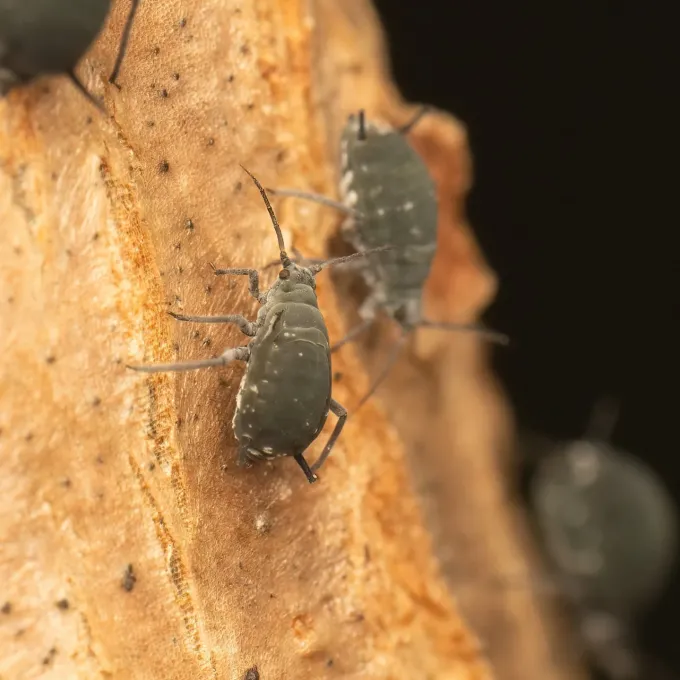
The elder aphid (Aphis sambuci) is a member of the order Hemiptera and the family Aphididae. These small insects are typically dark brown or black in color, providing effective camouflage against the dark stems of their primary host plants.
The colony structure includes both wingless and winged individuals. The wingless forms remain on the plant to reproduce rapidly, while the winged forms allow the population to disperse to new hosts throughout the growing season.
What it damages
The primary host for this species is the common elderberry (Sambucus nigra), where they congregate on tender young shoots and flowering stems. They can also feed on various herbaceous plants like Rumex or Caryophyllaceae during the summer months.
Feeding damage is characterized by the depletion of plant sap, which stunts growth and causes the leaves to curl. Severely affected shoots may become twisted or fail to develop properly, reducing the overall health and ornamental value of the elderberry bush.
When it appears
The life cycle begins in spring when overwintering eggs on the bark of elderberry hatch into stem mothers. Multiple generations occur throughout the spring and summer, with some populations migrating to secondary hosts during the peak of summer.
In the autumn, winged females return to the elderberry to lay the eggs that will survive the winter. The most significant damage usually occurs in late spring, coinciding with the rapid growth of new succulent vegetation.
Signs of infestation
Infestation is easily spotted by looking at the tips of the shoots, where leaves become tightly curled and distorted. A sticky substance known as honeydew is excreted by the aphids, often covering the surface of the leaves.
- Curled and deformed leaves at the shoot tips.
- Presence of a sticky, shiny honeydew coating.
- Dark sooty mold growing on the honeydew-covered areas.
- Increased ant activity around the plant base and stems.
Control measures
Effective management begins with regular monitoring of the elderberry bushes during spring. Pruning and disposing of heavily infested shoot tips can significantly reduce the initial population levels in the garden.
When chemical control is necessary, systemic insecticides applied during the early stages of infestation are highly effective. For those seeking organic alternatives, insecticidal soaps or neem oil treatments can be used to manage the aphids while minimizing harm to beneficial insects.
Taxonomy
- Latin name
- Aphis sambuci
- Order
- Hemiptera (bugs, aphids, leafhoppers)
- Family
- Aphididae
- EPPO code
- APHISA
Discussion
No discussions yet — be the first.