
Bean aphid
Aphis rumicis
Description
How to identify
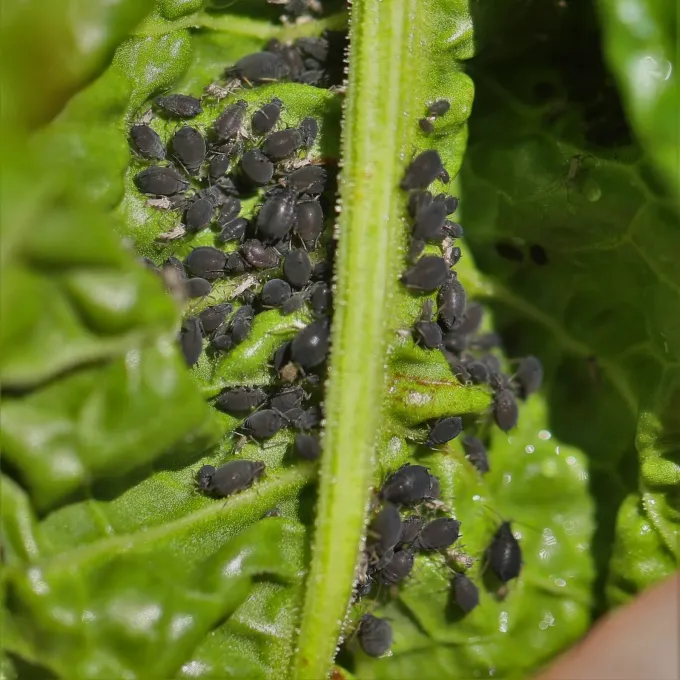
The bean aphid (Aphis rumicis), also commonly known as the dock aphid, belongs to the family Aphididae. These small insects are typically dark brown or black, reaching a size of 2-2.5 mm in adulthood.
The species exhibits polyphenism, with both wingless and winged individuals. Winged forms are crucial for the rapid colonization of new fields and seasonal migration between different host plants.
They overwinter primarily as eggs, which are deposited on the stalks and crowns of perennial plants, particularly those in the Polygonaceae family, such as dock and sorrel.
Upon hatching in the spring, the nymphs begin feeding immediately. They have a high reproductive rate, allowing for multiple overlapping generations throughout the growing season.
Identification is easiest by inspecting the undersides of leaves and the apical parts of stems, where they cluster in dense, easily visible colonies that cause rapid plant distress.
What it damages
While the dock aphid is highly associated with sorrel and dock plants, it is a polyphagous pest that also attacks beans, beets, and various ornamental plants in the garden.
By sucking the phloem sap, the aphids extract essential nutrients, leading to stunted growth, wilting, and a significant reduction in the quality and yield of the harvest.
They act as primary vectors for several plant viruses. A viral infection transmitted by these aphids can cause severe tissue deformation and widespread crop failure in affected areas.
The secretion of honeydew serves as a substrate for sooty mold fungi. This black coating inhibits photosynthesis and further stresses the plant, making it more susceptible to other diseases.
- Leaf curling and deformation.
- Stunted shoot development.
- Yellowing or chlorosis of the foliage.
When it appears
The first generation emerges early in the spring as temperatures rise, typically coinciding with the start of the primary growth phase of the host plants.
The population peaks in late spring and early summer, benefiting from moderate temperatures and sufficient humidity, which are ideal for their rapid development and reproduction.
During peak summer, extreme heat may slow down activity; however, consistent irrigation or high moisture levels allow them to maintain strong colony numbers throughout the season.
As autumn approaches, the life cycle concludes with the production of overwintering eggs, ensuring the species survives until the following spring.
Farmers should monitor fields from early spring, focusing on young, tender growth where the initial colonies establish themselves before migrating across the entire field.
Signs of infestation
The most immediate symptom of an infestation is the curling and distortion of leaves, which often appear pale and lack the vigor of healthy plant foliage.
Upon closer inspection, large, dense colonies of black, soft-bodied insects will be visible, tightly packed along the veins and petioles of the plant leaves.
The presence of ants is a strong indicator of aphid activity. Ants are known to "farm" aphids for their honeydew, defending them against natural predators like ladybugs.
A sticky, shiny residue on the leaves or the ground beneath the plants is a clear sign of honeydew production, often accompanied by the emergence of black sooty mold.
Significant decline in plant growth, accompanied by discolored, drooping, or necrotic leaf patches, indicates that the infestation has reached a damaging level.
Control measures
Effective cultural control involves the removal of alternative weed hosts, particularly docks and other Polygonaceae, which serve as reservoirs during the winter months.
Regular harvesting or mowing of the sorrel can disrupt the aphid's lifecycle and physically remove the majority of the population before they become a massive threat.
Biological control methods focus on encouraging populations of natural enemies, including lady beetles, hoverflies, and lacewings, which can significantly reduce aphid numbers.
When chemical intervention is necessary, choose selective insecticides and always respect the pre-harvest interval, as leafy vegetables are highly sensitive to chemical residues.
Small-scale gardens can utilize organic approaches, such as regular water sprays to dislodge the aphids or the application of insecticidal soaps to kill the insects on contact.
Taxonomy
- Latin name
- Aphis rumicis
- Order
- Hemiptera (bugs, aphids, leafhoppers)
- Family
- Aphididae
- EPPO code
- APHIRU
Discussion
No discussions yet — be the first.