
Blackberry aphid
Aphis ruborum
Description
How to identify
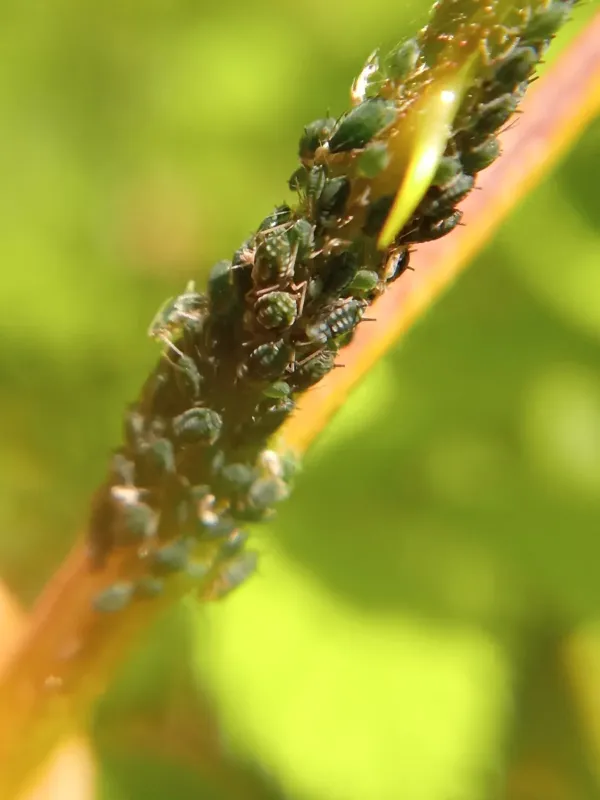
The blackberry aphid (Aphis ruborum) is a small insect belonging to the order Hemiptera and the family Aphididae, specialized in feeding on Rubus species.
Adult aphids are typically 1.5–2.0 mm long, with a body color that ranges from light green to yellow-green, making them well-camouflaged against leaves.
They live in dense colonies, mostly aggregating on the underside of leaves or along the tender, succulent growth of young blackberry and raspberry shoots.
The life cycle involves multiple generations of parthenogenetically reproducing females during the warm season, allowing for rapid population growth.
Overwintering occurs in the egg stage, with tiny, shiny black eggs typically laid near buds on the host plant's stems for protection.
What it damages
These aphids primarily feed on the phloem sap of blackberry and raspberry plants, causing significant stress to the host.
Feeding activity leads to the curling, twisting, and yellowing of young leaves, which significantly stunts the development of new shoots.
The aphids excrete honeydew, a sugary substance that promotes the growth of sooty mold, blocking sunlight and reducing the plant's photosynthetic efficiency.
Perhaps the most severe threat is that Aphis ruborum is a recognized vector for various plant viruses that cause systemic diseases in berries.
Heavy infestations reduce fruit size and quality, leading to diminished yields and potentially weakening the plant to the point of long-term decline.
When it appears
In spring, when temperatures rise, eggs hatch, and the first generation of aphids begins colonizing the emerging succulent buds.
Populations tend to explode during late spring and early summer, peaking in May and June when the plant growth rate is at its highest.
The rapid life cycle allows these insects to multiply exponentially in favorable weather conditions, frequently requiring monitoring during these months.
Late summer heat and the presence of natural predators like ladybird beetles often help to suppress aphid numbers naturally.
As autumn approaches and day length decreases, the aphids shift to producing sexual forms to lay eggs, ensuring survival through the winter.
Signs of infestation
The most immediate sign of infestation is the curling of young leaves, which often hide the aphid colonies inside the fold.
Sticky honeydew on leaf surfaces and the presence of black sooty mold are clear indicators that an aphid colony is present.
Increased ant activity on the blackberry canes is a strong signal, as ants frequently tend to aphids to harvest their sugary honeydew.
Stunted and deformed shoot tips are common, indicating that the aphids are actively sucking sap from the most productive areas of the plant.
Premature drying of flower clusters or buds can be another sign that the aphid population is depriving the plant of vital nutrients.
Control measures
Good cultural practices, such as proper pruning to ensure air circulation and avoid excessive succulent growth, are essential for prevention.
Biological control methods involve protecting and encouraging natural enemies like ladybirds, hoverflies, and lacewings in the garden ecosystem.
For small infestations, a strong blast of water or the application of insecticidal soaps can be effective in physically removing the aphids.
In cases of severe infestation, systemic insecticides may be necessary, though they should be applied carefully to avoid harming pollinators.
- Inspect shoot tips weekly during the early growing season
- Remove weeds that can serve as alternative hosts
- Use dormant oil sprays in early spring to kill overwintering eggs
- Monitor the effectiveness of predatory insects in your garden
Taxonomy
- Latin name
- Aphis ruborum
- Order
- Hemiptera (bugs, aphids, leafhoppers)
- Family
- Aphididae
- EPPO code
- APHIRB
Discussion
No discussions yet — be the first.