
Blackberry aphid
Aphis rubifolii
Description
How to identify
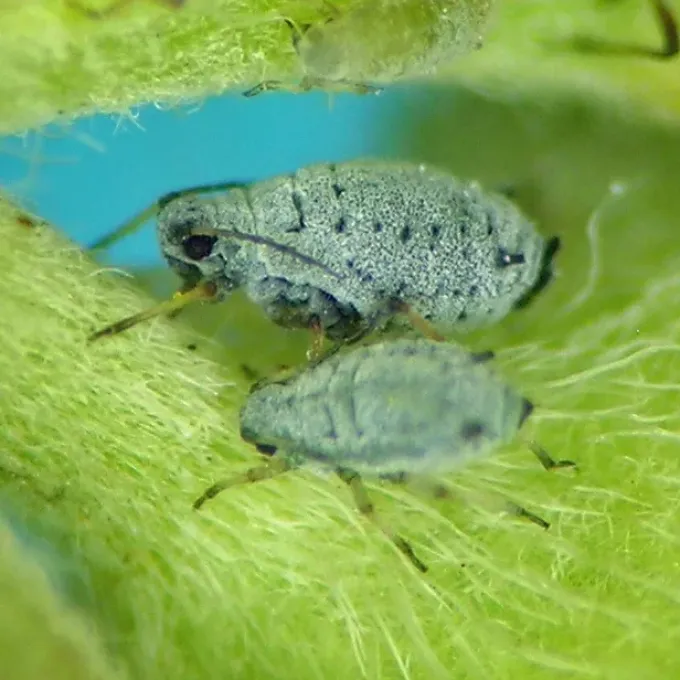
The blackberry aphid (Aphis rubifolii) is a small insect belonging to the order Hemiptera and the family Aphididae. These aphids typically appear yellow-green or brownish, with adults measuring about 1.5 to 2 mm in length.
These pests prefer to congregate on the undersides of leaves, which makes them difficult to detect until they have established significant colonies on the host plant.
The life cycle begins in early spring, when eggs overwintering on the stems hatch into fundatrices (stem mothers). These individuals initiate the season's population growth through asexual reproduction.
During the peak of the season, aphids reproduce rapidly, producing multiple generations within a short period, which allows them to colonize new shoots and adjacent plants very quickly.
As autumn approaches, winged sexual forms are produced. After mating, the females lay overwintering eggs near the base of buds or within bark crevices to survive the winter conditions.
What it damages
The blackberry aphid primarily feeds on plants of the Rubus genus, particularly blackberries. While they are specialists, they can occasionally be found on nearby raspberries depending on local environmental conditions.
By piercing plant tissues and extracting sap, the aphids drain vital nutrients, which leads to significant weakening of the host plant, reduced vigor, and poor growth rates.
The insects secrete a sugary substance called honeydew, which coats the foliage and provides a perfect substrate for the growth of sooty mold, blocking sunlight and hindering photosynthesis.
Feeding often causes curling and distortion of young leaves and shoots, which directly affects the plant's ability to produce quality berries, leading to smaller, deformed, or shriveled fruits.
Furthermore, these aphids serve as primary vectors for various plant viruses, which can cause long-term decline in productivity and potentially kill entire blackberry patches if left unmanaged.
Signs of infestation
The most noticeable sign of an aphid infestation is the curling and yellowing of the terminal leaves. As the colony grows, the damage becomes more visible as leaves begin to dry and wither.
The presence of ants on the blackberry canes is a strong indicator of aphid activity. Ants are attracted to the honeydew and will actively protect the aphids from natural predators.
Sticky residue on leaves and stems, often accompanied by a black, powdery coating (sooty mold), clearly demonstrates that an active colony has been feeding on the plant for some time.
Young, stunted, or distorted shoots are a classic symptom of heavy feeding, as the aphids concentrate on the most nutrient-rich, growing tissues of the blackberry plant.
A sudden decline in overall plant health or early fruit drop can also signify a massive aphid infestation that has depleted the plant's resources during the critical fruiting phase.
Control measures
Pruning out infested shoots and canes during the dormant season is an effective cultural practice to reduce the number of overwintering eggs and minimize early spring outbreaks.
Encouraging beneficial insects, such as lady beetles, lacewings, and syrphid flies, can provide natural control. These predators are very effective at keeping aphid populations in check.
For severe infestations, growers may need to use systemic or contact insecticides registered for use on berry crops. It is crucial to follow label directions carefully regarding pre-harvest intervals.
Organic control methods, such as applying insecticidal soaps or neem oil, are often sufficient for smaller gardens if applied thoroughly to the underside of the leaves.
- Conduct regular inspections of leaf undersides.
- Avoid excessive nitrogen fertilization to prevent succulent, attractive growth.
- Control ant populations in the immediate vicinity of the blackberry rows.
Taxonomy
- Latin name
- Aphis rubifolii
- Order
- Hemiptera (bugs, aphids, leafhoppers)
- Family
- Aphididae
- EPPO code
- APHIRF
Discussion
No discussions yet — be the first.