
Pomegranate aphid
Aphis punicae
Description
How to identify
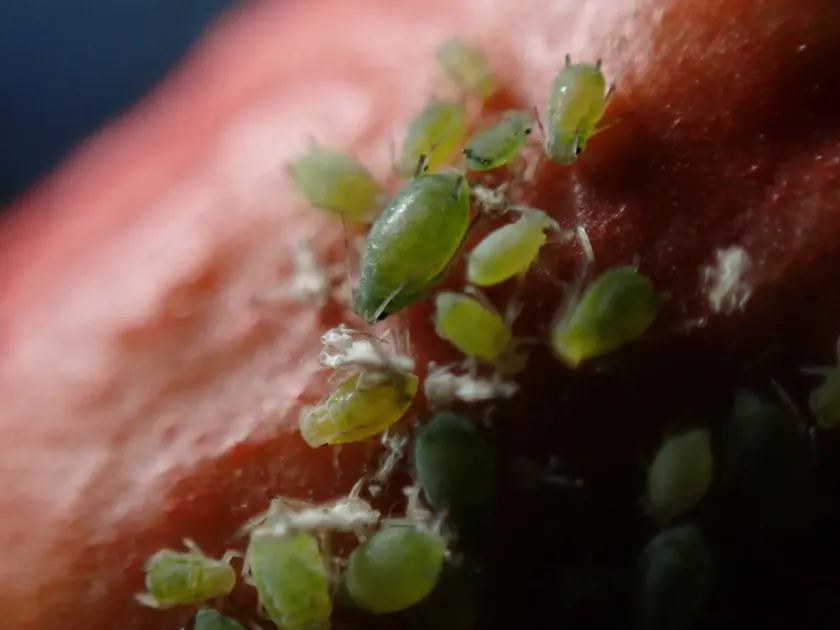
The pomegranate aphid (Aphis punicae) is a small sap-sucking insect belonging to the family Aphididae, order Hemiptera, which specifically targets pomegranate trees.
These insects are typically yellow-green or light brown, allowing them to blend into the young, tender foliage and succulent stems of the host plant during early spring.
The life cycle involves both winged and wingless forms, allowing the aphid to rapidly colonize new branches and neighboring trees once a colony becomes overcrowded.
Like other aphids, they feed in dense colonies on the undersides of leaves and the tips of young branches, using their specialized piercing-sucking mouthparts.
Their reproduction rate is highly temperature-dependent, allowing for exponential population growth during the warm, stable weather of the late spring and summer months.
What it damages
The primary host for this pest is the pomegranate (Punica granatum), where it causes damage by draining plant sap, leading to chlorosis and stunted growth.
Heavy infestations lead to leaf curling, which creates a protective microclimate for the aphids but severely disrupts the tree's photosynthetic capability.
Pomegranate aphids excrete large amounts of honeydew, a sugary substance that promotes the growth of sooty mold, which blocks light and impairs plant respiration.
When feeding on flower buds, the aphids can cause bud deformation or premature flower drop, directly reducing the total fruit yield for the season.
Chronic infestation weakens the overall vigor of the pomegranate tree, making it more susceptible to environmental stress and secondary fungal infections.
When it appears
The aphid activity typically begins in early spring, as soon as the first fresh shoots and leaves emerge, providing the necessary nutrients for the first generation.
Population peaks are most often observed in late spring and early summer when environmental conditions are optimal for the rapid completion of their life cycle.
The species passes through several generations during the summer, with fluctuations in population size often driven by predator activity and environmental humidity.
As temperatures begin to drop in late autumn, the aphids prepare for winter, typically by laying eggs on the bark or within crevices of the pomegranate branches.
Consistent monitoring of new growth is essential throughout the entire growing season to detect initial colonies before they reach uncontrollable levels.
Signs of infestation
The most obvious sign of infestation is the presence of tightly curled leaves at the tips of new growth, often hiding clusters of aphids underneath.
A shiny, sticky layer of honeydew on leaves and stems serves as a primary visual indicator, often accompanied by a dark, dusty appearance caused by sooty mold.
The presence of ants crawling on the bark or foliage is a strong indirect sign, as ants are known to tend aphid colonies to harvest the sweet honeydew.
Deformed buds, stunted stem elongation, and leaves that appear yellow or mottled are classic symptoms of prolonged feeding damage on the pomegranate tree.
Small white specks scattered on the leaf surfaces are often the empty cast skins (exuviae) left behind as the nymphs grow and molt.
Control measures
Cultural management includes proper pruning of pomegranate trees to remove crowded growth and water sprouts, which are the most common sites for aphid colonization.
Encouraging natural biological control agents, such as lady beetles, hoverflies, and lacewings, is highly recommended to keep aphid numbers in check naturally.
Chemical applications should be reserved for severe outbreaks, utilizing soft soaps or specific systemic insecticides that minimize harm to beneficial insects.
- Mechanical removal by hosing down infested branches with a strong stream of water.
- Application of horticultural oils or neem oil to suffocate aphids on contact during early infestations.
- Strategic timing of treatments to target the early spring generation before the population peaks.
Taxonomy
- Latin name
- Aphis punicae
- Order
- Hemiptera (bugs, aphids, leafhoppers)
- Family
- Aphididae
- EPPO code
- APHIPU
Discussion
No discussions yet — be the first.