
Iris aphid
Aphis newtoni
Description
How to identify
The iris aphid (Aphis newtoni) belongs to the order Hemiptera and the family Aphididae. It is a specialized pest that primarily targets plants within the Iris genus.
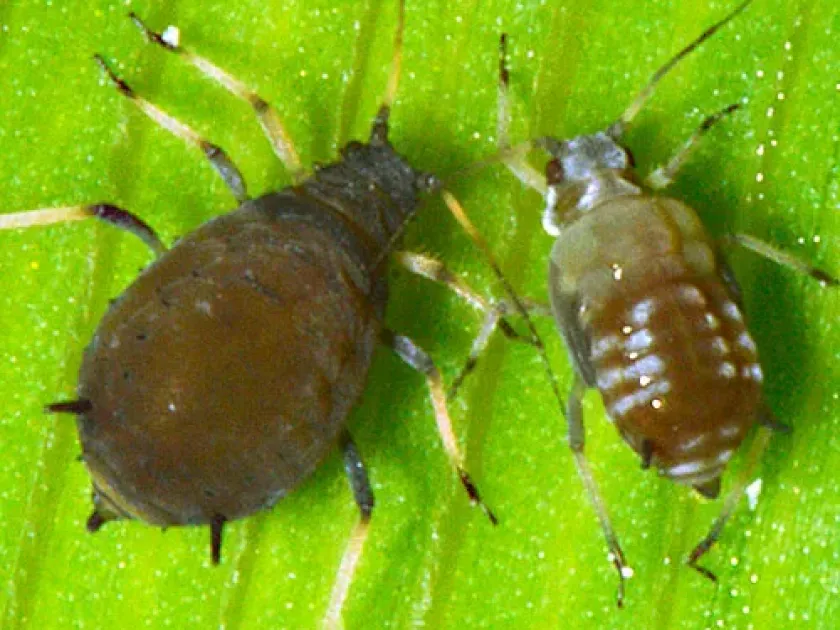
Adult aphids typically measure 1.5 to 2.5 mm in length. They display a dark green to black coloration, which provides effective camouflage against the dark foliage and stems of host plants.
Their life cycle involves both apterous (wingless) and alate (winged) forms. The winged individuals are crucial for the migration of the colony to new, uninfected iris plants during the growing season.
Aphids reproduce parthenogenetically, meaning females produce live young without mating. This allows for rapid population growth, enabling a small infestation to expand into a large colony within days.
Overwintering occurs in the egg stage, with eggs laid near the rhizomes or at the base of the iris plant, ensuring survival through harsh winter conditions.
What it damages
Iris aphids damage plants by piercing tissues with their mouthparts and extracting phloem sap, which deprives the plant of essential nutrients and weakens its overall vigor.
The feeding activity is concentrated on the most nutrient-rich areas: young leaves, developing buds, and succulent stems. This results in significant stress for the iris plant.
Besides physical damage, these aphids serve as vectors for various plant viruses. Viral transmission can lead to stunted growth, distorted foliage, and reduced flowering capacity.
The aphids excrete a sugary substance known as honeydew. This excretion often leads to the growth of sooty mold, which coats the leaves and restricts photosynthesis.
Severe infestations often cause the buds to wither or fail to open correctly, which ruins the ornamental value of the irises during the blooming season.
Signs of infestation
The first sign of infestation is typically the curling or twisting of new leaves and flower stalks, which often look withered despite adequate soil moisture.
Close inspection of the undersides of leaves or within the folds of developing flower buds reveals dense clusters of small, dark-colored insects.
The presence of ants is a major indicator of an aphid problem, as ants actively farm the aphids for their honeydew and protect them from natural predators.
Leaves may become sticky to the touch due to the presence of honeydew, and a black, velvety coating of sooty mold may appear on the plant surfaces.
If left unmanaged, the reproductive parts of the iris become heavily infested, leading to deformed flowers and early senescence of the flower stalks.
Control measures
Cultural control is the first line of defense: remove weeds around the iris beds and clear away dead plant debris where aphids might have laid their eggs over the winter.
Biological control involves encouraging natural predators such as ladybugs, lacewings, and hoverflies in your garden to keep the aphid population naturally suppressed.
For minor infestations, manual removal or spraying the plants with a sharp stream of water can physically knock the aphids off, effectively reducing their numbers.
Insecticidal soaps or horticultural oils can be applied directly to the colonies. These contact-based treatments are effective and have a lower environmental impact.
In cases of severe outbreaks, systemic insecticides can be used. Always ensure the product is labeled for use on ornamental flowers and strictly follow safety guidelines.
Taxonomy
- Latin name
- Aphis newtoni
- Order
- Hemiptera (bugs, aphids, leafhoppers)
- Family
- Aphididae
- EPPO code
- APHINW
Discussion
No discussions yet — be the first.