
Oleander aphid
Aphis nerii
Description
How to identify
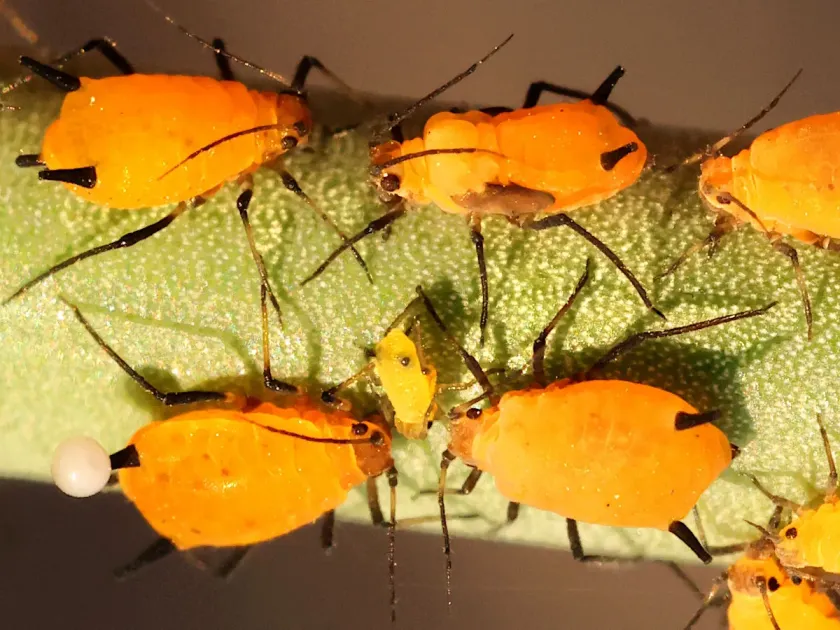
The oleander aphid (Aphis nerii) belongs to the Hemiptera order and the Aphididae family. This small insect is easily identified by its bright yellow body and contrasting black legs, antennae, and cornicles.
This species specializes on plants from the Apocynaceae and Asclepiadaceae families, which contain cardiac glycosides. By consuming these toxins, the aphid becomes unpalatable to many natural predators.
Reproduction is primarily parthenogenetic, which allows for rapid colonization of host plants. The life cycle involves multiple overlapping generations throughout the season, leading to massive populations.
Winged forms appear when colonies become crowded, facilitating the spread to neighboring plants. Their high reproductive rate and chemical defenses make them persistent pests in gardens.
They prefer the most succulent parts of the plant, including young shoots, flower buds, and the undersides of leaves, often forming dense, visible mats.
What it damages
Common host plants include oleander (Nerium oleander) and various species of milkweed (Asclepias). They also frequently attack Hoya, vinca, and other ornamental plants.
The aphid extracts sap from the host, which leads to stunted growth and reduced vigor. Ornamental plants suffer significantly as their aesthetic appeal is destroyed by the presence of the pests.
Flower buds often fail to develop properly or appear deformed. In severe cases, the plant may drop its leaves prematurely, significantly weakening its health.
Furthermore, these aphids serve as vectors for various plant viruses. Even small infestations can lead to the transmission of pathogens into the vascular system of the host plant.
The excretion of honeydew promotes the growth of sooty mold, which coats the leaves and interferes with photosynthesis, further depriving the plant of energy.
When it appears
Activity peaks during the warmer months when temperatures remain consistently above 15°C. They thrive in humid conditions, which support their rapid development.
In greenhouses and indoor environments, the oleander aphid can continue its life cycle throughout the year, provided the host plant remains healthy.
The migration of winged adults occurs throughout the growing season, typically triggered by overcrowding or the decline of the current host plant's quality.
While cold temperatures reduce activity, the species is highly adaptable. In warmer climates, it can remain active even during mild winter periods.
Monitoring should begin in early spring, checking the tips of new growth where the first colonies are likely to establish themselves.
Signs of infestation
The most obvious sign is the presence of yellow insects on the stems and buds of the host plant. Leaves often become sticky due to the accumulation of honeydew.
Plants may show signs of yellowing, curling leaves, and general lack of vitality. Young shoots become distorted and twisted as a result of constant feeding pressure.
The appearance of a black, powdery coating on the foliage, known as sooty mold, is a clear indicator of a long-standing aphid infestation.
Ants are frequently observed attending to the aphid colonies to harvest the honeydew, often providing protection from natural predators.
- Clusters of yellow aphids on new growth.
- Sticky leaves covered in honeydew.
- Development of black sooty mold.
- Deformed buds and stunted flower development.
- Curled and yellowing leaf foliage.
Control measures
Mechanical removal is a simple first step, involving washing the plants with a strong stream of water or using insecticidal soaps to clear the aphids and honeydew.
Biological control can be implemented using natural predators like lacewings or lady beetles, though their effectiveness is often limited by the toxicity of the host plant.
Systemic insecticides, such as those containing imidacloprid or acetamiprid, are highly effective against sap-sucking pests. These chemicals enter the plant tissue and provide lasting control.
Care must be taken to apply chemical treatments according to the manufacturer's guidelines, specifically ensuring proper dosage to avoid damaging the host plant.
Maintain general plant hygiene by removing nearby weeds from the Apocynaceae family, which can act as secondary hosts for the aphids during the growing season.
Taxonomy
- Latin name
- Aphis nerii
- Order
- Hemiptera (bugs, aphids, leafhoppers)
- Family
- Aphididae
- EPPO code
- APHINE
Discussion
No discussions yet — be the first.