
Cowpea aphid
Aphis medicaginis
Description
How to identify
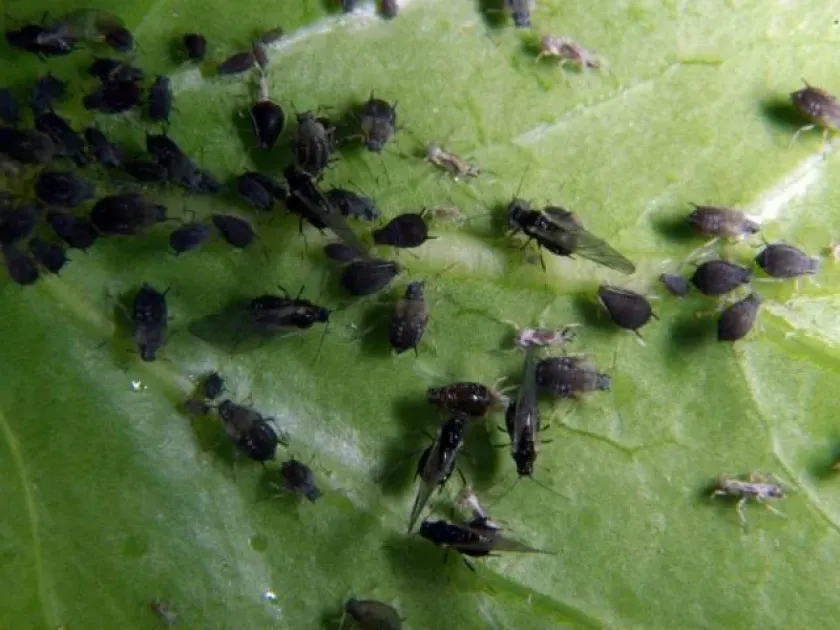
The cowpea aphid (Latin: Aphis medicaginis) belongs to the order Hemiptera and the family Aphididae. Adults are small, measuring about 1.5–2.2 mm, with a distinctive shiny black or dark brown body.
Winged forms (alates) possess transparent wings with clear venation, which facilitates the dispersal of the colony to new host plants throughout the growing season.
Nymphs resemble adults but are generally smaller and lack developed reproductive organs. The species is characterized by short, black cornicles and a tail (cauda) of similar length.
They are colonial insects, often found in dense groups on the growing points, stems, and undersides of leaves of various host plants within the legume family.
The taxonomic classification confirms their status as a major agricultural pest, with a lifecycle that involves both asexual and sexual reproductive phases during the year.
What it damages
Although commonly known as the cowpea aphid, this species is a significant pest of alfalfa (lucerne), clover, beans, peas, and various other leguminous forage crops.
Feeding involves the direct extraction of phloem sap from the plant tissues, which deprives the plant of essential nutrients and leads to stunted development.
The insects inject toxins while feeding, causing leaf curling, stem distortion, and reduced flowering, which negatively affects total biomass and seed production.
Furthermore, they serve as efficient vectors for several plant viruses, such as the Alfalfa Mosaic Virus, which can devastate crop yields even at low pest densities.
The economic impact is compounded by the accumulation of honeydew, which promotes the growth of sooty mold, further reducing the photosynthetic capacity of the plants.
When it appears
Activity begins in the early spring as temperatures rise, leading to the hatching of eggs laid on overwintering host plants or the migration of winged adults.
Population density typically peaks during the late spring and early summer months, coinciding with the rapid vegetative growth and flowering stages of legumes.
During the summer, the species undergoes multiple generations, with the speed of development being strictly dependent on ambient temperature and humidity levels.
As the season progresses toward autumn, changing day length and temperature trigger the production of sexual forms to ensure survival through the winter.
The cycle is completed when these forms deposit eggs on winter host plants, creating a biological reservoir that initiates the next season's infestation cycle.
Signs of infestation
Infestation is first identified by the characteristic curling and yellowing of terminal leaves, where colonies of black aphids congregate for protection and feeding.
The presence of honeydew on the leaves and stems is a key diagnostic sign, often attracting ants that protect the aphid colonies from potential predators.
Plants affected by the pest often show signs of overall weakness, reduced height, and a lack of vigor, making them more susceptible to environmental stress.
In seed crops, the flowers and pods may dry out or fail to form correctly, directly leading to significant losses in marketable yield for the farmers.
Field scouting often reveals patchy distribution, with heavily infested areas showing visible stunted growth compared to the surrounding healthy vegetation.
Control measures
Cultural practices such as early harvesting can effectively disrupt the aphid reproductive cycle by removing the food source and destroying existing colonies.
Maintaining a clean field environment by removing host weeds is crucial to reducing the population pressure and minimizing the risk of re-infestation.
- Encouraging natural predators, including lady beetles, hoverflies, and lacewings, to keep aphid populations below economic injury levels.
- Chemical control using systemic insecticides is recommended when infestation levels exceed established local economic thresholds for the crop.
- Regular monitoring of field margins and interior areas is essential to catch outbreaks before they reach critical levels that require widespread treatment.
Integrated Pest Management (IPM) strategies, which balance chemical, biological, and cultural methods, provide the most sustainable long-term control solution.
Crop rotation and selecting resistant or tolerant varieties can further decrease the attractiveness of the fields to immigrating aphid populations.
Taxonomy
- Latin name
- Aphis medicaginis
- Order
- Hemiptera (bugs, aphids, leafhoppers)
- Family
- Aphididae
- EPPO code
- APHIME
Discussion
No discussions yet — be the first.