
Senecio aphid
Aphis lugentis
Description
How to identify
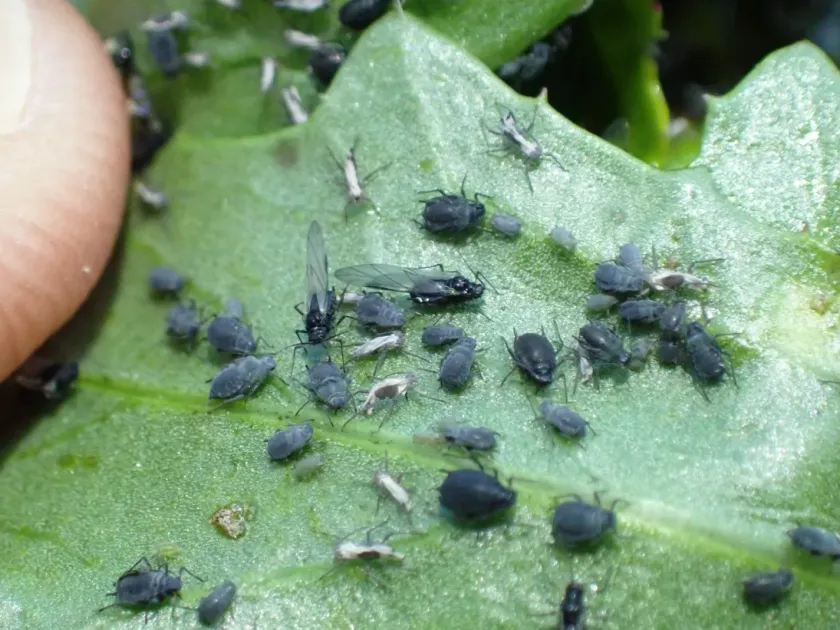
The Senecio aphid (Aphis lugentis) belongs to the Hemiptera order and the Aphididae family. These insects are characterized by their dark coloration, which serves as a natural camouflage against the host plant tissues during their feeding stage.
The population consists of both winged and wingless forms, allowing the species to disperse effectively to new host plants when overcrowding occurs. Nymphs, or immature aphids, resemble adults but are smaller and focus entirely on feeding to facilitate rapid growth.
Equipped with specialized piercing-sucking mouthparts, these aphids feed on plant sap. By inserting their stylets into the phloem, they siphon nutrients, which deprives the host plant of essential sugars and amino acids needed for development.
Reproduction is largely parthenogenetic during the growing season, enabling rapid population explosions. This strategy allows the aphid to colonize entire fields in a matter of weeks under optimal warm and humid weather conditions.
The lifecycle concludes in the autumn with sexual reproduction, leading to the production of overwintering eggs. These eggs are highly resilient and remain on plant debris, ensuring the survival of the population until the next spring.
What it damages
The primary host plants for this species belong to the Asteraceae family, specifically the Senecio genus. Aphids prefer to gather on succulent young shoots and the abaxial surface of leaves, where the concentration of nutrients is highest.
Feeding damage causes significant physiological stress to the plant. It leads to leaf curling, stunted growth, and a reduction in overall vigor, which hinders the plant’s ability to perform photosynthesis efficiently.
Beyond direct feeding damage, Aphis lugentis is a known vector for various plant viruses. Even small infestations can result in the transmission of viral diseases, which can lead to permanent structural deformities and systemic plant decline.
The secretion of honeydew promotes the growth of sooty mold, a fungus that covers the leaves in a black, sticky film. This layer interferes with light absorption and gas exchange through the stomata, further weakening the host.
In severe cases, infestation of flowering structures leads to blossom abortion or deformed inflorescences. This dramatically reduces the plant's reproductive success and results in significant yield loss for both ornamental and agricultural varieties.
When it appears
The active season begins in early spring as soon as temperatures permit the hatching of overwintering eggs. The first generation of nymphs immediately seeks out fresh vegetation to begin the cycle of feeding and reproduction.
Peak infestation levels are generally observed during the warmer months of summer. This is when the population growth rate is highest, and winged forms migrate to new plants, spreading the infestation across the surrounding environment.
Hot, dry weather can sometimes lead to a temporary decrease in aphid activity; however, consistent moisture from irrigation or rainfall helps sustain the population throughout the summer months.
In the autumn, as days become shorter and temperatures drop, the aphids switch to their sexual stage to ensure the next generation. The focus of the colony shifts from mass reproduction to securing overwintering sites.
Continuous monitoring throughout the growing season is essential for early detection. The rapid reproductive pace of Aphis lugentis requires prompt intervention as soon as the first individuals are spotted.
Signs of infestation
The most reliable sign of an infestation is the curling or distortion of young apical leaves. These curled leaves provide a sheltered micro-habitat that protects the aphids from predators and contact-based control methods.
- Presence of sticky honeydew on the foliage and stems.
- Development of a dark sooty mold layer on leaves.
- Increased activity of ants patrolling the infested plants.
- Stunted or deformed tips and flower stalks.
- Yellowing of leaves in localized patches where feeding is intense.
Close observation of the leaf undersides will reveal colonies of dark-colored aphids clustered together. In heavy infestations, the sheer density of the insects can cover large portions of the stems.
Ants are frequent indicators of an aphid colony. They maintain a mutualistic relationship with the aphids, harvesting the honeydew and protecting them from natural enemies like ladybugs and lacewing larvae.
Wilting of the plant canopy during the hottest part of the day, despite adequate watering, can indicate that the vascular system is being compromised by the mass feeding of the aphid population.
Control measures
Chemical control involving systemic insecticides is effective, as these chemicals move through the plant's vascular system. They provide lasting protection against sucking pests compared to contact-only treatments.
Cultural management is vital, starting with the removal of weeds that serve as alternative hosts for the aphids. Maintaining field borders and cleaning up plant debris in the fall reduces overwintering populations.
Biological control methods encourage the presence of natural predators, such as lady beetles, hoverflies, and lacewings. These beneficial insects can significantly suppress aphid populations if they are protected from broad-spectrum pesticide use.
Organic alternatives, such as insecticidal soaps or neem oil, are useful tools for small-scale control. These products act by suffocating the aphids or disrupting their hormonal development without leaving long-term toxic residues.
Ensuring balanced plant nutrition, particularly avoiding excess nitrogen, prevents the overproduction of succulent growth that is highly attractive to aphids. A resilient, healthy plant is always the first line of defense.
Taxonomy
- Latin name
- Aphis lugentis
- Order
- Hemiptera (bugs, aphids, leafhoppers)
- Family
- Aphididae
- EPPO code
- APHILU
Discussion
No discussions yet — be the first.