
Ragwort aphid
Aphis jacobaeae
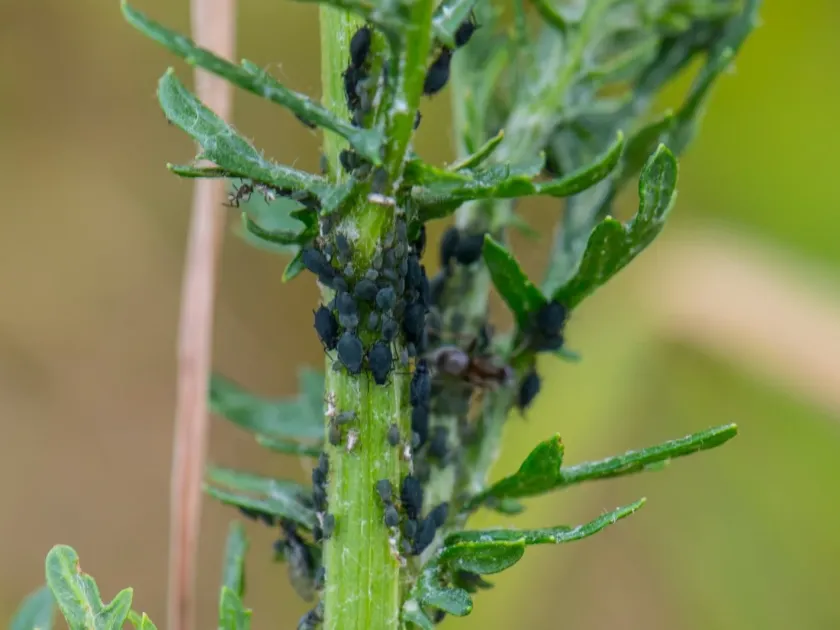
Description
How to identify
The ragwort aphid Aphis jacobaeae is an insect belonging to the family Aphididae, known for its specific host preference for plants in the Jacobaea genus.
These small insects possess soft bodies and piercing-sucking mouthparts, which they use to exploit the vascular system of host plants.
Adults exhibit polyphenism, with both winged and wingless forms emerging depending on environmental conditions and the availability of food resources.
Coloration typically ranges from pale green to brownish-yellow, allowing them to remain well-hidden among the foliage of their host plants.
The species is highly specialized, meaning its life cycle is intricately linked to the developmental stages of the ragwort and its relatives.
What it damages
Damage is primarily caused by the intensive removal of plant sap, which deprives the host of essential nutrients and photosynthetic products.
Affected plants often show stunted growth, distorted leaf development, and poor vigor due to the physiological stress imposed by the aphid colony.
The excretion of honeydew serves as a substrate for the growth of sooty mold, which physically covers leaves and reduces the efficiency of sunlight absorption.
In addition to direct damage, excessive infestation can lead to the wilting and eventual death of the most tender parts of the plant.
Economic impact varies based on whether the host plants are weeds or cultivated species, potentially affecting seeds' quality and overall population structure.
When it appears
Development begins in the early spring as temperatures rise, allowing the population to start growing from eggs that overwintered on the host.
Peak abundance is typically observed during the warm summer months, coinciding with the rapid vegetative growth of host plants.
During the peak season, reproduction is largely asexual, allowing for a massive increase in the number of individuals within a short timeframe.
As daylight decreases and temperatures drop in autumn, sexual reproduction occurs, leading to the production of winter-hardy eggs.
Environmental fluctuations significantly affect the success rate of each generation, yet the aphids remain resilient due to their high reproductive capacity.
Signs of infestation
Visible signs of infestation include the curling and yellowing of young leaves, which often serve as the first point of colonization for aphids.
A sticky film covering the leaf surfaces is a clear indication that the plants are under attack by sap-sucking insects.
The presence of ants on the plant is a strong indicator of an active aphid colony, as ants are often attracted to the honeydew secretion.
Flower stalks may become twisted or fail to develop properly, which is a classic symptom of significant stress caused by the pest colony.
The development of black sooty mold on the foliage is a late-stage symptom, indicating a long-term infestation that needs immediate attention.
Control measures
Cultural practices focus on the elimination of primary host plants to reduce the local carrying capacity for the aphid population.
Biological control methods involve promoting the population of natural predators, such as ladybugs, lacewings, and hoverflies.
Chemical control should be applied using selective systemic insecticides only when the population density reaches economic damage thresholds.
Environmentally friendly soaps and oils can be effective for localized control in gardens without harming beneficial insects significantly.
- Implement systematic scouting to detect infestations early.
- Remove weeds that act as reservoir hosts for the species.
- Use selective sprays during the early stages of colony formation.
Taxonomy
- Latin name
- Aphis jacobaeae
- Order
- Hemiptera (bugs, aphids, leafhoppers)
- Family
- Aphididae
- EPPO code
- APHIJA
Discussion
No discussions yet — be the first.