
Grape aphid
Aphis illinoisensis
Description
How to identify
The grape aphid (Aphis illinoisensis) belongs to the Hemiptera order and the Aphididae family. It is a small, soft-bodied insect that is a significant pest in viticulture.
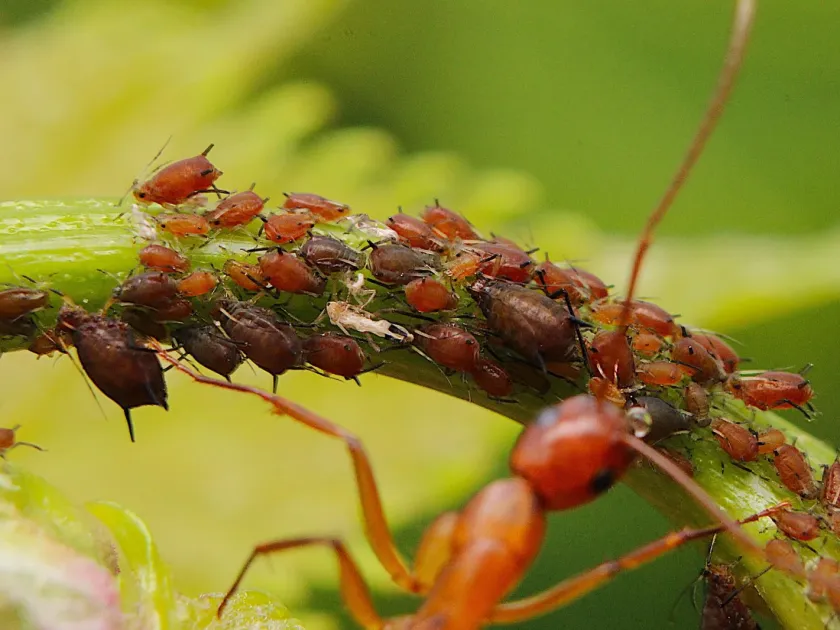
Adult aphids are typically 1.5 to 2 mm in length. Their coloration ranges from dark brown to black, which often helps them blend in with the dark bark of the vine shoots.
The species exhibits a complex life cycle with both winged and wingless forms. Winged individuals are responsible for migrating to new vines and spreading infestations across the vineyard.
The aphid relies on piercing-sucking mouthparts to feed on plant sap. Their reproductive rate is high, allowing a few individuals to develop into large colonies within a short period.
Identification is most commonly achieved by inspecting the underside of young leaves and the growing tips of the shoots, where these insects tend to aggregate during the spring and summer.
What it damages
This pest specifically targets grapevines (Vitis species). It primarily affects the most vulnerable parts of the plant, such as new growth, shoots, and young leaves.
Feeding by Aphis illinoisensis results in significant stunting of shoot growth. The plant loses vital energy, which can lead to poor development of the foliage and reduced cluster quality.
Severe infestations cause leaves to curl, yellow, and eventually die. This loss of photosynthetic area severely hinders the vine's ability to accumulate sugar for fruit ripening.
Grape aphids act as vectors for various plant viruses, which can lead to long-term decline of the vineyard productivity and require the removal of infected vines.
The accumulation of honeydew secreted by the aphids provides an ideal medium for the growth of sooty mold, which blocks light and impairs the plant's physiological functions.
When it appears
Activity typically begins in the early spring, synchronized with bud break and the emergence of new, tender green tissue that the aphids require for nourishment.
Summer months represent the peak of the infestation. During high temperatures, the aphid reproductive cycle shortens, leading to explosive population growth.
The infestation pressure continues through the autumn as long as the vine maintains active growth and sap flow, which provides the necessary sustenance for the aphids.
Environmental conditions, particularly humidity and temperature, play a crucial role in the timing and intensity of the aphid population spikes observed annually.
Monitoring should be most intense during the period of rapid vine development, as the aphids prioritize the most rapidly growing parts of the plant canopy.
Signs of infestation
The most immediate sign of an infestation is the curling and distortion of young leaves, which often appear stunted or misshapen due to the aphids feeding at the shoot tips.
A sticky, shiny residue known as honeydew on the leaves and stems is a clear indicator of aphid presence, as this is a byproduct of their continuous sap-feeding.
The presence of sooty mold—a dark, black fungal growth that develops on top of the honeydew—is a hallmark sign that the infestation has been present for some time.
Ant activity is frequently observed, as ants are attracted to the sweet honeydew secreted by the aphids and will often protect them from predators.
- Curling and distortion of shoot tips
- Sticky honeydew residue on foliage
- Development of black sooty mold
- Significant ant presence on the vine
- Yellowing and loss of vigor in new growth
Control measures
Systemic insecticides are the preferred chemical method of control, as they are absorbed into the plant sap, effectively killing the aphids as they feed.
Biological control plays a vital role in sustainable vineyards by encouraging the presence of natural predators like ladybugs, lacewings, and parasitic wasps.
Cultural practices, such as proper canopy management and pruning, help to increase airflow within the vine, making the environment less favorable for aphid colonization.
Managing the ant population is an essential component of integrated pest management, as ants actively cultivate and defend aphids, preventing their natural enemies from reaching them.
Regular field scouting for early signs of infestation allows for localized treatments, which significantly reduces the need for broad-spectrum insecticide applications across the whole vineyard.
Taxonomy
- Latin name
- Aphis illinoisensis
- Order
- Hemiptera (bugs, aphids, leafhoppers)
- Family
- Aphididae
- EPPO code
- APHIIL
Discussion
No discussions yet — be the first.