
Raspberry aphid
Aphis idaei
Description
How to identify
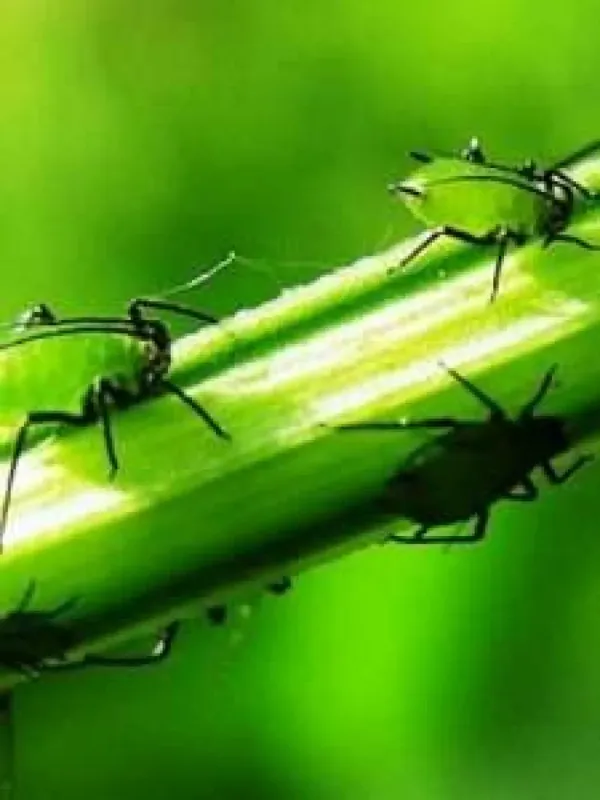
The raspberry aphid (Aphis idaei) is a small insect belonging to the order Hemiptera, family Aphididae. The adult body is oval-shaped, with a color ranging from pale yellow to light green, making it difficult to spot against young leaves.
The population consists of both wingless and winged forms. Winged individuals are responsible for dispersing colonies to new plants, while wingless ones focus on rapid reproduction and feeding within the existing colony.
The pest overwinters as eggs at the base of the buds on raspberry canes. Early in the spring, during the bud-burst stage, the fundatrix larvae emerge and quickly give rise to new generations.
This insect is primarily colonial, inhabiting the undersides of young leaves, shoot tips, and flower stalks. Its high reproductive rate allows it to infest the entire plant in a very short period.
The aphid possesses piercing-sucking mouthparts, which it uses to puncture the plant epidermis and feed on cell sap, thereby weakening the plant's overall vitality.
What it damages
The primary host is the red raspberry, though it can also be found on blackberries. The damage manifests as stunted shoot growth and a significant reduction in fruit yield.
Beyond the direct depletion of nutrients, the aphid is a primary vector for viral diseases, most notably the raspberry mosaic virus. Such infections can lead to the total loss of the bush's productivity.
Affected plant parts lose turgor and become deformed. As a result of the feeding process, necrotic spots and systemic development pathologies may occur within the raspberry tissues.
Mass infestations disrupt the photosynthetic process, leading to premature yellowing and leaf drop. This significantly reduces the cold hardiness of the bushes during the winter months.
The honeydew excreted by aphids often encourages the growth of sooty mold, which covers the leaf surface with a black film, further impeding gas exchange and plant health.
When it appears
The active life cycle of the pest begins in early spring as soon as the average daily temperature exceeds 8-10 degrees Celsius, coinciding with the bud swelling phenophase.
Colonies reach their peak numbers in late May and June, coinciding with the period of intensive growth of young raspberry shoots, where aphids congregate in high concentrations.
Several generations of insects develop throughout the summer. Hot and dry weather conditions accelerate the reproductive cycle, leading to rapid population surges.
By autumn, as temperatures drop and day length changes, sexual forms appear and lay fertilized eggs to survive the winter.
Understanding these seasonal patterns is crucial for planning protective measures, as the main treatments must be applied before active sap flow or during the budding stage.
Signs of infestation
The first sign of infestation is the curling of young leaves at the shoot tips. The leaves become chlorotic and take on a yellowish hue due to the disruption of their nutrient supply.
A detailed inspection of the underside of the leaf will reveal numerous clusters of small insects. Additionally, a sticky residue, known as honeydew, will be visible on the leaves and stems.
The presence of ants on raspberry bushes is often a strong indicator of aphid activity. Ants "farm" the colonies, protecting them from predators while feeding on the aphids' sugary excretions.
Stunted growth of young shoots, distorted flower stalks, and blossom drop are also characteristic indirect signs of a high level of raspberry aphid infestation.
In severe cases, plants appear depressed with thin, weak tops that are incapable of producing a full harvest during the current season.
Control measures
Prevention begins with sound agricultural practices: timely pruning and burning of infested shoots, as well as the removal of root suckers where colonies often congregate.
An effective biological method is to attract natural predators such as ladybugs, lacewings, and hoverflies to the garden. It is vital to limit the use of broad-spectrum insecticides to avoid harming these beneficial insects.
When infestation levels are high, chemical insecticides with systemic or contact-stomach action that are approved for use on berry crops should be employed.
- Apply treatments before the flowering stage to avoid harming pollinators like bees.
- Rotate different chemical classes to prevent the aphid population from developing resistance.
- Thoroughly spray the undersides of the leaves where the majority of the colony is located.
Using home remedies, such as soap-ash solutions or tobacco infusions, is effective during the early stages of infestation when the insect count is still low.
Taxonomy
- Latin name
- Aphis idaei
- Order
- Hemiptera (bugs, aphids, leafhoppers)
- Family
- Aphididae
- EPPO code
- APHIID
Discussion
No discussions yet — be the first.