
Sunflower aphid
Aphis helianthi
Description
How to identify
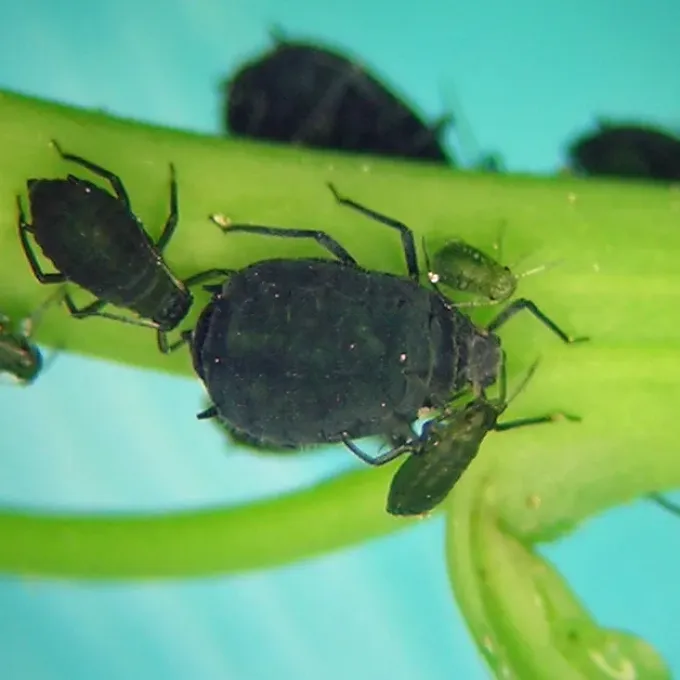
The sunflower aphid (Aphis helianthi) is an insect belonging to the order Hemiptera and the family Aphididae. These pests are small, typically measuring between 1.5 and 2.5 mm in length.
Their bodies are soft and usually range in color from dark green to deep black. They are easily identified by the presence of a pair of tubes called siphunculi located on the dorsal side of the abdomen.
What it damages
The primary host plant for this species is the sunflower. However, they can also be found on a variety of wild plants within the Asteraceae family, which serve as alternative food sources throughout the growing season.
The aphids cause direct damage by feeding on the sap of the plant. They aggregate in large colonies on the undersides of leaves and on the floral heads, depleting the plant's resources and causing physiological stress.
When it appears
The life cycle of the sunflower aphid often involves migration between a primary winter host and secondary summer hosts. Overwintering occurs in the egg stage on woody plants.
In the spring, nymphs hatch and develop into winged adults that migrate to sunflower fields. Throughout the summer, they reproduce rapidly through parthenogenesis, producing multiple generations in a single season.
Signs of infestation
Infested plants often show curling, yellowing, and stunted growth of the upper leaves. In severe cases, the entire plant may appear wilted even if soil moisture levels are adequate.
A sticky substance known as honeydew is frequently present on the leaves, which encourages the growth of sooty mold. The presence of dense ant colonies on the stem is a strong indicator of an aphid infestation.
Control measures
Integrated pest management starts with field sanitation, including the removal of weeds that act as alternate hosts. Proper nutrient management to avoid excessive nitrogen levels can also reduce the plant's attractiveness.
If thresholds are exceeded, insecticidal control is necessary. The use of systemic insecticides is typically most effective as it targets the aphids hidden within the dense foliage of the sunflower canopy.
Taxonomy
- Latin name
- Aphis helianthi
- Order
- Hemiptera (bugs, aphids, leafhoppers)
- Family
- Aphididae
- EPPO code
- COMPHE
Discussion
No discussions yet — be the first.