
Ivy aphid
Aphis hederae
Description
How to identify
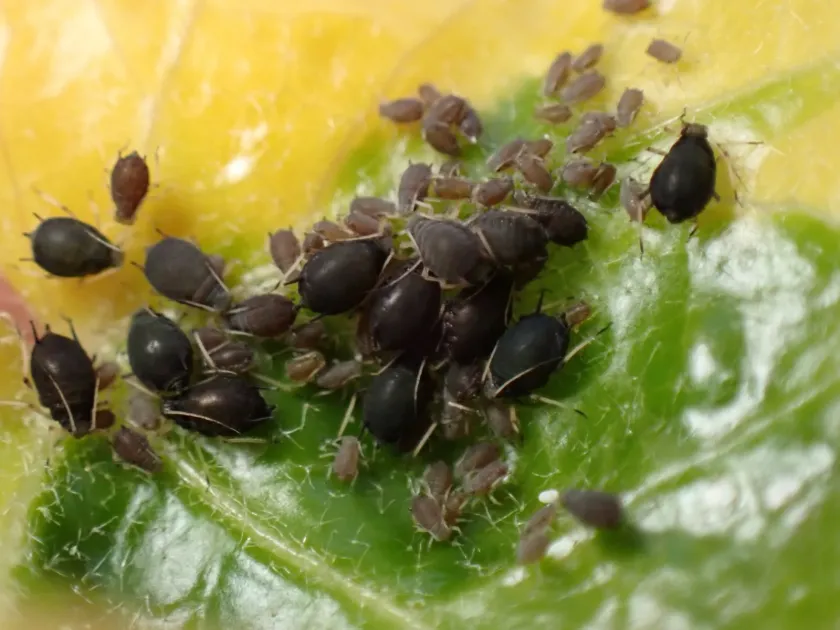
The ivy aphid (Aphis hederae) is a member of the Aphididae family, specifically adapted to colonize plants of the Hedera genus. These insects are small, typically measuring 1.5 to 2.5 mm in length.
Adult ivy aphids are recognizable by their dark brown to black, somewhat shiny bodies. Their appearance often makes them blend into the dark foliage of older ivy plants, though they stand out on light-colored new growth.
The insect possesses a specialized piercing-sucking mouthpart, known as a stylet, which is perfectly evolved to penetrate plant tissues and extract phloem sap from the ivy stems and leaves.
Morphologically, these aphids have distinct siphunculi (tubes) on their abdomen, which are vital for identification. They often exist in dense colonies consisting of both wingless and winged reproductive forms.
Their life strategy relies on rapid colonization of host plants, often forming dense clusters at the tips of shoots to maximize nutrient uptake from the plant's active growth regions.
What it damages
The primary host for Aphis hederae is English ivy (Hedera helix). Damage occurs due to the continuous removal of sap, which stunts the plant's overall growth and weakens its vigor.
Aphids preferentially feed on tender young leaves and shoot tips. As a result, these areas become distorted, curled, and stunted, severely impacting the decorative value of the plant.
The secretion of honeydew is a major secondary issue. This sticky substance covers the foliage and becomes a substrate for sooty mold, a fungus that grows in black patches and hinders photosynthesis.
If left untreated, severe infestations can lead to leaf yellowing (chlorosis) and premature leaf drop. In extreme cases, the plant may lose its aesthetic appeal and structural health.
While the damage is primarily focused on the foliage, heavy infestations can also extend to flower stalks, potentially affecting the plant's ability to produce berries in the late season.
When it appears
The biological cycle of the ivy aphid is highly temperature-dependent. Spring activity begins once temperatures reach approximately +10°C to +12°C, triggered by eggs that overwintered on the bark.
The peak infestation period typically occurs during late spring and early summer, coinciding with the rapid flush of new, succulent growth on the ivy plant, which provides the best nutrition for the aphid population.
During the heat of mid-summer, the population growth may slow, but as long as the host plant remains well-watered and provides new growth, the aphids will continue to thrive and reproduce.
As autumn arrives, the aphids transition into a sexual reproductive phase. Females lay eggs in sheltered crevices of the stems, ensuring the survival of the species throughout the cold winter months.
Indoor plants or plants located in protected conservatories may host active colonies throughout the entire year, as the lack of a harsh winter environment allows for continuous reproduction.
Signs of infestation
Visible signs of infestation include the curling and twisting of young terminal leaves. This is a common defense mechanism and a byproduct of the aphid feeding directly on the leaf cells.
The presence of honeydew—a shiny, sticky layer on the leaves—is one of the most obvious signs. If you see ants trailing up and down the ivy stems, they are almost certainly "farming" the aphids for their honeydew.
Sooty mold growth is another indicator. The black, dusty appearance on the leaves confirms that the aphid colony has been present long enough to coat the plant in excrement.
Stunted growth or blackened, necrotic tips are signs that the feeding pressure is extreme, significantly impacting the plant's development and long-term health.
- Distorted, curled leaves at shoot tips.
- Sticky, shiny residue on foliage (honeydew).
- Black, powdery sooty mold covering leaves.
- High activity of ants on the ivy plants.
- Reduced vitality and stunted development of new shoots.
Control measures
For minor infestations, the first line of defense is physical removal. A strong spray of water can wash away the majority of the aphid colony without damaging the plant foliage.
Insecticidal soaps or horticultural oils can be applied to smother the aphids on contact. These are effective but require repeat applications to ensure all individuals are reached.
For larger infestations, systemic insecticides such as those containing acetamiprid or imidacloprid can be used. These are absorbed by the plant and kill aphids feeding on any part of the ivy.
Promoting natural biological control agents is key for long-term health. Encourage ladybirds, lacewings, and hoverflies by avoiding broad-spectrum pesticides that might harm these beneficial predatory insects.
Proper cultural practices, including avoiding excessive nitrogen fertilization and ensuring proper spacing for air circulation, can make the ivy less susceptible to aphid outbreaks.
Taxonomy
- Latin name
- Aphis hederae
- Order
- Hemiptera (bugs, aphids, leafhoppers)
- Family
- Aphididae
- EPPO code
- APHIHE
Discussion
No discussions yet — be the first.