
Soybean aphid
Aphis glycines
Description
How to identify
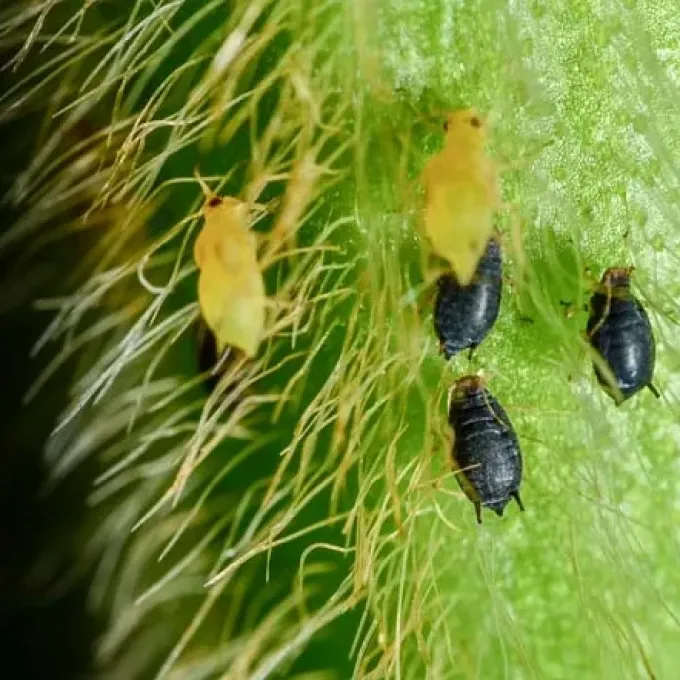
The soybean aphid (Aphis glycines) is a small insect typically ranging from 1 to 2 mm in length. Its body color varies from light yellow to pale green, often matching the color of young soybean leaves.
The insect possesses a pear-shaped body with distinct dark cornicles on its abdomen. Both winged and wingless forms exist, allowing for rapid colonization and dispersal across soybean fields.
Taxonomically, it belongs to the order Hemiptera and the family Aphididae. It is a specialized herbivore that feeds exclusively on plant sap, causing significant stress to the host plant.
Field identification requires a magnifying glass, as these aphids prefer the underside of leaves and growing points. It is crucial to distinguish them from other aphid species found on neighboring weeds.
The life cycle involves an alternate host, the common buckthorn (Rhamnus cathartica), where eggs overwinter. In spring, winged aphids migrate from buckthorn to soybean crops to start the infestation cycle.
What it damages
Soybean plants are the primary victims of this pest. Aphids pierce the leaves and stems to suck the sap, leading to nutrient depletion and hindered plant development.
Visible damage includes leaf curling, yellowing, and stunted growth. The loss of chlorophyll reduces the plant's photosynthetic efficiency, which directly impacts yield quality and quantity.
A critical concern is the transmission of viruses, such as the soybean mosaic virus. Even low populations of aphids can effectively vector diseases throughout the entire field, causing extensive crop failure.
Heavy infestations lead to stunted pods and shriveled seeds. This reduction in the weight of a thousand seeds significantly lowers the overall profitability of the harvest.
Sooty mold growth is often observed on the leaves due to the honeydew secreted by the aphids. This black, powdery growth blocks sunlight and further stresses the already weakened plants.
When it appears
Infestation usually begins in early summer, as winged aphids migrate from primary hosts to young soybean plants. This coincides with the vegetative growth stages of the crop.
Population growth is highly dependent on ambient temperatures. Moderate temperatures are ideal for rapid reproduction, allowing the population to reach peak numbers within a few weeks.
The most vulnerable period for the crop is during flowering and pod development. Severe infestations at these stages result in the most significant yield losses due to nutrient competition.
As daylight decreases and temperatures drop in late summer, the aphid population produces winged sexual forms that migrate back to buckthorn for winter egg-laying.
Soybean aphids have an incredibly fast generation cycle. Under optimal conditions, they can produce multiple generations within a single season, necessitating diligent monitoring.
Signs of infestation
The first indicator of an infestation is a noticeable decline in the vigor of the plant terminals. Leaves may appear distorted or curled, which is a classic symptom of aphid sap-sucking activity.
Increased ant activity on soybean plants is a strong sign of an aphid colony. Ants are attracted to the honeydew produced by aphids and will actively protect them from natural predators.
Sticky, shiny residue on the leaves indicates the presence of honeydew. This is often the first visual warning that the aphid population is reaching significant levels.
Yellowing of the foliage, often misidentified as nutrient deficiency, can be a sign of long-term aphid presence. Checking the underside of leaves will confirm the presence of these insects.
Regular scouting is the best way to catch early signs of infestation. Sampling multiple plants across the field helps determine if the population is nearing the economic threshold.
Control measures
The primary control measure involves the management of the primary host. Removing buckthorn shrubs around field margins can significantly reduce the potential for spring migration.
Cultural practices, such as timely planting and using vigorous soybean varieties, help crops outgrow early-season aphid pressure, making them more resilient.
Biological control plays a significant role. Encouraging natural predators like lady beetles, lacewings, and parasitic wasps is essential for maintaining natural equilibrium in the field.
Chemical control is advised only when the economic injury level is reached. The use of selective insecticides is preferred to protect beneficial insects while effectively targeting the aphid population.
- Scout fields weekly, especially during early reproductive stages.
- Use economic threshold guidelines (e.g., 250 aphids per plant).
- Rotate insecticide modes of action to prevent resistance.
- Ensure thorough coverage during application to reach aphids on the leaf undersides.
Taxonomy
- Latin name
- Aphis glycines
- Order
- Hemiptera (bugs, aphids, leafhoppers)
- Family
- Aphididae
- EPPO code
- APHIGY
Discussion
No discussions yet — be the first.