
Euonymus aphid
Aphis euonymi
Description
How to identify
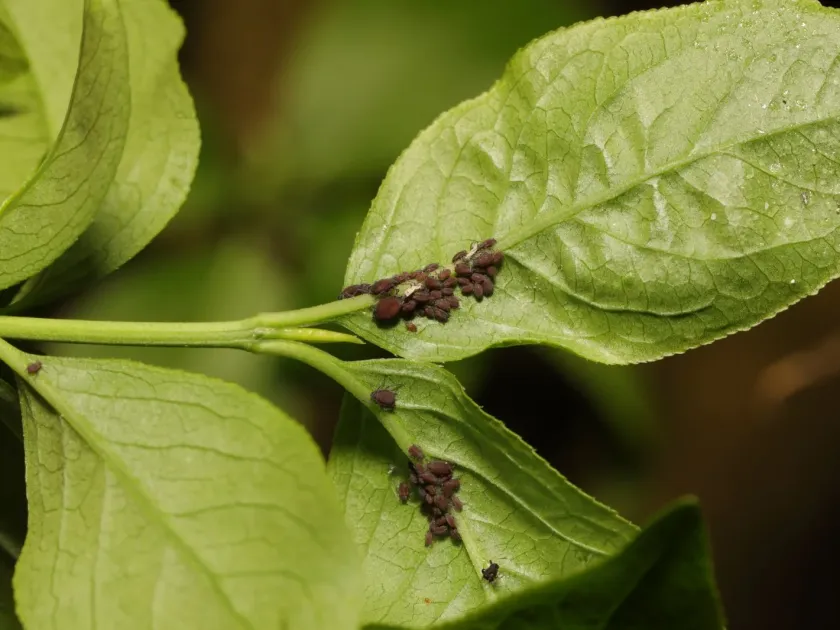
The Euonymus aphid, scientifically known as Aphis euonymi, is a common insect pest belonging to the Aphididae family. These insects are small, typically measuring 1.5 to 2.5 mm in length.
Adult aphids often exhibit a dark green to black coloration. Their bodies are typically covered with a light, dusty wax secretion that gives them a dull appearance.
The species exists in both wingless and winged forms. Winged individuals primarily facilitate the colonization of new host plants during the warmer months of the year.
They possess a specialized piercing-sucking mouthpart, which allows them to penetrate plant tissues and extract phloem sap for nutrition.
The life cycle involves multiple generations per year, with rapid development rates that can lead to explosive population growth under favorable weather conditions.
What it damages
The primary host plant for this aphid is the European spindle tree, Euonymus europaeus. It serves as the main site for overwintering and early spring development.
During the growing season, the aphids may migrate to a variety of secondary host plants, including various ornamental shrubs and some herbaceous species.
The damage is caused by the continuous extraction of plant fluids, which depletes the host's energy reserves and impairs its physiological processes.
Infested shoots often show signs of stunted growth, leaf curling, and overall reduction in plant vigor, which diminishes the ornamental value of the host.
Heavy infestations can lead to premature leaf drop and increased susceptibility to secondary infections or winter frost damage.
When it appears
These insects overwinter in the egg stage. Eggs are laid in the crevices of the bark or near the buds of the euonymus plant to survive the winter season.
In early spring, as buds begin to swell and open, the eggs hatch into nymphs, which immediately begin feeding on the developing tender leaves.
Summer months are characterized by the production of winged forms that migrate to secondary hosts to multiply during the peak of the growing season.
As temperatures begin to drop in the autumn, the aphids migrate back to the primary host (Euonymus) to mate and lay overwintering eggs.
The speed of the life cycle is highly temperature-dependent, with warmer, dry weather significantly accelerating reproduction rates and nymph maturation.
Signs of infestation
The most visible sign of an infestation is the curling and distortion of young leaves, particularly on the terminal shoots where colonies tend to cluster.
The presence of honeydew, a sticky substance excreted by the aphids, is a major indicator. This substance covers the foliage and attracts ants.
Sooty mold, a black fungal growth, often develops on the honeydew-coated leaves, which can interfere with the plant's ability to perform photosynthesis.
Inspection of the underside of leaves or the tips of new growth usually reveals dense clusters of these dark-colored insects.
- Distorted and curled leaves
- Sticky honeydew accumulation
- Black sooty mold covering foliage
- Ant activity on infested stems
- Yellowing of terminal shoots
Control measures
Effective management begins with monitoring the Euonymus plants in early spring to identify and treat early-stage colonies before they spread.
For chemical control, systemic insecticides are highly effective as they are absorbed by the plant and provide residual protection against aphids.
Manual removal of heavily infested shoot tips can be a practical and chemical-free approach for small garden settings to manage localized populations.
Encouraging natural predators such as ladybugs, lacewings, and parasitic wasps can significantly suppress aphid numbers in balanced garden ecosystems.
Regular maintenance, including proper fertilization and watering, helps plants build resistance and recover more quickly from potential aphid damage.
Taxonomy
- Latin name
- Aphis euonymi
- Order
- Hemiptera (bugs, aphids, leafhoppers)
- Family
- Aphididae
- EPPO code
- APHIEU
Discussion
No discussions yet — be the first.