
Cytisus aphid
Aphis cytisorum
Description
How to identify
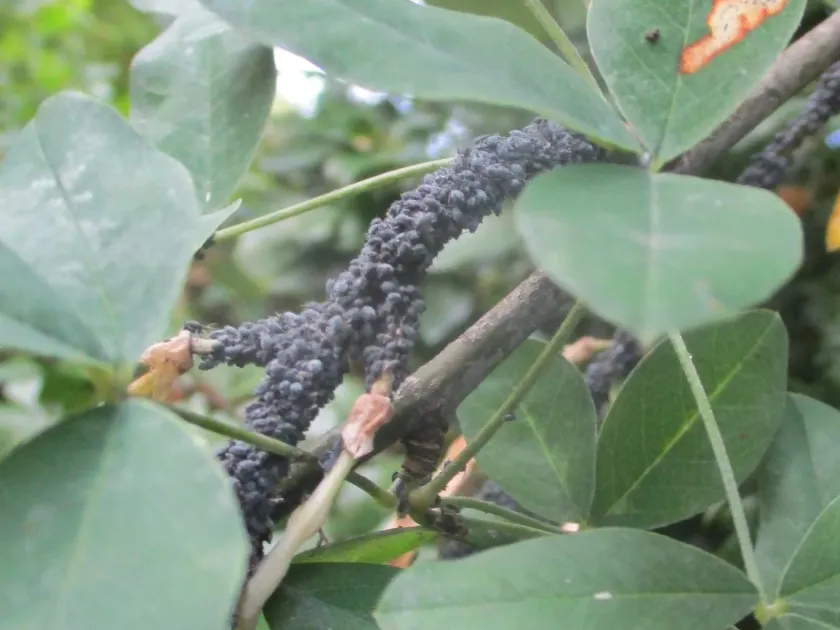
The Cytisus aphid (Aphis cytisorum) is a small insect belonging to the family Aphididae. Adults are typically dark green to black in color, which serves as a protective camouflage against the stems of their host plants, particularly those in the Fabaceae family.
The life cycle encompasses several stages including eggs, nymphs, and adults. These insects reproduce parthenogenetically during the growing season, allowing for rapid colonization of host plants, which can lead to severe infestations in a short period.
A distinctive morphological feature of this species is the presence of well-developed cornicles (tubular structures) on the abdomen, which secrete honeydew. These organs are useful diagnostic markers for entomologists when identifying the species in the field.
They preferentially colonize the most succulent parts of the plant, such as growing shoot tips, flower buds, and the undersides of young leaves. These areas provide the high concentrations of nutrients necessary for rapid nymph development.
Due to its high host specificity for legumes, the Cytisus aphid is a significant concern for both ornamental landscaping and pulse crop production, requiring diligent monitoring during the early stages of plant development.
What it damages
The primary damage caused by the Cytisus aphid results from the systematic withdrawal of plant cell sap. As the insects feed, they inject toxic saliva, which leads to physical exhaustion of the shoots and overall growth inhibition.
Infested leaves typically curl, yellow, and drop prematurely, significantly reducing the plant's photosynthetic capacity. This physiological stress severely impacts the health and vigor of the host plant, making it more susceptible to environmental stressors.
Aphis cytisorum is also a known vector for various plant viruses. Even small aphid populations can transmit pathogens while feeding, causing mosaic patterns, leaf distortion, and long-term stunted growth that is often more damaging than the sap loss itself.
The secretion of honeydew promotes the growth of sooty mold, a fungus that covers leaf surfaces in a black, powdery layer. This mold blocks sunlight, further depressing photosynthesis and causing unsightly damage to ornamental foliage.
Severe infestations during the flowering period frequently result in bud drop and poor pod set, which leads to significant yield losses in fruit-bearing crops or decreased aesthetic value in flowering ornamental shrubs.
When it appears
Activity commences in early spring as temperatures rise, when nymphs hatch from eggs that overwintered in bark crevices. This synchronization with bud break ensures immediate access to the most nutritious plant tissues.
Population density peaks between late spring and early summer. During this time, mild temperatures and high humidity provide ideal conditions for the aphid to complete generations rapidly, potentially causing an explosion in numbers within weeks.
During the peak of summer, if conditions become too dry or hot, population growth may temporarily slow down. However, the presence of irrigation or high ambient humidity often allows colonies to remain active on secondary shoots throughout the season.
As autumn approaches, a sexual generation is produced, and females lay cold-hardy eggs on the host plant to ensure the species survives the winter. This lifecycle trait is critical for planning effective dormant-season management.
Agronomic monitoring should be consistent from the start of leaf emergence, as early detection of the founding colonies is the most effective strategy to prevent a large-scale outbreak later in the season.
Signs of infestation
The most immediate visual sign of infestation is the curling or distortion of young leaves. If you observe clusters of small, dark insects at the tips of shoots, it is a clear indication that a colony has established itself.
A sticky residue on leaves and stems, known as honeydew, is a classic sign of aphid activity. This substance is often highly attractive to ants, which will form symbiotic relationships with the aphids, effectively guarding them against natural predators.
The appearance of a black, dusty layer on the foliage indicates that sooty mold is growing on the honeydew deposits. This is a sign of a well-established and long-standing aphid colony that requires immediate intervention.
The presence of predators such as lady beetles (Coccinellidae) and their larvae on specific branches often serves as a natural indicator that a significant aphid colony is nearby, acting as a warning to conduct a thorough inspection.
Stunted shoot growth, twisting of stems, and an overall lack of vigor in the plant are indirect symptoms that require a closer look at the undersides of the leaves to confirm the presence of Aphis cytisorum.
Control measures
Effective management of the Cytisus aphid requires an integrated approach. In small-scale settings, mechanical removal of heavily infested shoot tips can be highly effective in reducing the population early in the season.
Biological control relies on conserving natural enemies such as ladybugs, lacewings, and hoverflies. Avoiding broad-spectrum insecticides during the initial growth phase allows these beneficial insects to naturally regulate aphid numbers.
For significant infestations, systemic insecticides are the most effective chemical intervention. These products are absorbed into the plant tissues, providing long-term protection against sap-sucking insects that are often hidden from contact sprays.
Cultural practices include proper pruning to remove basal suckers, which often serve as an early-season nursery for aphids, and balanced fertilization to prevent an excess of succulent growth that is highly attractive to pests.
- Use of insecticidal soaps or neem oil as a contact treatment for early-stage infestations.
- Application of biological fungicides based on Beauveria bassiana for targeted aphid control.
- Regular monitoring and removal of infected plant debris to break the cycle of overwintering eggs.
Taxonomy
- Latin name
- Aphis cytisorum
- Order
- Hemiptera (bugs, aphids, leafhoppers)
- Family
- Aphididae
- EPPO code
- APHICY
Discussion
No discussions yet — be the first.