
Cowpea aphid
Aphis craccivora
Description
How to identify
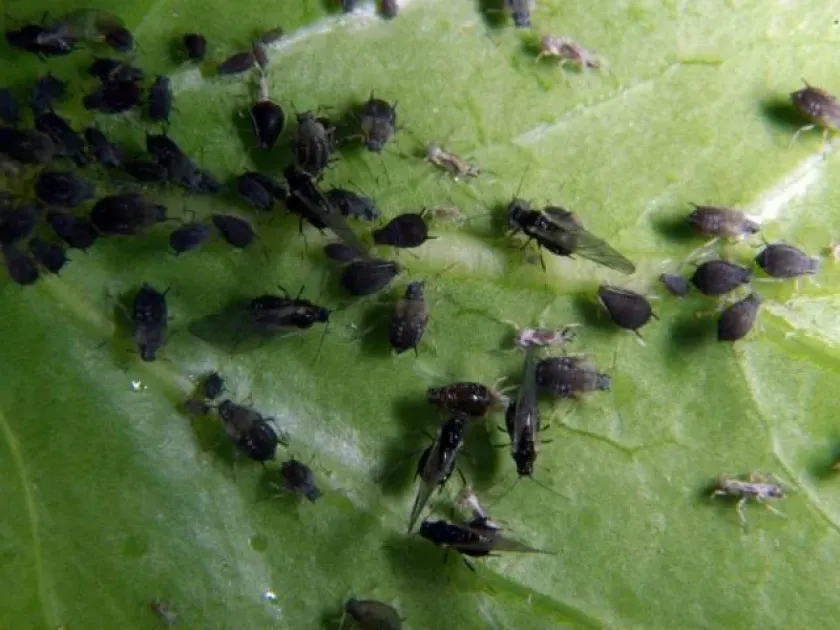
The Cowpea aphid (Aphis craccivora) is a small sap-sucking insect belonging to the Aphididae family. Adult wingless females are shiny, jet-black, and roughly 2 mm long.
These aphids are characterized by their rapid development and high reproductive capacity. They overwinter as eggs on various acacia species and other woody plants.
They typically live in dense colonies, concentrating on the growing points, flower stalks, and tender leaves of host plants, leading to quick infestation spread.
The life cycle is highly temperature-dependent, allowing multiple generations to emerge within a single growing season under favorable conditions.
Beyond physical damage, they serve as essential vectors for various plant-pathogenic viruses, significantly impacting the overall yield quality and health of crops.
What it damages
The primary hosts include various legumes such as peas, beans, soybeans, peanuts, cowpeas, and lentils, which can suffer severe losses due to infestation.
The aphids extract large amounts of plant sap, which stunts growth, causes leaf curling, and leads to the premature shedding of blossoms and young pods.
Massive infestations often result in reduced seed quality and lower yields. The plants become weak and highly susceptible to secondary infections or environmental stress.
Their honeydew excretion promotes the growth of sooty mold, which blocks sunlight and interferes with the plant's essential photosynthetic processes.
Economic damage is most significant during the early vegetative and reproductive stages of the crop, where plants are most vulnerable to stunted development.
When it appears
Infestation starts in early spring when eggs on primary woody hosts hatch. Winged adults then migrate to susceptible legume crops during the growing season.
Migration typically peaks during the flowering stage of the host crops, making this a critical window for crop monitoring and necessary intervention.
During the summer months, they produce several generations, with populations often exploding in hot and dry weather conditions, which favor rapid aphid reproduction.
As autumn approaches, the aphids perform a return migration to their primary woody hosts, where they mate and deposit eggs for overwintering.
Environmental factors like humidity and temperature regulate population dynamics; sustained hot weather usually accelerates the population increase significantly.
Signs of infestation
Early symptoms include the curling and yellowing of young leaves, along with visible stickiness on stems due to the presence of aphid-produced honeydew.
Colonies of small, black insects are easily observed clustering on the undersides of leaves, shoots, and developing flower buds during field inspections.
The presence of ants, which feed on the sugary honeydew, is a strong indicator of an active aphid colony on the crops that requires attention.
Soor-like dark growths (sooty mold) appearing on leaves indicate long-term aphid presence and a significant reduction in the plant's photosynthetic efficiency.
Wilted or deformed plant structures, combined with a lack of pod development, are key indicators of advanced damage caused by the feeding of these aphids.
Control measures
Cultural control practices include the removal of weeds that act as alternative hosts and the strategic placement of crops away from overwintering acacia sites.
Maintaining healthy crop stands and using resistant or early-maturing varieties can significantly reduce the vulnerability of plants to aphid outbreaks.
Chemical control involving systemic insecticides is recommended when population thresholds are exceeded, ensuring the timing avoids peak pollinator activity.
Biological control through the conservation of natural predators such as lady beetles, lacewings, and hoverflies is an essential component of integrated management.
Regular field scouting is vital for early detection; timely intervention prevents the spread of both the aphid population and the associated viral diseases.
Taxonomy
- Latin name
- Aphis craccivora
- Order
- Hemiptera (bugs, aphids, leafhoppers)
- Family
- Aphididae
- EPPO code
- APHICR
Discussion
No discussions yet — be the first.