
Vetch aphid
Aphis craccae
Description
How to identify
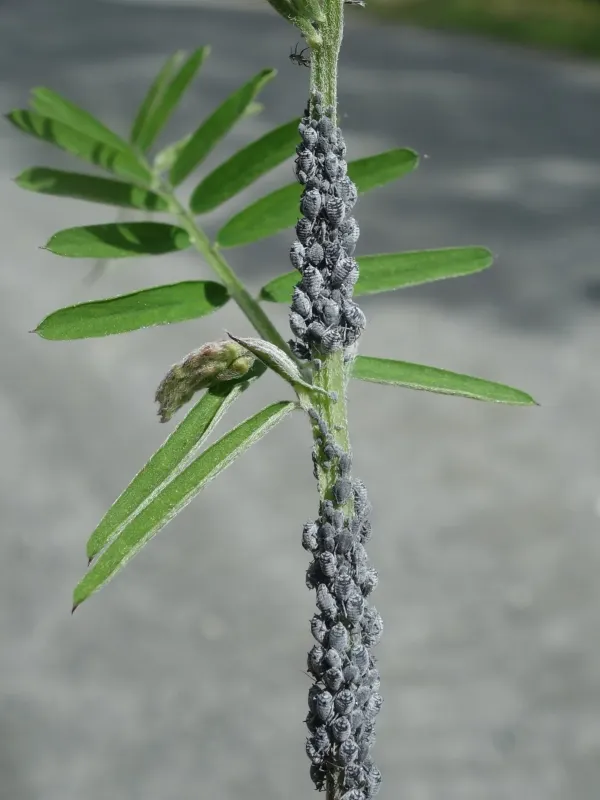
The vetch aphid (Aphis craccae) is a member of the Aphididae family, known for infesting various legume species. Adults typically measure 2 to 3 mm in length and feature a distinct dark brown or black body covered with a dull, matte coating.
These insects are characterized by short, dark siphunculi on the posterior of the abdomen. The species overwinters in the egg stage on the stems of perennial legumes or wild weed hosts.
During spring, stem mothers emerge and begin the reproductive cycle through parthenogenesis. This allows for rapid population growth, leading to several generations per season.
Both winged and wingless forms exist within the colony. The winged adults are responsible for migrating to new host plants, ensuring the spread of the infestation across fields of peas and vetch.
Effective scouting involves checking the underside of young leaves and terminal shoots, where these aphids aggregate in large, dense colonies to feed.
What it damages
The vetch aphid primarily targets legume crops, including peas (Pisum sativum), vetch (Vicia), clover, and alfalfa. It feeds by sucking sap from the plant tissues, which causes systemic physiological stress.
Feeding typically occurs on the most vulnerable parts of the plant, including succulent shoots, flower buds, and young pods. This damage restricts the plant’s ability to develop pods and fill seeds correctly.
Direct damage results in stunted growth, curling of leaves, and premature abortion of flowers. If the infestation reaches high levels, the entire plant may show signs of severe chlorosis and wilting.
Furthermore, this aphid acts as a vector for various plant viruses, which are transmitted through its saliva. These viruses often cause mosaic patterns and necrosis, leading to further yield degradation.
The accumulation of honeydew secreted by the aphids provides a substrate for sooty mold fungi to grow on the foliage, which interferes with photosynthesis and reduces crop vigor.
Signs of infestation
The first indicator of an aphid problem is the curling and yellowing of the terminal shoots. These clusters of leaves provide shelter and protection for the growing aphid population.
During the flowering stage, gardeners and farmers may notice an unusual drop of buds and flowers. This is often the result of heavy sap extraction from the reproductive parts of the plant.
A sticky substance known as honeydew on the leaves is a classic symptom of an aphid infestation. Often, the presence of ants, which tend the aphids to feed on the honeydew, serves as a strong signal of activity.
In later stages, you may see black sooty mold covering the leaves and stems, which is a secondary effect of the honeydew accumulation and indicates a long-standing infestation.
In periods of dry, hot weather, the combined stress of aphid feeding and dehydration leads to rapid deterioration of the plant's condition.
Control measures
Integrated pest management (IPM) is essential for controlling the vetch aphid. Cultural practices such as crop rotation and the removal of weed hosts are the first lines of defense to reduce overwintering sites.
Monitoring fields during the early stages of plant development is crucial for timely intervention. If thresholds are exceeded, systemic insecticides can be applied to stop the infestation.
Biological control plays a significant role in limiting aphid numbers. Beneficial insects like lady beetles (Coccinellidae), lacewings, and syrphid fly larvae are natural predators that can effectively reduce colonies.
Chemical applications should be timed carefully to avoid harming pollinators, as legume crops are frequently visited by bees during the flowering period.
- Maintain field hygiene by removing crop residues after harvest.
- Apply selective insecticides if biological controls are insufficient.
- Use pheromone traps for monitoring to determine the exact time for treatment.
Taxonomy
- Latin name
- Aphis craccae
- Order
- Hemiptera (bugs, aphids, leafhoppers)
- Family
- Aphididae
- EPPO code
- PERNCR
Discussion
No discussions yet — be the first.