
Dogwood aphid
Aphis cornifoliae
Description
How to identify
The dogwood aphid (Aphis cornifoliae) is a small sap-sucking insect belonging to the family Aphididae. It is a specialized pest that primarily targets dogwood trees and shrubs.
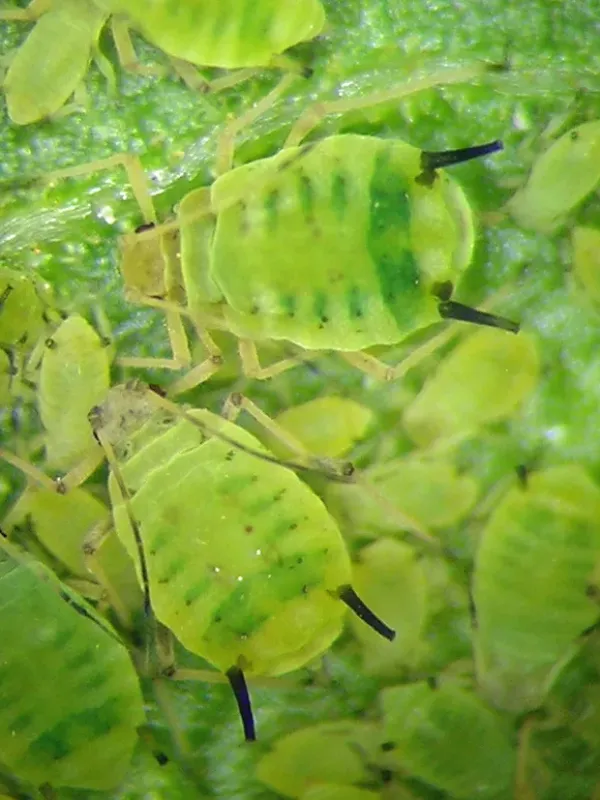
These insects are typically 1.5 to 2.5 mm long, with an oval-shaped body. Their color ranges from light green to yellow, which helps them blend in perfectly with the underside of new leaves.
The species reproduces through a combination of asexual and sexual cycles. Aphids can exist as wingless individuals, which multiply locally, and winged individuals, which migrate to colonize new parts of the plant.
Winter is spent in the egg stage. Eggs are laid in bark crevices and near buds, ensuring they remain protected from harsh conditions until spring temperatures trigger hatching.
The population grows rapidly due to high fecundity. A single founder female can produce multiple generations in a short time, leading to large colonies by early summer.
What it damages
Aphids cause damage by inserting their piercing-sucking mouthparts into the phloem of the plant. They extract vital nutrients, causing the plant to weaken and lose its growth vigor.
The feeding process results in the injection of saliva, which causes the foliage to curl and deform. This reduces the leaf surface area available for photosynthesis, impacting the tree's health.
Dogwood aphids are potential vectors for plant viruses. They can transmit diseases while moving between plants, which may cause more long-term damage than the nutrient loss caused by feeding.
The excretion of honeydew encourages the growth of sooty mold, a black fungus that covers leaves. This layer blocks light, further hindering photosynthesis and respiration.
Severe infestations often lead to premature leaf drop and the shedding of flower buds or fruit set. This significantly lowers the aesthetic value and fruit production of the dogwood.
When it appears
Activity begins in early spring as soon as the buds start to open. The insects feed on the tender, nutrient-rich tissues that appear during the start of the growing season.
Peak populations are usually observed during June when temperatures are warm and stable. During this time, colonies can completely cover the tips of young shoots.
In mid-summer, if the weather becomes excessively hot or dry, aphid activity might temporarily decline. However, they remain present throughout the summer season.
As autumn approaches, the insects switch to sexual reproduction. This cycle produces the hardy eggs that will survive the winter and start the next year's infestation.
Gardeners should monitor for aphids from the first bud break until late August. Inspections should be frequent because small colonies can explode in size within a week.
Signs of infestation
Leaf curling on the tips of branches is the most noticeable sign of a dogwood aphid infestation. Inside these curled leaves, colonies of the pest can be found hiding.
Sticky, shiny honeydew residue on leaves is a clear indicator that aphids are present. This substance is often highly visible when it catches the light on a sunny day.
The presence of ants patrolling branches is a strong indicator of aphid activity. Ants protect aphids from predators to ensure they continue to produce the sweet honeydew they consume.
A black or dark grey soot-like appearance on the leaves indicates the presence of sooty mold. This mold is a secondary effect of aphid feeding and signals a significant population level.
Stunted growth of new shoots is a symptom of heavy infestation. When many insects feed on one shoot, it becomes deformed and stops growing properly.
Control measures
Cultural control is the first line of defense. This includes pruning heavily infested branches and keeping the area around the dogwood clear of weeds and excess suckers.
Biological control agents, such as lady beetles, lacewings, and hoverflies, are very effective at keeping aphid numbers low. Encouraging these predators by planting nectar-rich flowers is recommended.
Chemical control should be used judiciously, targeting the underside of leaves where aphids aggregate. Systemic insecticides can be effective if the infestation is widespread.
For minor infestations, manual removal or a strong stream of water can dislodge many aphids. This is a non-toxic way to manage the population without harming beneficial insects.
- Regular inspection of new growth for early signs of leaf curling.
- Using horticultural soaps or oils to suffocate insects upon contact.
- Managing ant colonies to prevent them from protecting the aphids.
Taxonomy
- Latin name
- Aphis cornifoliae
- Order
- Hemiptera (bugs, aphids, leafhoppers)
- Family
- Aphididae
- EPPO code
- APHICF
Discussion
No discussions yet — be the first.