
Lucerne aphid
Aphis comosa
Description
How to identify
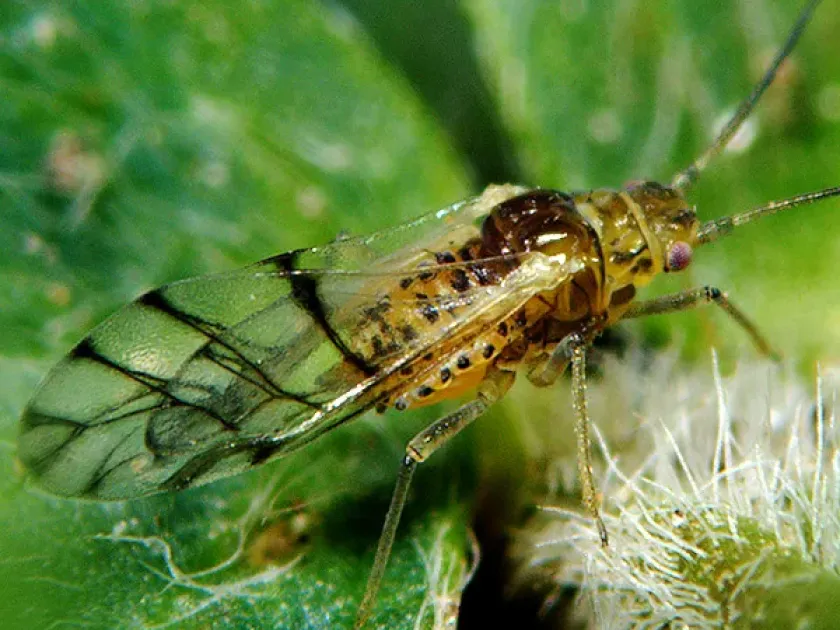
The lucerne aphid (Aphis comosa) is a small insect classified within the order Hemiptera and the family Aphididae, commonly affecting legumes.
Adults typically measure between 1.5 and 2.5 mm in length and exhibit colors ranging from light green to yellowish-brown, aiding in camouflage.
The life cycle includes both winged and wingless forms, where winged individuals are responsible for dispersal across agricultural fields.
Overwintering occurs primarily as eggs deposited at the base of stems of perennial legumes, ensuring survival through harsh weather conditions.
Reproductive success is highly dependent on ambient temperatures, with rapid population growth occurring during warm spring and summer months.
What it damages
Lucerne (alfalfa) serves as the primary host plant, where these aphids aggregate in large colonies to feed on plant sap.
Beyond lucerne, this pest can inhabit various wild legume species, which act as reservoirs that facilitate infestation in neighboring fields.
By draining cellular nutrients, the aphids interfere with the plant's metabolic processes, leading to stunted development and reduced biomass.
Severe infestations pose a significant threat to yields, particularly in forage production where succulent growth is essential for quality.
Beyond direct feeding, these pests can transmit harmful plant viruses, further complicating the health management of the affected crops.
Signs of infestation
The most noticeable sign is the curling and yellowing of terminal leaves, which prevents normal development of the plant's canopy.
Under close inspection, dense colonies of aphids are typically visible on the underside of leaves and along the tender new stems.
The secretion of honeydew attracts sooty mold, which creates a black, unsightly coating on foliage that hinders effective photosynthesis.
Weakened plants often show signs of wilting and may drop flowers, leading to decreased seed production if the crop is intended for harvest.
Increased ant traffic on the stems is a reliable indicator of aphid presence, as ants feed on the honeydew produced by the aphids.
Control measures
Integrated pest management (IPM) strategies are essential for effectively reducing aphid numbers while maintaining environmental balance.
A combination of regular field monitoring and timely mechanical practices, such as early mowing, helps disrupt the aphid's lifecycle.
If population thresholds are exceeded, targeted applications of systemic insecticides provide the most reliable control against heavy outbreaks.
Conserving natural predators, including lady beetles and hoverflies, plays a crucial role in suppressing aphid populations naturally.
- Regular monitoring of field edges and interiors.
- Timely chemical interventions using registered insecticides.
- Promotion of beneficial predatory insect habitats.
Taxonomy
- Latin name
- Aphis comosa
- Order
- Hemiptera (bugs, aphids, leafhoppers)
- Family
- Aphididae
- EPPO code
- PERNCO
Discussion
No discussions yet — be the first.