
Thistle aphid
Aphis armata
Description
How to identify
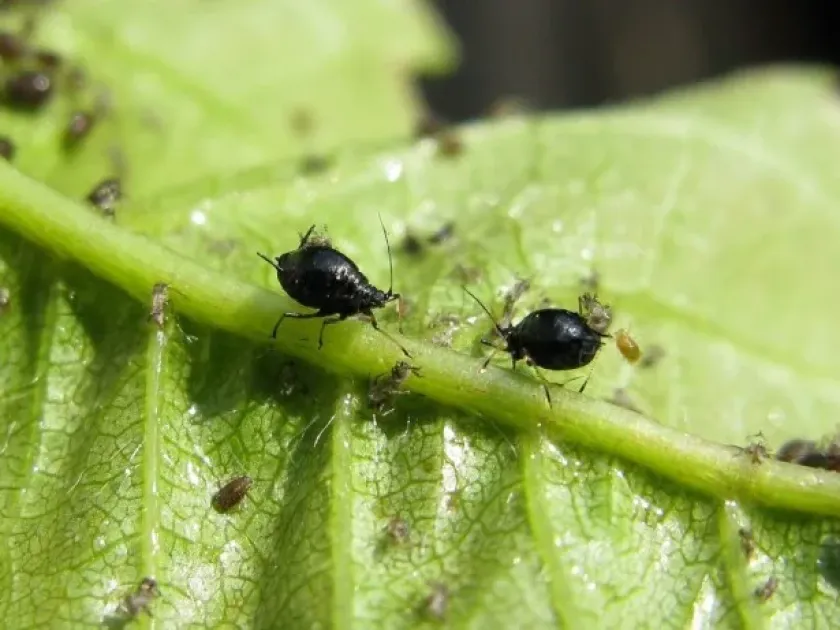
The thistle aphid (Aphis armata) is a small insect belonging to the family Aphididae. It is characterized by a dark, often black appearance, which makes it easy to spot on the leaves and stems of host plants.
The species lives in colonies, often covering the apical parts of plant shoots. Like other aphids, it undergoes an incomplete metamorphosis, with populations consisting of both wingless and winged individuals depending on the season.
A distinctive feature of its ecology is the mutualistic relationship with ants, which protect the aphid colonies from predators in exchange for honeydew, a sugary substance secreted by the aphids during feeding.
Identification in the field is usually based on observing characteristic plant symptoms and the presence of dense black colonies, though definitive classification requires expert analysis of anatomical structures.
The lifecycle is highly adaptive, allowing the species to transition between vegetative stages and overwintering stages efficiently, ensuring population survival across different climatic zones.
What it damages
The thistle aphid primarily infests plants in the Asteraceae family. As the name suggests, it is commonly found on various species of thistles and weeds, which serve as the main host plants.
While often considered a minor pest in wild habitats, it can cause significant damage when populations spill over into cultivated areas, particularly affecting ornamental flowers or specialized technical crops.
The aphid feeds by inserting its stylets into the phloem of the plant to extract sap. This continuous nutrient depletion weakens the host, causing stunted growth and reduced vigor.
Damage to flowering structures is particularly harmful, as it prevents proper seed formation and negatively impacts the aesthetic and commercial value of the plants.
Beyond direct mechanical damage, these aphids are vectors for various plant viruses, which can prove far more destructive than the aphid feeding itself, leading to systemic infections in crops.
When it appears
The activity begins in early spring when eggs deposited on the host plants hatch. The first generations emerge as the plant begins its active growth phase, coinciding with the availability of succulent tissue.
During the summer months, the species reproduces via parthenogenesis, leading to a rapid buildup in numbers. Peak populations are typically observed in mid-summer when temperatures are optimal for growth.
In autumn, as conditions become harsher, the aphid produces sexual forms that mate and lay overwintering eggs. These eggs remain on the plant residues, ensuring the next year's generation.
Environmental factors like heavy rainfall or extreme heat can temporarily disrupt population growth, but the species recovers quickly due to its high reproductive rate and short generation time.
Regular scouting throughout the growing season is essential for early detection, particularly during the transition from the vegetative to the flowering stage of host plants.
Signs of infestation
Leaf curling and yellowing are the primary symptoms of infestation. The aphids often concentrate in the younger, more tender leaves, causing them to deform as they grow.
Honeydew secretion is another major indicator. This sticky residue often leads to the growth of sooty mold, a black fungal layer that coats the leaves and further inhibits photosynthesis.
Stunted growth of the main stem and the presence of withered flower buds are clear signs of high aphid density. Plants struggling with an infestation often look wilted even when soil moisture is adequate.
The presence of large numbers of ants foraging on the plant is a reliable sign of aphid activity. Ants aggressively tend the colonies, which makes them very conspicuous in the field.
Visual inspection of the underside of leaves or the crevices in the flower stalks will reveal the dense colonies of dark-colored insects if the infestation is present.
Control measures
Effective management begins with sanitation. Eliminating host weeds like thistles and burdock from field margins significantly reduces the risk of aphids migrating to crops.
Biological control plays a key role in keeping populations in check. Encouraging natural predators such as lady beetles, lacewings, and hoverfly larvae is an environmentally friendly approach.
Chemical control should be employed only when necessary. Systemic insecticides are generally the most effective, as they reach the aphids hiding within curled or deformed leaves.
Maintaining a balanced fertilizer program helps plants remain resilient to stress. Avoiding excessive nitrogen application can make the plants less attractive to aphids by preventing overly succulent growth.
- Regular monitoring of crop health.
- Using biological pesticides based on entomopathogenic fungi.
- Removing and destroying heavily infested plant parts.
- Implementing appropriate crop rotation strategies.
Taxonomy
- Latin name
- Aphis armata
- Order
- Hemiptera (bugs, aphids, leafhoppers)
- Family
- Aphididae
- EPPO code
- APHIAR
Discussion
No discussions yet — be the first.