
Thistle aphid
Aphis acanthi
Description
How to identify
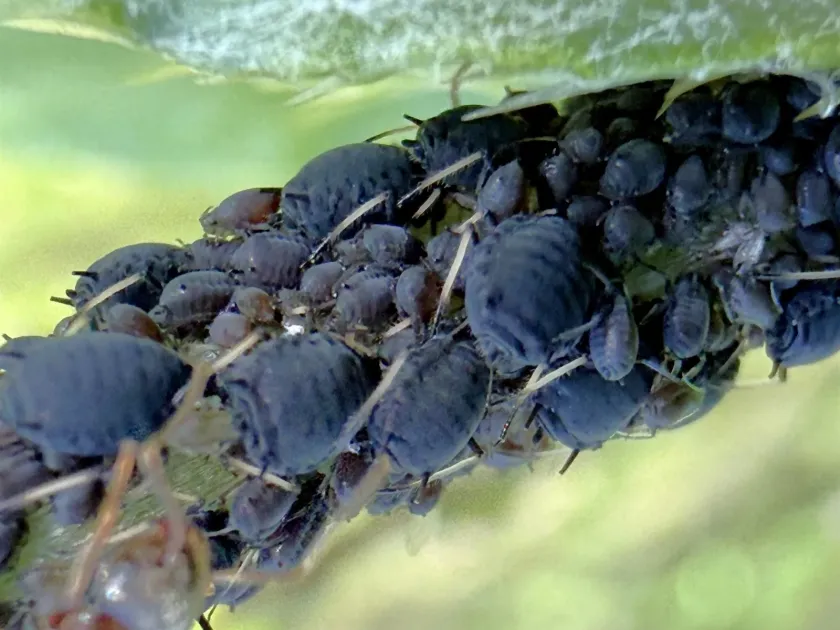
The thistle aphid (Aphis acanthi) is a member of the order Hemiptera, specifically belonging to the family Aphididae. These are small insects, typically measuring between 1.5 and 2.5 millimeters in length.
The body color of these aphids ranges from dark green to black with distinct brown undertones. Their body surface is matte, a key feature distinguishing them from other aphid species found on weeds.
They possess a specialized piercing-sucking mouthpart called a rostrum, which is perfectly adapted for penetrating plant tissues to extract nutrient-rich sap.
These pests frequently form dense colonies on the undersides of leaves, as well as on succulent young shoots and developing flower buds where sap concentration is at its peak.
The life cycle of this species is closely tied to plants in the Asteraceae family. Thistles and creeping thistles serve as their primary hosts, making them a common sight in agricultural environments.
What it damages
The main targets of the thistle aphid are plants within the Asteraceae family. While primarily focused on thistles, they can migrate to related crops if the preferred host plant population is exhausted.
By constantly extracting cell sap, the aphid causes severe physiological exhaustion of the plant. This leads to stunted growth, deformation of young leaves, and a significant decline in overall vigor.
Beyond direct damage, these aphids act as critical vectors for various phytopathogenic viruses. Even a small infestation can potentially introduce viral diseases to an entire field of crops.
Their honeydew secretions create a medium for the growth of sooty mold. This dark fungal layer blocks sunlight, which inhibits the plant's photosynthetic ability and reduces the quality of produce.
Severe infestations often result in the yellowing, wilting, and eventual necrosis of affected tissues, posing a serious threat to both agricultural yields and decorative plant health.
When it appears
The life cycle begins in early spring when larvae emerge from overwintering eggs laid on weeds. This emergence is strictly synchronized with the onset of the host plant's growth season.
Throughout the summer, the aphid undergoes several generations. Both wingless and winged forms emerge, with the latter responsible for spreading the infestation to new plants and adjacent fields.
Peak population levels typically occur in mid-summer. Favorable weather conditions, such as warm temperatures and moderate humidity, facilitate explosive population growth during this period.
As autumn arrives, the population transitions to sexual reproduction. After mating, females lay overwintering eggs, usually located near the root zone or on the lower stems of perennial host plants.
Weather patterns characterized by mild springs and dry, warm summers are particularly conducive to rapid colony expansion, often leading to outbreaks if left unmonitored.
Signs of infestation
The first indicator of an infestation is the characteristic curling and twisting of leaves. Affected areas often turn yellow and eventually develop brown necrotic spots due to cell death.
Stunted plant growth and deformed shoots are common consequences of aphid feeding. Even with proper irrigation, affected plants may appear wilted and fail to reach their full potential.
Sticky honeydew residues found on leaves are a tell-tale sign of aphid activity. Increased ant activity around these colonies is often observed, as ants tend to aphids to feed on their sugary waste.
The presence of a dark, sooty mold coating on leaves indicates that an aphid colony has been established for a significant amount of time, suggesting a need for immediate intervention.
Close inspection of the leaf undersides reveals clusters of small insects and white, translucent skins (exuviae). These are shed by the nymphs during their molting process and are easily visible.
Control measures
Effective management begins with robust agronomic practices. Regular mowing of weeds, particularly thistles and related Asteraceae, significantly reduces the reservoir for the pest.
Biological control plays a vital role in management; encouraging natural predators like ladybugs, lacewings, and hoverflies can help keep aphid populations below the economic injury level.
In cases of high infestation, systemic insecticides are effective. It is recommended to use products approved for the specific crop and to apply them according to the manufacturer's safety intervals.
Using yellow sticky traps provides an excellent monitoring tool. These traps attract winged adults, helping growers detect the onset of an infestation and time their control measures accordingly.
Maintaining balanced plant nutrition and avoiding excessive nitrogen fertilization helps keep plants less attractive to aphids. Robust, well-nourished plants possess better natural resistance to pests.
Taxonomy
- Latin name
- Aphis acanthi
- Order
- Hemiptera (bugs, aphids, leafhoppers)
- Family
- Aphididae
- EPPO code
- APHIAC
Discussion
No discussions yet — be the first.