
Aphid
Aphis
Description
How to identify
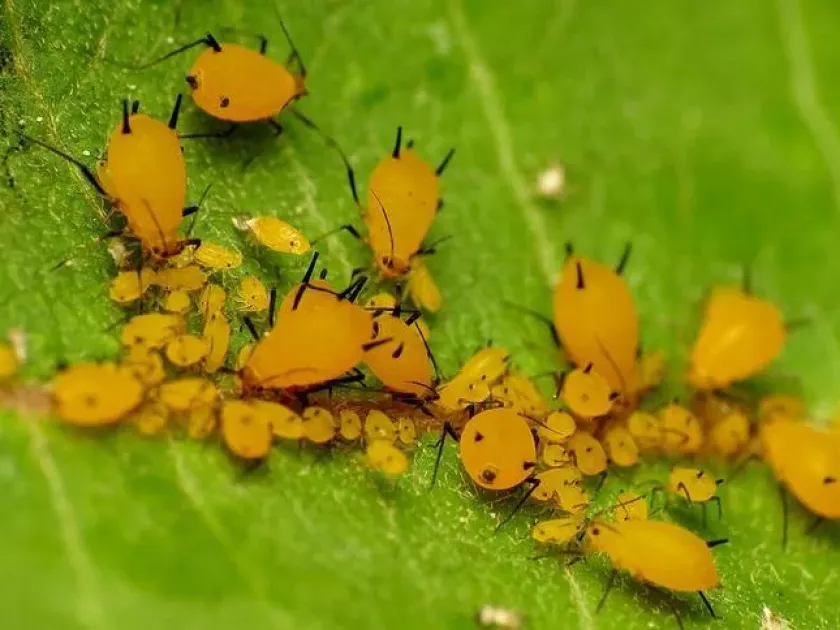
Aphids (family Aphididae) are small sap-sucking insects ranging from 0.5 to 6 mm in length. The bodies of most species are soft and pear-shaped, with colors varying from green and black to yellow or brown depending on the host plant.
These pests are characterized by a pair of tube-like structures called cornicles located on the rear of the abdomen. They can exist as both wingless and winged forms, which allows colonies to spread rapidly throughout the area.
Aphids reproduce extremely quickly through parthenogenesis, meaning females can produce live nymphs without mating. Up to 10–15 generations can occur within a single season, making their management a challenging task.
At the beginning of the season, aphid colonies typically congregate on the undersides of young leaves and at the tips of new shoots. There, the insects are protected from direct sunlight and environmental stress.
The presence of sticky secretions, known as honeydew, is a reliable sign of aphid infestation. Sooty mold often grows on this sugary residue, further hindering plant photosynthesis and overall health.
What it damages
Aphids are polyphagous, meaning they damage a wide variety of agricultural crops, including vegetables, fruit trees, berries, and ornamental plants. Apple, pear, and plum trees are particularly susceptible.
Among vegetable crops, tomatoes, cucumbers, cabbage, and peppers suffer most frequently. The insects actively suck out cell sap, leading to plant exhaustion, stunted growth, and reduced vigor.
Beyond direct damage from sap extraction, aphids are dangerous vectors for over 100 plant viruses. Even a small colony can infect healthy plants with mosaic or leaf curl viruses.
During mass outbreaks, aphids can completely destroy young plantings within a few weeks. Leaves curl, yellow, and drop prematurely, while shoots become twisted and deformed.
Fruit crops lose their market value, and yields decrease significantly due to the plant's weakened immune system. In severe cases, the tips of the shoots and young buds may die off entirely.
When it appears
The first individuals appear in early spring when average daily temperatures reach +10...+12 degrees Celsius. Aphids typically overwinter as eggs on tree bark or on perennial weeds.
Peak activity occurs in May and June, coinciding with the period of rapid shoot growth. At this time, plant sap is nutrient-rich, which attracts massive numbers of aphids.
In hot and dry summer weather, the reproduction rate of aphids accelerates exponentially. Drought-stressed plants are especially vulnerable to these pest attacks.
In autumn, many species produce a sexual generation. Females lay eggs that overwinter on buds or under bark scales, ensuring the survival of the population for the next season.
Winged aphid migration occurs in the second half of the summer, allowing them to colonize new areas. Regular monitoring during this period is essential for maintaining plant health.
Signs of infestation
The primary sign of infestation is the curling and deformation of young leaves. Large colonies are usually hidden inside these curled-leaf structures.
A sticky film on the leaf surface is a key indicator of aphid presence. If ants are spotted on the plants, it is a strong signal that aphids are nearby, as ants feed on their sugary secretions.
The appearance of black sooty mold on leaves indicates a long-standing infestation. This mold covers the foliage, blocking light and interfering with gas exchange.
Stunted growth, yellowing, and drying of shoot tips are common consequences of serious nutrient loss caused by aphid feeding activity.
Inspecting the undersides of leaves and young shoots confirms the diagnosis. Early detection through regular scouting is the best way to prevent widespread plant damage.
Control measures
Agronomic practices include the timely removal of weeds, which often serve as host reservoirs for aphids. It is also important to avoid excessive nitrogen fertilization, which produces succulent tissues that are highly attractive to pests.
Biological control involves encouraging natural predators such as lady beetles, lacewings, and hoverflies. In greenhouses, the introduction of beneficial parasitoid wasps is an effective way to manage populations.
For minor infestations, a strong stream of water can physically wash insects off the plants. Homemade remedies like ash infusions, soap solutions, or botanical extracts can also be effective.
In cases of heavy infestation, systemic chemical insecticides are necessary. These products are absorbed into the plant tissues, making the sap toxic to aphids for an extended period.
- Application of insecticides containing imidacloprid, thiamethoxam, or acetamiprid.
- Rotation of products with different modes of action to prevent resistance.
- Strict adherence to pre-harvest intervals for all pesticide applications.
Taxonomy
- Latin name
- Aphis
- Order
- Hemiptera (bugs, aphids, leafhoppers)
- Family
- Aphididae
- EPPO code
- APHISP
Discussion
No discussions yet — be the first.